Key takeaways
- AI social listening uses natural language processing and machine learning to analyze millions of social posts for sentiment, trends, and emerging topics in real time, replacing manual keyword tracking.
- Enterprise teams use AI social listening to manage crises, track competitors, identify influencers, and optimize campaigns based on real-time audience insights.
- The best AI social listening tools for 2026 include Hootsuite Social OS (Lumen), Brandwatch, Sprinklr, Brand24, YouScan, Meltwater, Mention, and Sprout Social.
- Measuring AI social listening success means tracking share of voice, sentiment trends, crisis response time, and the business decisions your listening data actually informed.
What is AI social listening?
AI social listening is the process of using artificial intelligence (AI) to monitor social media channels for mentions of specific topics, such as your brand, products, competitors, or industry.
Instead of manually reading thousands of posts and comments, AI tools:
- Collect public posts and mentions across social platforms
- Identify patterns in language and engagement
- Group conversations by topic
- Analyze sentiment (positive, neutral, or negative tone)
- Flag emerging trends as they happen
In simple terms, AI scans massive amounts of content, detects patterns, and turns those patterns into insights you can act on.
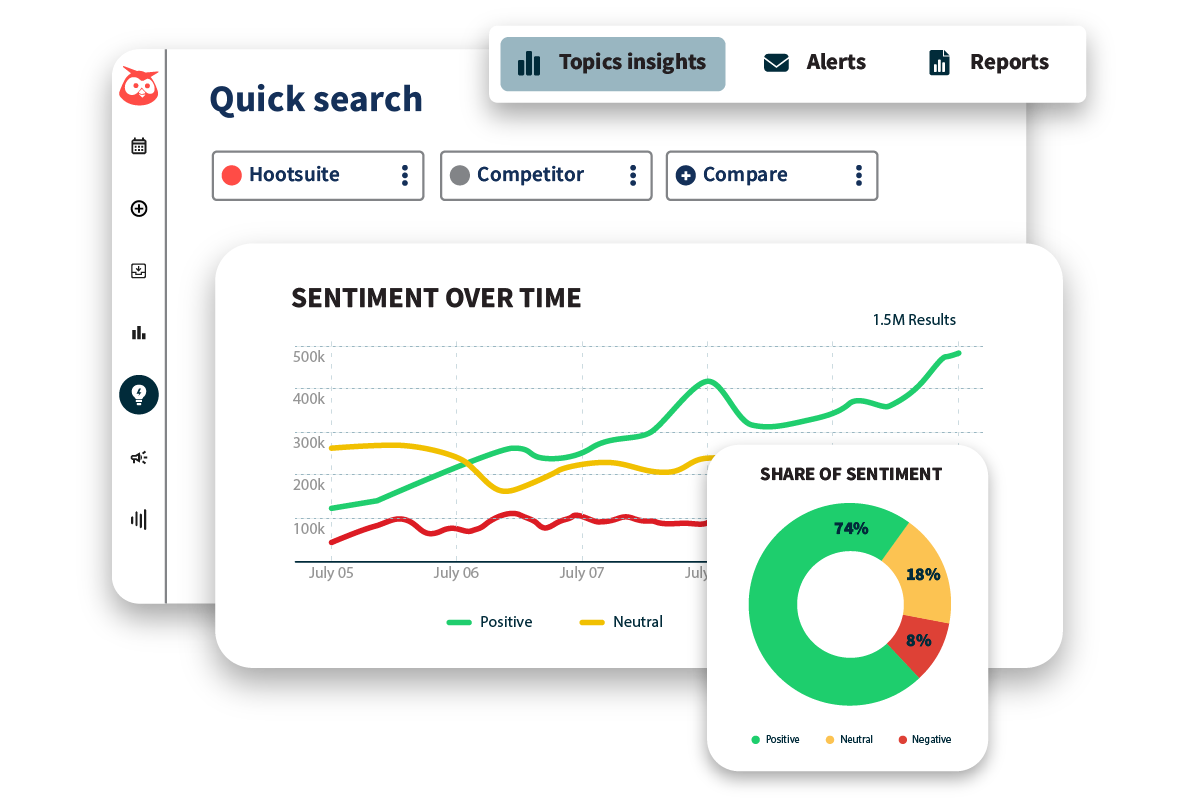
And unlike traditional keyword tracking, AI doesn’t just match exact phrases. It can detect indirect brand mentions, understand context, and even interpret slang and sarcasm.
Plus, the “smartest” AI listening tools offer predictive analytics — a shift Forrester identifies as platforms expanding into trend forecasting — giving you an advanced look at future topic volumes, trends, and even risks to your brand.
Modern social media management platforms now bring AI-powered listening, analysis, and reporting into a connected workflow, a consolidation 83% of US B2C marketing executives are actively pursuing, according to Forrester. Hootsuite Social OS, for example, makes it easier to collect and organize social media listening data at scale, then act on it in the same place.
AI social listening vs. traditional social listening
Let’s take a look at the key differences between traditional and AI-powered social listening:
Traditional social listening | AI-powered social listening |
|---|---|
Relies on exact keyword matches | Detects both direct and indirect brand references |
Basic positive/negative sentiment scoring | Understands tone shifts, emotion, and even sarcasm and slang |
Reactive (spots trends after they spike) | Proactive (spots emerging signals before they peak) |
Limited multimedia tracking | Can monitor text, images, video, and audio |
Struggles to scale across platforms and languages | Scales across dozens of channels and supports multilingual analysis |
Handles limited data volumes, often sampled | Processes millions of posts in real time without sampling |
Manual exports and hand-built reports | Automated reporting with AI-generated summaries |
How is social listening different from social monitoring?
Social monitoring is about tracking and responding to individual mentions, while social listening analyzes the bigger picture to inform strategy.
Here’s how the two compare:
- Social monitoring: Tracks specific brand mentions, comments, and questions so your team can respond in real time. It’s reactive and tactical, focused on day-to-day engagement and customer care.
- Social listening: Analyzes broader patterns, sentiment trends, and audience conversations across channels. It’s strategic, helping you understand the “why” behind the chatter and shape future decisions.
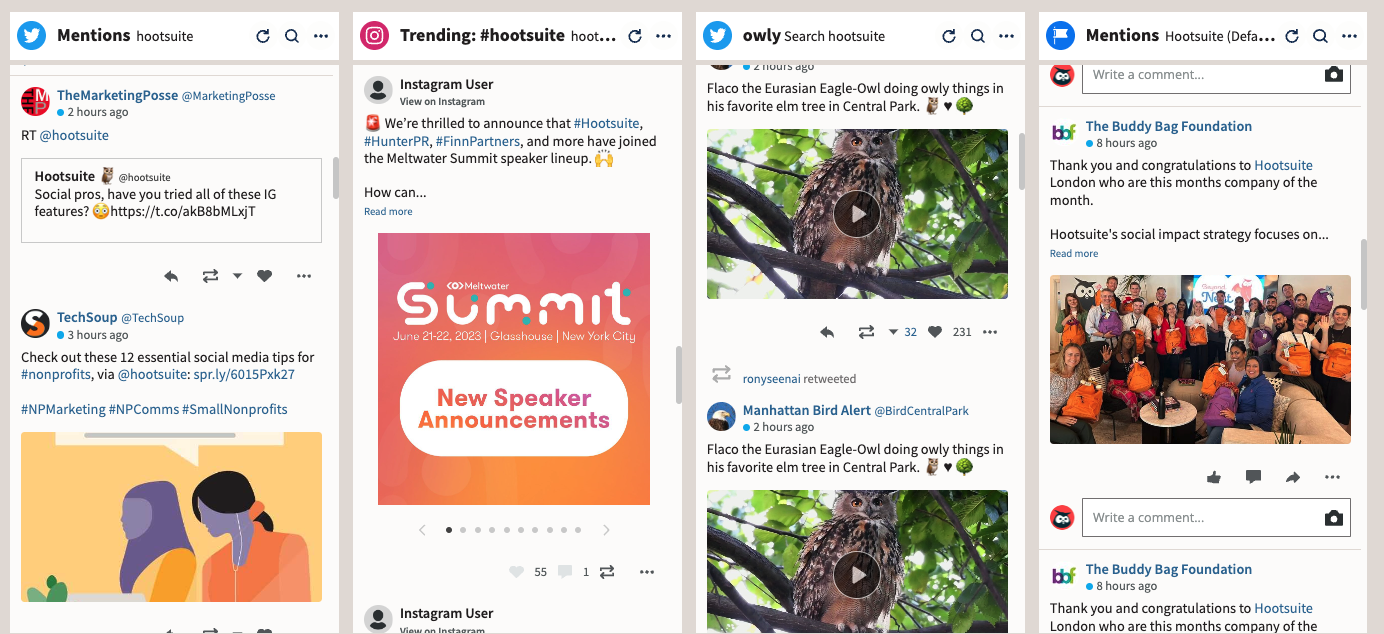
Most brands need both. Social monitoring keeps you responsive to your audience, while social listening (especially when powered by AI) turns the noise into insights you can act on. Think of monitoring as listening to one conversation and listening as understanding the entire room.
How does AI turn social conversations into insights?
AI-powered social listening tools use artificial intelligence and related technologies to collect, filter, and analyze large volumes of social media content in real time. It automates much of the process — one expected to double by 2028 — giving teams more time to focus on strategy.
What AI techniques power social listening?
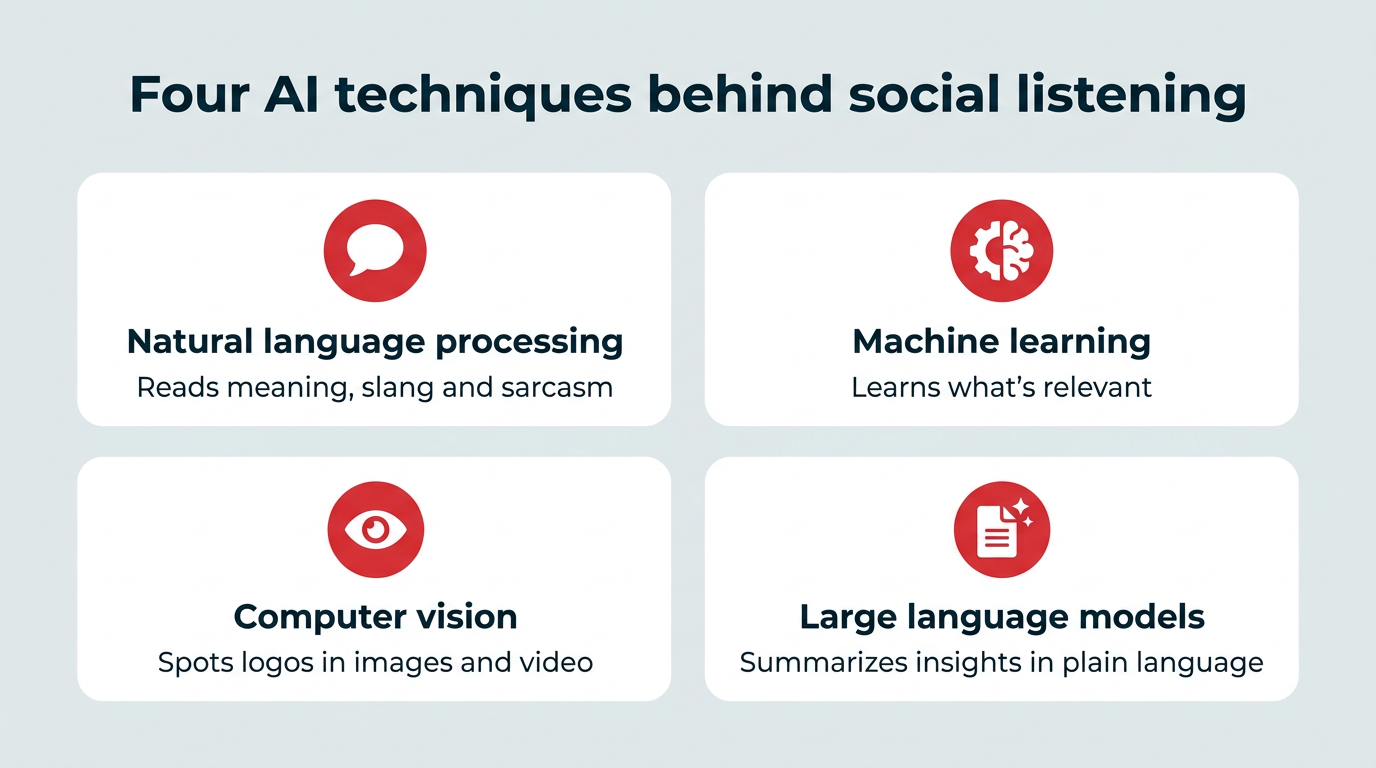
Four technologies do most of the heavy lifting, and knowing which is which helps you tell genuine AI capability from marketing language.
- Natural language processing: Reads text the way people actually write it, including slang, misspellings, emoji, and sarcasm, so mentions get classified by meaning rather than exact wording.
- Machine learning: Improves accuracy over time by learning which mentions your team marks as relevant, which cuts down the noise in your queries.
- Computer vision: Scans images and video frames for logos, products, objects, and on-screen text, catching mentions where your brand is shown but never typed.
- Large language models: Summarize findings in plain language, answer follow-up questions about a data set, and help build queries without Boolean syntax.
In practice these layers work together: computer vision and NLP gather and classify the mentions, machine learning sharpens what counts as relevant, and LLMs translate the result into something a marketing leader can read in 30 seconds.
1. AI listening and data collection
AI social listening tools scan social networks and other online media looking for mentions of specific phrases or words. Thanks to natural language processing (NLP), AI can also interpret how people actually use language, including context, nuance, slang, and misspellings, instead of relying on exact keyword matches.
Need to zero in on the right mentions? Hootsuite’s AI Query Builder makes it easy.

Crafting Boolean searches, like ‘brand AND campaign NOT competitor,’ can be tricky, but this tool uses AI to turn keywords into precise queries with a simple interface. No tech skills needed, just sharper insights, faster.
Large language models have also changed how queries get built. You can describe what you want to track in plain language, and the model translates it into the operators and exclusions that would have taken an analyst an afternoon to write.
The best AI algorithms can learn to recognize text, logos, and even objects in images and videos, a kind of visual listening.
2. AI analysis and sentiment detection
Once data is collected, AI then analyzes large data sets, spotting patterns and trends that help make sense of the online noise.
Using its natural language processing skills, AI can sort mentions by sentiment analysis, meaning it can tell whether posts are positive, negative, or neutral. Some tools can even detect emotions like anger, excitement, or frustration.
AI can also understand casual language, slang, and sarcasm. This helps brands see not just what people are saying, but how they genuinely feel.
Analysis goes beyond text, too. Advanced tools use visual listening to scan images, video, audio, and even memes for brand mentions. Visual social listening usually combines a few techniques at once:
- Logo and object detection: Recognizes your logo or product in a photo or video frame, even when nobody tags or names your brand.
- Optical character recognition: Reads text baked into screenshots, memes, packaging, and on-screen captions.
- Audio transcription and keyword spotting: Converts speech in videos, livestreams, and podcasts to text, then flags your tracked terms.
- Scene and context recognition: Identifies where and how your product appears, which tells you about real-world usage, not just mention counts.
Lumen, the insights and listening app inside Hootsuite Social OS, uses these capabilities to surface conversations that text-only tools would miss entirely, like a product cameo in an unbranded TikTok or a spoken mention halfway through a podcast episode.
3. AI reporting and predictive insights
Finally, AI can turn all that data-crunching and analysis into clear insights that are easy to understand and use.
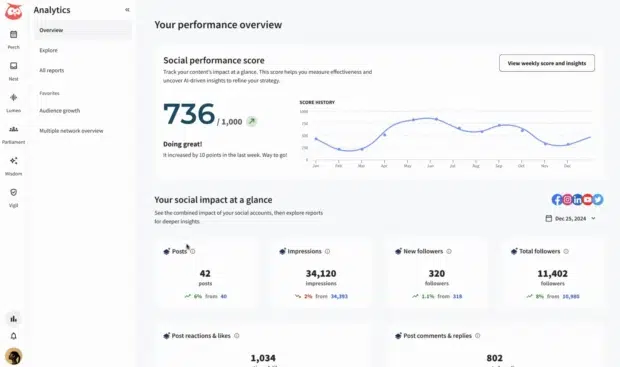
Instead of simply showing a spike in mentions, AI social listening tools can offer insight into what caused the spike in the first place. Some tools use predictive analytics to forecast future changes, like rising interest in a topic or possible risks to your brand, so your team can act before issues escalate.
Reporting itself has also gotten faster. Tools built on large language models can now write a natural-language summary of a week’s listening data, so instead of reading a dashboard, you get a short brief on what changed and why it matters.
Why do marketers need AI for social listening?
AI social listening lets marketers track more conversations, with more clarity, in less time. With Gartner’s 2025 CMO Spend Survey finding 49% of CMOs cite improved time efficiency as GenAI’s top ROI driver, it replaces manual guesswork with faster, more accurate insights that scale with you.
Here’s how social media listening powered by AI can support your marketing:
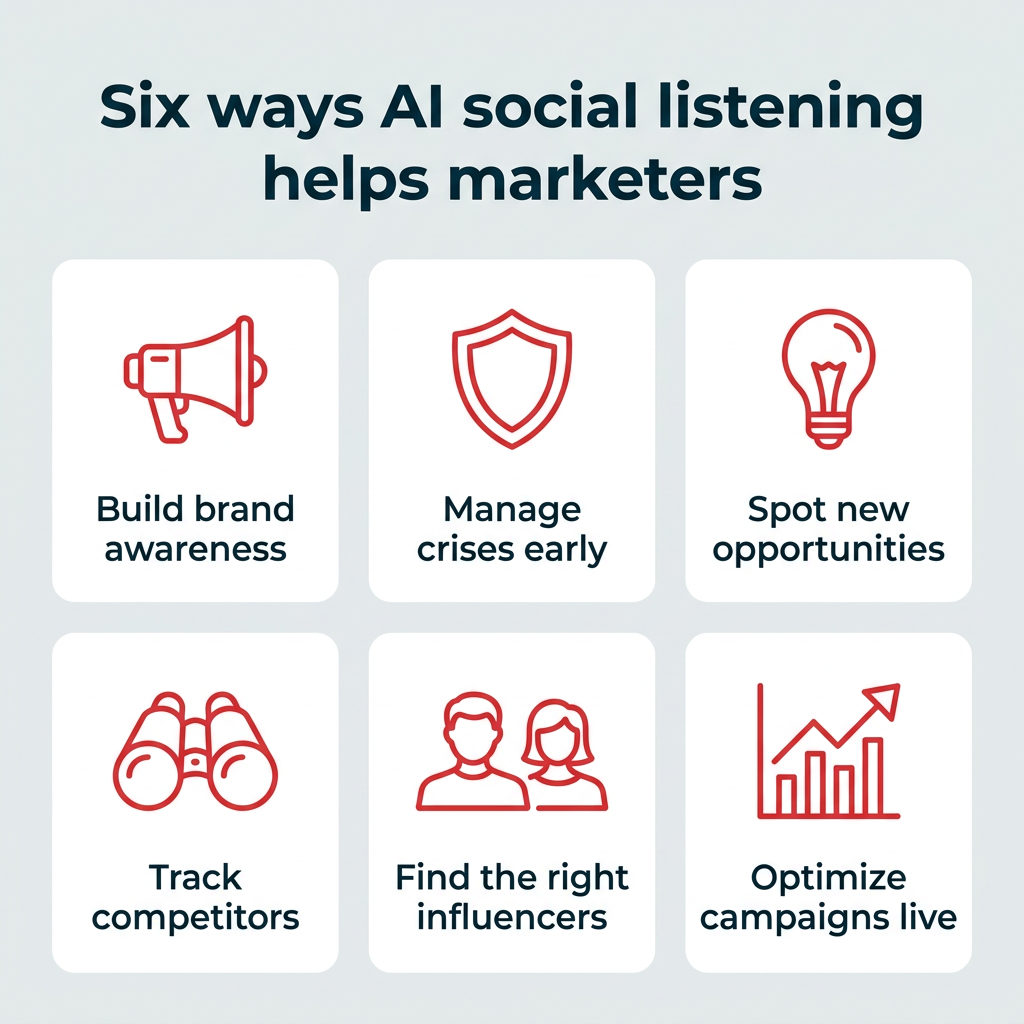
Build brand awareness
AI social listening lets you find (and join) conversations about your brand more efficiently than ever.
If your product shows up in a video, your brand gets mentioned in a podcast, or your logo pops up in a meme, the best AI listening tools create more engagement opportunities. Traditional keyword tools would miss these visual and audio mentions entirely, leaving valuable awareness moments on the table.
Say a creator reviews your product in a TikTok video without tagging your handle or typing your name. Visual AI catches the logo on screen, and your team can reply, reshare, or start a partnership conversation the same day.
Manage crises before they escalate
AI tracks online conversations in real time, helping marketers monitor brand health and spot potential issues before they escalate. AI can even learn to predict trouble before it happens. Crisis averted.
Plus, tools like Hootsuite can send you real-time alerts when they detect sudden spikes in brand mentions, so you’re always a step ahead. Automated alerting also shortens the gap between an issue surfacing and your team responding, which is usually the difference between a contained problem and a news cycle.
Spot new opportunities
By listening more closely to more channels, AI lets you quickly discover new product ideas (or improvements), potential collaborators, or market gaps.
For instance, it can detect rising topics, like growing interest in sustainable packaging, across forums, social platforms, and niche communities.
It’s like having a radar for what’s next, helping your team act on opportunities that might otherwise go unnoticed.
Track competitors
AI social listening tools monitor competitor activity across platforms, alerting you to new campaigns, product launches, or changes in messaging as they happen. They can also benchmark your share of voice against rivals, showing how much of the industry conversation belongs to your brand versus theirs.
Lumen’s competitive analysis, for example, can surface messaging shifts and emerging competitor strategies before they gain traction, so you can respond proactively rather than playing catch-up.
Find influencers with precision
AI doesn’t just track mentions: it shows you who’s driving the conversation.
AI tools analyze engagement, reach, and relevance to flag influencers who align with your audience. Instead of guessing who matters, your influencer marketing program is informed by data-backed picks for partnerships or ambassador programs.
Lumen can also rank influencers by impact, saving you time and amplifying your brand’s voice through the right people.
Optimize campaigns in real time
Marketing campaigns aren’t set-and-forget anymore, but AI lets you tweak them as they unfold.
Say, for example, you launch a hashtag campaign on X, only to see AI detect a wave of confusion around your message. With real-time insights, you can adjust fast, clarifying your intent or leaning into what’s resonating.
This flexibility turns listening data into action, keeping your efforts sharp and effective.
How did one NBA team use AI social listening to boost engagement?
The benefits above hold up in practice. One NBA team turned AI reporting into a slam dunk. Their social media crew wanted to deepen fan connections but struggled to prove business impact. Enter Hootsuite’s AI listening.
By consolidating social data, they spotted fans craving polls, Q&As, and authentic, original content over repurposed clips.
This feedback allowed the team to shift to at least 50% original content across platforms, and up to 80% original content on Instagram, like behind-the-scenes footage, which led to a 352% average season-over-season increase in video views on Instagram, X/Twitter, and Facebook, and grew overall impressions by 46%.
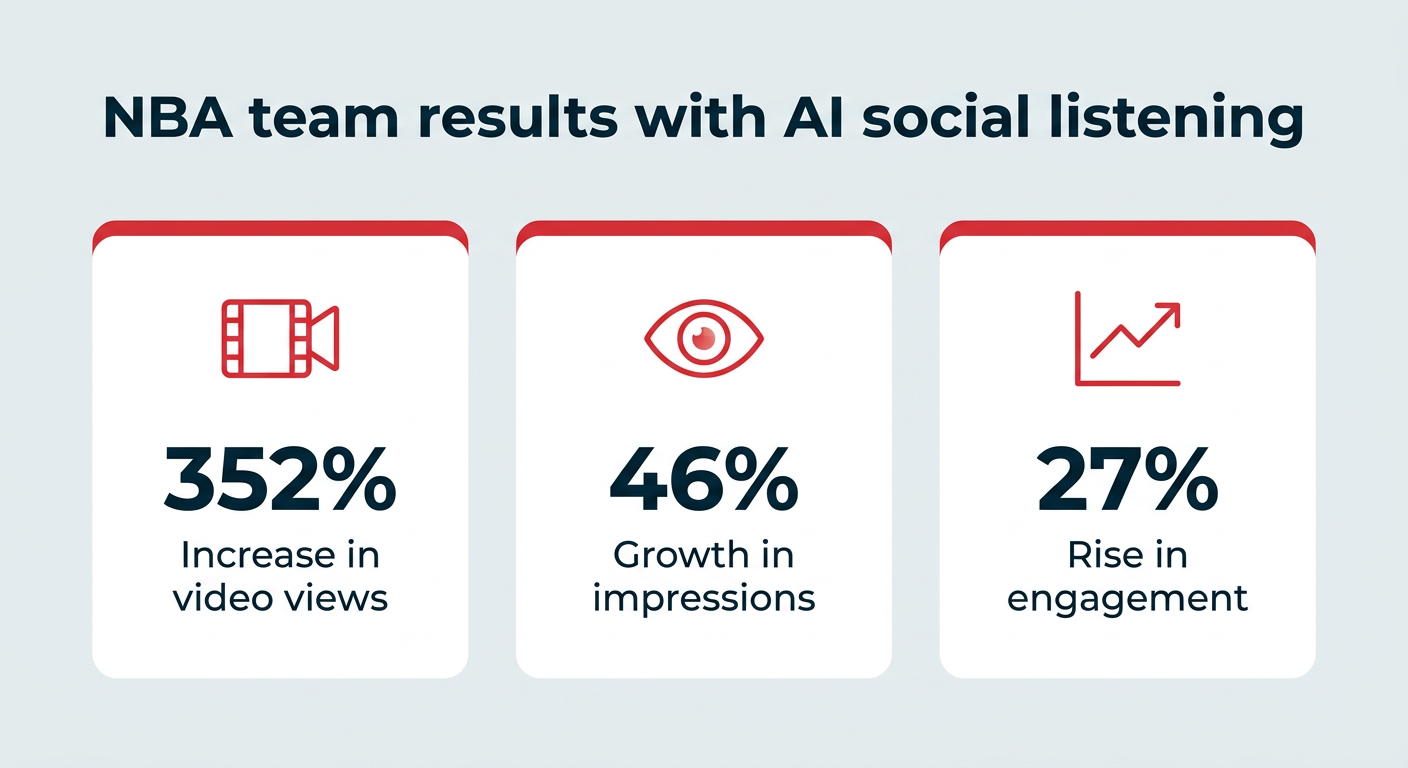
Sentiment analysis helped the team pinpoint nine key emotional drivers that resonated most with fans. The team then used these insights to shape a more collaborative approach to content that would keep target audiences invested before, during, and after basketball season.
Competitor analysis reporting also benchmarked their performance against other teams, convincing leadership to fund a new hire. Engagement rose 27% with fewer, smarter posts.

In other words, AI reporting leads to more informed decision-making, strategy, and results.

Brand mentions, trending topics, and sentiment at your fingertips. Enhance your social strategy with the insights that matter.
Start your free trialHow do you measure AI social listening success?
You measure AI social listening success by tracking a small set of metrics that connect conversation data to business outcomes, then reporting on them consistently. Mention volume alone won’t convince a CFO. What moves the conversation is showing which decisions your listening data shaped, and what happened next.
Here are the metrics enterprise teams should track:
- Share of voice: Your percentage of industry conversation versus competitors. Track it monthly so you can tie movement to specific campaigns or launches.
- Sentiment trend over time: Not a single score, but the direction of travel. A steady climb in positive sentiment after a product fix is a clear, reportable win.
- Mention volume and anomaly frequency: Baseline volume plus how often your tools flag genuine spikes. This tells you whether your queries are tuned or just noisy.
- Time to detection and response: How long between an issue appearing online and your team acting on it. This is the number that justifies alerting investment.
- Campaign-attributed insights: The number of campaigns, messages, or product changes informed by listening data, and their performance against a baseline.
- Executive reporting cadence: How reliably listening insights reach leadership. Monthly or quarterly briefs keep social visible in planning conversations.
To make the business case easier, map each metric to the outcome it supports:
Metric | Business outcome it supports |
|---|---|
Share of voice | Brand awareness and competitive positioning |
Sentiment trend | Brand health and customer satisfaction |
Time to detection and response | Reduced reputational and revenue risk |
Campaign-attributed insights | Marketing efficiency and content ROI |
Anomaly frequency | Operational readiness and team focus |
Pick three or four of these to start, set a baseline in your first month, and report on the same set every quarter. Consistency is what turns listening from a monitoring exercise into a measurable program.
What are the best AI social listening tools for 2026?
The best social listening tools combine broad data coverage with smart analysis, helping you turn online chatter into strategy. Below, we compare the top eight AI social listening tools for 2026, then break down what makes each one stand out.
AI social listening tools comparison
Tool | Key AI capabilities | Channels monitored | Best for |
|---|---|---|---|
Hootsuite Social OS (Lumen) | Sentiment and emotion detection, visual and audio listening, AI Query Builder, predictive crisis detection, cited AI answers, governed workflows | A wide range of social networks, plus websites, blogs, forums, videos, news, and review sites | Teams that want enterprise listening connected to publishing, engagement, and analytics |
Brandwatch | OpenAI-powered analysis, visual mentions | 100M unique sites, billions of sources | Large-scale consumer research |
Sprinklr | Logo/text detection, unified CX management | 30+ social and digital channels | Brands needing combined CX and listening tools |
Brand24 | Emotion detection, anomaly alerts | Social, news, blogs, podcasts, newsletters, forums | Broad coverage of online conversations |
YouScan | Visual AI (logos, objects, scenes), consumer insights | Social, web, and visual content | Brands needing deep visual intelligence |
Meltwater | AI media intelligence, combined PR and social | Social, news, print, broadcast | Organizations needing PR and social intelligence together |
Mention | Real-time alerting, sentiment scoring, competitive tracking | Social, web, news, and blogs | Mid-market teams wanting fast, lightweight monitoring |
Sprout Social | Audience segmentation, predictive analytics | Major social networks and the web | Small teams and beginners |
1. Hootsuite Social OS (Lumen)
Lumen is the integrated insights and listening app inside Hootsuite Social OS, so AI-powered listening sits alongside publishing, engagement, and analytics rather than in a separate tool.
Use Quick Search to discover trending hashtags, brands, and events anywhere in the world, or dive deeper for personalized insights on your brand. You can track what people are saying about you, your top competitors, and your products.
The powerful AI Query Builder lets you optimize those searches effortlessly, turning basic keywords into smart, targeted queries. No Boolean expertise required.
You can also analyze things like:
- Key metrics: Are more people talking about you this week? What’s the vibe of their posts? Lumen doesn’t just track what people are saying, it uses enhanced sentiment analysis to tell you how they really feel.
- Top themes: How are people talking about you? What are the most popular positive and negative posts about? Which other conversations are you showing up in?
- Results: Ready to get into specifics? The results tab will show you a selection of popular posts related to your search terms, and you can filter by sentiment, channel, and more.
At the enterprise end, coverage spans a wide range of social networks (including emerging networks like Bluesky) and millions of websites globally, including blogs, forums, videos, news sites, and review sites. You can also dig back into several years of historical data.
Text-based mentions are only part of the picture. Lumen can listen visually, tracking any time your brand, logo, or product appears in images, videos, memes, or GIFs. It also monitors audio content in videos and podcasts, so spoken mentions don’t slip past you.
Using natural language processing, it interprets human emotion, including irony and sarcasm, and turns that into tangible metrics. It also surfaces social influencers with solid engagement, reach, and relevance to your brand.
Governance is built in too. Vigil applies approval and compliance controls across workflows, while Wisdom answers questions about your social data with cited sources rather than unsourced summaries, which matters for regulated teams.
Finally, AI-driven crisis management tools can spot trouble early by paying attention to anomalies in social data, helping brands put out fires quickly.
Teams on standard plans get Lumen Lite, while organizations that need standalone enterprise listening with API access and custom AI models can use Lumen by Talkwalker.

2. Brandwatch
Brandwatch focuses on large-scale, in-depth consumer research (powered by AI, of course). They claim to add 501 million new conversations every day.
It relies on industry-standard OpenAI to search through and analyze 100 million unique sites and billions of sources. Like other AI social listening tools, Brandwatch also uses AI to identify “visual mentions” like objects, words, and logos in images.
That range of sources makes Brandwatch a solid option for brands in need of broad consumer research.

Source: Brandwatch
3. Sprinklr
Sprinklr layers AI-powered social listening into its broader customer experience management platform. This makes it a strong option for brands that also need tools for call center operations and live chat support, for example.
Sprinklr monitors 30+ social and digital channels in real time, including news sites, Reddit, blogs, websites, forums, podcasts, videos, WordPress, and even reviews and classifieds.
Using AI, Sprinklr can also detect logos and text in GIFs, images, videos, and other media formats for a wider understanding of the conversation.

Source: Sprinklr
4. Brand24
Brand24 provides AI-powered social media listening across all major social media platforms, including Facebook, X, Instagram, YouTube, TikTok, Telegram, Twitch, Reddit, and Quora. It can also “listen” to blogs, news and review sites, podcasts, newsletters, and forums.
Overall, Brand24 monitors a broad range of online sources in real time. This breadth makes it an option for brands that need blanket coverage of online conversations, and who have the budget to pay for it.
While standard listening tools can categorize customer sentiment as positive or negative, Brand24 can sense specific emotions, like sadness, happiness, or anger.
Brand24 harnesses AI to track trends and flag anomalies. It also lets you set a range of customer notifications to catch spikes in mentions, key events, or important changes in the sentiment of the conversations around your brand.

Source: Brand24
5. YouScan
YouScan stands out for its visual AI, making it a strong pick for brands that care about how their products and logos show up in images, not just text. Its image recognition can detect logos, objects, scenes, and even how products are being used in real-world photos.
Beyond visuals, YouScan monitors a broad range of online sources and applies AI to surface consumer insights, sentiment, and emerging trends. This makes it a good fit for brands that want deep visual intelligence alongside traditional text-based listening.
6. Meltwater
Meltwater combines media monitoring with AI-powered social listening, giving brands a single view of their presence across social, news, print, and broadcast. This broad coverage makes it especially useful for teams managing both PR and social media intelligence.
Its AI helps analyze sentiment, track share of voice, and build enterprise-grade reports. For organizations that need to connect earned media coverage with social conversation, Meltwater offers a comprehensive option.
7. Mention
Mention is a lighter-weight monitoring platform that tracks brand mentions across social networks, news sites, blogs, and the wider web, with AI applied to sentiment scoring and alerting.
Its strength is speed rather than depth. Real-time alerts, competitive tracking, and simple reporting make it a practical pick for mid-market teams that want to know when conversation spikes without staffing an insights function.
If your needs run to multimedia listening, historical data, or governed enterprise workflows, you’ll likely outgrow it. But for straightforward brand and competitor monitoring, it does the job without a long onboarding.
8. Sprout Social
Sprout‘s basic social media management platform can be a good fit for small teams and beginners.
Sprout monitors Facebook, X, Instagram, Reddit, YouTube, Tumblr, and the web to track your keywords, hashtags, and brand mentions, including in multimedia content.
Sprout Social’s AI can automatically segment your audiences into separate personas based on their interests, activities, and engagement patterns.
To make benchmarking easier, Sprout’s AI compares your social media performance, including share of voice (SOV), with your competitors.
Finally, Sprout’s predictive analytics can anticipate potential problems based on historical patterns and trends.

Source: Sprout Social
What are the common challenges of AI social listening?
AI social listening comes with four core challenges: deciding what information matters, correctly interpreting how people really feel, turning massive amounts of data into usable insights, and trusting that the AI’s output is accurate and traceable.
Below, we explore these challenges, along with how modern solutions are designed to address them.
1. Filtering out irrelevant data
Social media is a firehose of data. With 5.75 billion social media users in 2026, millions of posts flood in daily, and not all are relevant.
Without smart filtering, marketers can end up buried in posts that have nothing to do with their brand, industry, or goals. A query for “Apple,” for instance, returns thousands of fruit and recipe posts alongside genuine tech conversation. That makes it harder to spot real insights.
Advanced AI social listening tools solve this by using machine learning to refine searches fast. They prioritize what matters most (your brand, competitors, or industry keywords) and deliver actionable insights without the clutter.
2. Understanding context and sentiment
Human language is messy, and that can confuse AI systems.
Sarcasm, slang, emojis, and jokes often change the meaning of a message. For example, a phrase like “This is sick!” could mean excitement, not frustration. When tools miss context, sentiment analysis can miss the mark.
Modern AI tools counter this with natural language processing (NLP) trained on a wide range of language styles. This helps them better understand tone and meaning, correctly labeling posts as positive, negative, or neutral.
Some tools can even detect emotions like joy, anger, or disappointment, helping you see the full picture.
3. Managing high volumes of unstructured data
The sheer volume of online conversations can overwhelm systems, especially when pulling from dozens of platforms. Without robust integration, insights stay shallow.
Cross-platform normalization is part of the problem. A Reddit thread, a TikTok comment, and a review site post all structure data differently, so tools have to standardize them before any comparison holds up.
The best AI solutions aggregate data from social networks, blogs, and beyond, cleaning out duplicates and normalizing results. This comprehensive approach, powered by connected systems like Hootsuite’s, turns chaos into clear, usable trends.
4. Ensuring AI accuracy and traceability
As more listening tools layer large language models on top of social data, accuracy becomes a governance question, not just a technical one.
The risk is straightforward: a model can produce a confident-sounding summary that isn’t supported by the underlying posts. If that summary ends up in a leadership deck or a regulated communication, the consequences are real.
The fix is grounding. Look for tools that tie every AI-generated insight back to the specific mentions it came from, so an analyst can click through and verify. In Hootsuite Social OS, Wisdom answers questions with cited sources, and Vigil applies approval and audit controls, which gives compliance teams a record of what was generated and who approved it.
By tackling these challenges, AI social listening becomes a genuine advantage for marketers, setting the stage for the right tools to shine.
How do you choose the right AI social listening platform?
Choosing the right AI social listening platform comes down to matching a tool’s capabilities to your organization’s goals, scale, and tech stack. With dozens of options on the market, a clear evaluation framework helps you cut through the noise.
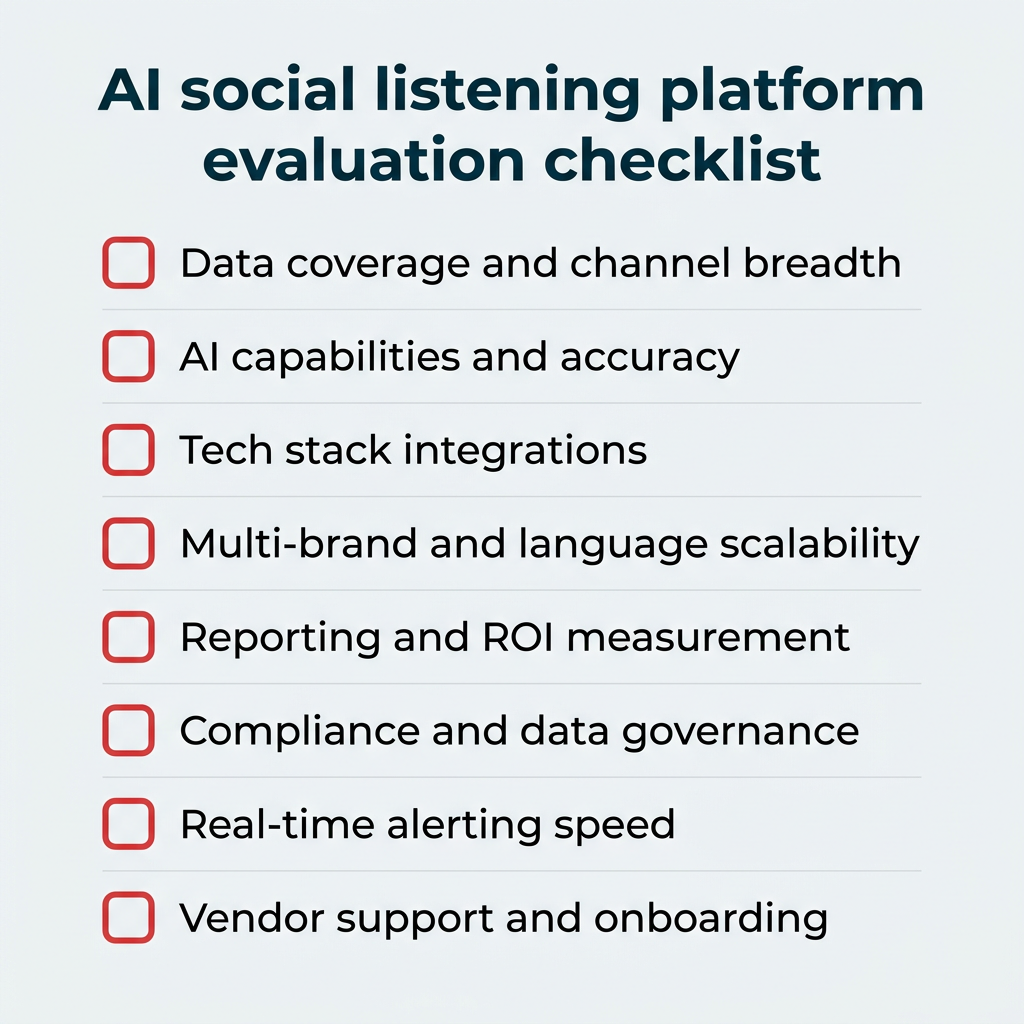
Here are the key criteria enterprise buyers should weigh:
- Data coverage and channel breadth: Look at how many social networks, websites, and media types (text, image, video, audio) the platform monitors, plus how far back its historical data goes.
- AI capabilities: Evaluate the accuracy of its natural language processing, sentiment and emotion detection, visual AI, and predictive analytics. These features separate genuine AI tools from buzzword-heavy ones.
- AI traceability and governance: Confirm that AI-generated insights cite the source mentions behind them, and that the platform offers audit trails and approval controls for regulated workflows.
- Integrations: Make sure the platform connects with your existing tech stack, including your CRM, business intelligence tools, and digital asset management systems.
- Scalability: Consider whether the tool can support multiple brands, regions, and languages as your organization grows.
- Reporting and ROI measurement: Strong reporting helps you prove social value to leadership. Look for customizable dashboards and clear export options.
- Compliance and governance: For regulated industries, confirm the platform meets your data privacy, security, and governance requirements.
- Real-time alerting: Fast alerts are critical for crisis management, so check how quickly the tool flags spikes and sentiment shifts.
- Vendor support and onboarding: Reliable support and structured onboarding help your team get value faster and avoid costly missteps.
The right platform should fit your workflow today and scale with your needs tomorrow. If you want listening connected to publishing, engagement, and analytics in one place, give Hootsuite Social OS a try.
How to get started with AI social listening
Getting started with AI social listening is straightforward when you break it into clear steps. The goal is to move from raw data to insights that shape your listening strategy. Tools like social media intelligence platforms make each step easier to manage.
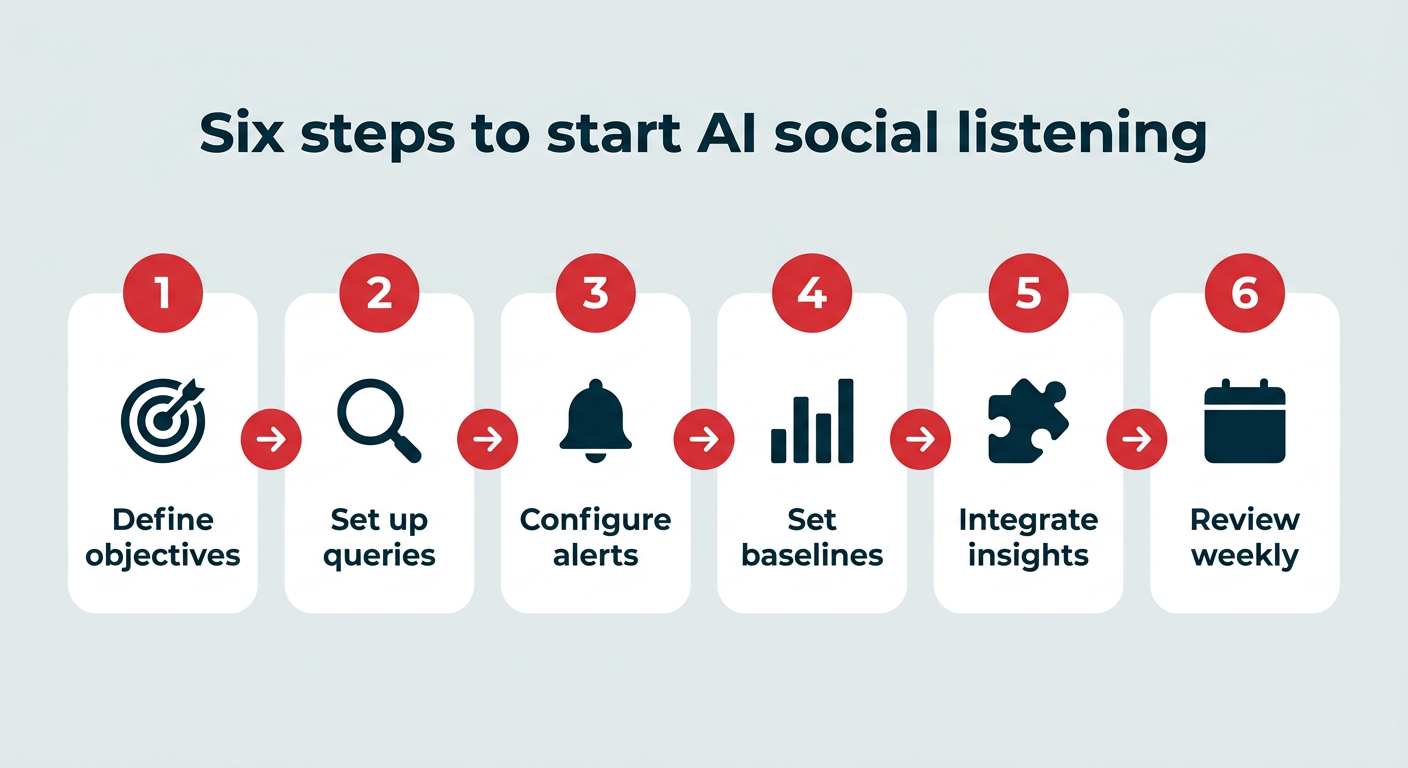
Here’s a simple six-step workflow for enterprise teams:
- Define your listening objectives and key topics. Start by clarifying what you want to learn, whether that’s brand health, competitor activity, or emerging trends. Clear goals keep your data focused and relevant.
- Set up queries and keyword groups. Build searches around your brand, products, competitors, and industry terms. Hootsuite’s AI Query Builder turns plain keywords into precise queries without any technical know-how.
- Configure alerts and reporting cadence. Decide how often you’ll review insights and set real-time alerts for spikes or sentiment shifts. This keeps your team responsive without constant manual checks.
- Analyze initial findings and establish baselines. Review your first wave of data to understand normal mention volumes and sentiment. These baselines make it easier to spot meaningful changes later.
- Integrate insights into your broader marketing strategy. Feed what you learn into campaign planning, content, and competitive positioning. The real value comes when listening informs action across your team.
- Set a weekly listening rhythm. Block 30 minutes each week to review sentiment shifts, top themes, and any flagged anomalies, then note one action to take from it. A standing review beats occasional deep dives, because patterns only show up when you look consistently.
Start small, refine as you go, and let your insights guide bigger decisions over time.
FAQ: AI social media listening
What is AI social listening, and how does it work?
How does AI improve social listening and brand monitoring?
What are common use cases for AI social listening in marketing and customer insights?
What is an example of AI social listening in action?
How accurate is AI social listening compared to traditional methods?
How do you measure the ROI of AI social listening?
What are the best AI social listening tools for enterprises?
Can you use AI for social listening?
Can ChatGPT do social listening?
What is the difference between social listening and social monitoring?
How much does AI social listening cost?
Save time managing your social media marketing strategy with Hootsuite. Publish and schedule posts, find relevant conversions, measure results, and more â all from one dashboard. Try it free today.
With files from Liz Stanton.
The post AI social listening in 2026: How it works and top tools appeared first on Social Media Marketing & Management Dashboard.
* This article was originally published here


No comments:
Post a Comment