Wednesday, November 4, 2026

Facebook ad tools: 14 best picks for 2026

Key takeaways

  1. The best Facebook ad tools in 2026 pair AI-powered optimization with cross-channel reporting so you get more out of every dollar of ad spend.
  2. Meta’s Meta Advantage+ features handle much of the heavy lifting for targeting and creative, but third-party tools still fill real gaps in reporting, design, and workflow management.
  3. An all-in-one platform like Hootsuite Social OS lets you manage paid and organic content together, so you can measure true social ROI in one place.
  4. Several powerful Facebook ad tools are free, including Meta Ads Manager, Facebook Ad Library, and Canva’s basic plan.

What are Facebook ad tools?

Facebook ad tools are software platforms that help you create, manage, optimize, report on, or scale advertising campaigns across Facebook and the rest of Meta’s apps. Some are native to Meta, like Ads Manager and the Ad Library. Others are third-party Facebook advertising tools that connect through Meta’s API to add capabilities Ads Manager does not cover well on its own.

They matter more in 2026 than they did a few years ago for a few reasons: ad delivery is increasingly automated (Meta’s end-to-end AI campaigns hit a $60 billion annual run rate in 2025), privacy rules have made measurement harder, and most teams now run campaigns across more than one network. Tools help you keep up without adding headcount.

The categories covered in this article:

  • Optimization and AI: Tools that spot opportunities to improve campaigns and automate changes.
  • Reporting: Dashboards that pull Facebook ad data together with your other channels.
  • Copywriting and AI content: Tools that draft and vary your ad copy.
  • Design: Tools for creating and scaling ad creative.
  • Scheduling and automation: Tools that control when and how campaigns run.
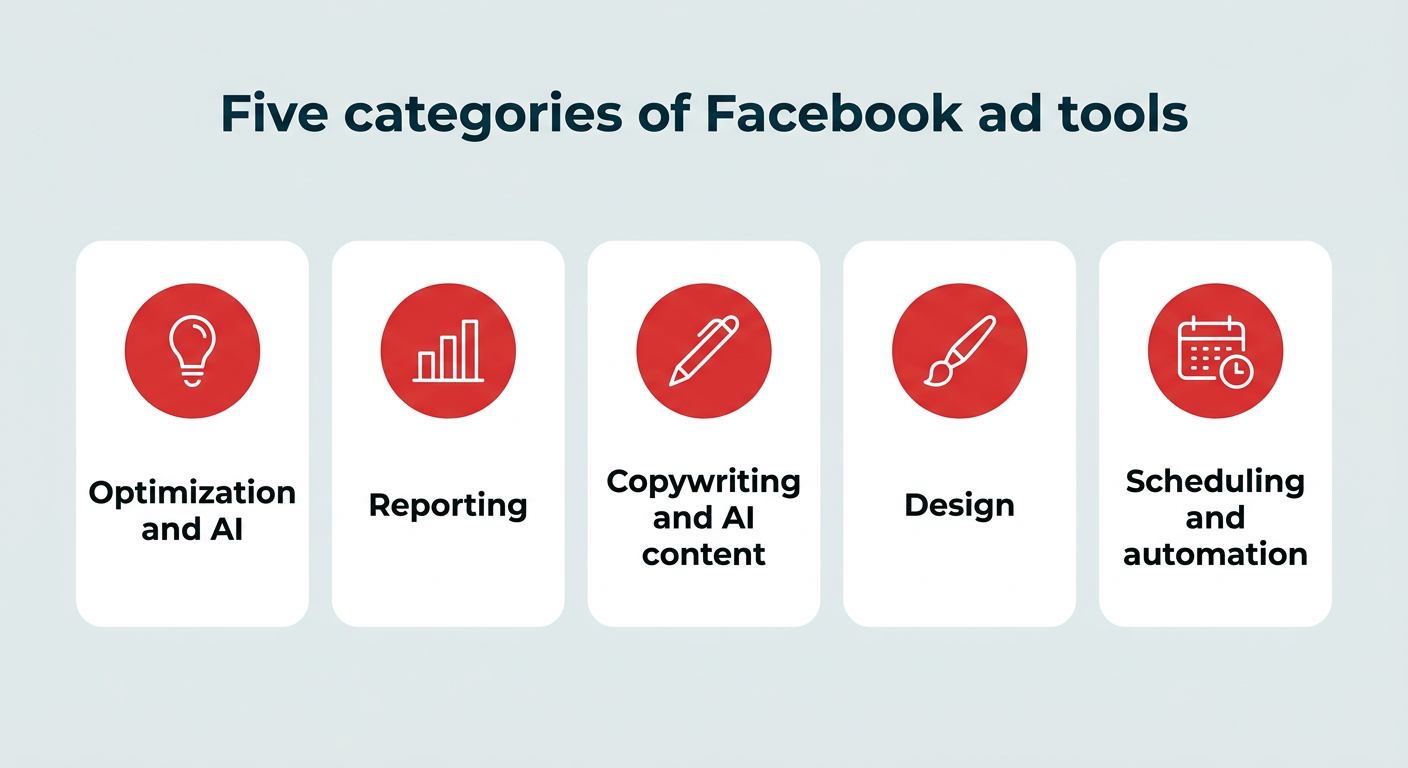
Five categories of Facebook ad tools

You do not need to pay for all of this. Several free Facebook ad tools cover the fundamentals, and you only pay for the cost of your ads.

Bonus: Use our free Facebook Ads budget calculator to figure out exactly how much you need to spend to get the results you want. Let us do the math for you!

How to choose the right Facebook ad tool

Start by naming the problem you are actually trying to solve. Most teams buy too many overlapping tools because they shop by feature list instead of by gap. Work through these five criteria in order:

  1. Define your primary goal. Are you stuck on creative production, campaign optimization, reporting, or managing the whole workflow? One clear goal narrows the list fast.
  2. Match the tool to your budget and team size. Many platforms price by monthly ad spend or by number of users, so a tool that fits a 10-person agency may be overkill for a two-person team.
  3. Check the integrations. Confirm the tool connects to the Meta API, plus any CRM, ecommerce platform, or analytics tool you already rely on.
  4. Evaluate the AI capabilities honestly. Look for AI that does specific work you can verify, like scoring creative or recommending budget shifts, rather than vague automation claims.
  5. Look for cross-channel support. If you advertise on Instagram, LinkedIn, or X as well, a tool that covers all of them saves you from stitching reports together manually.
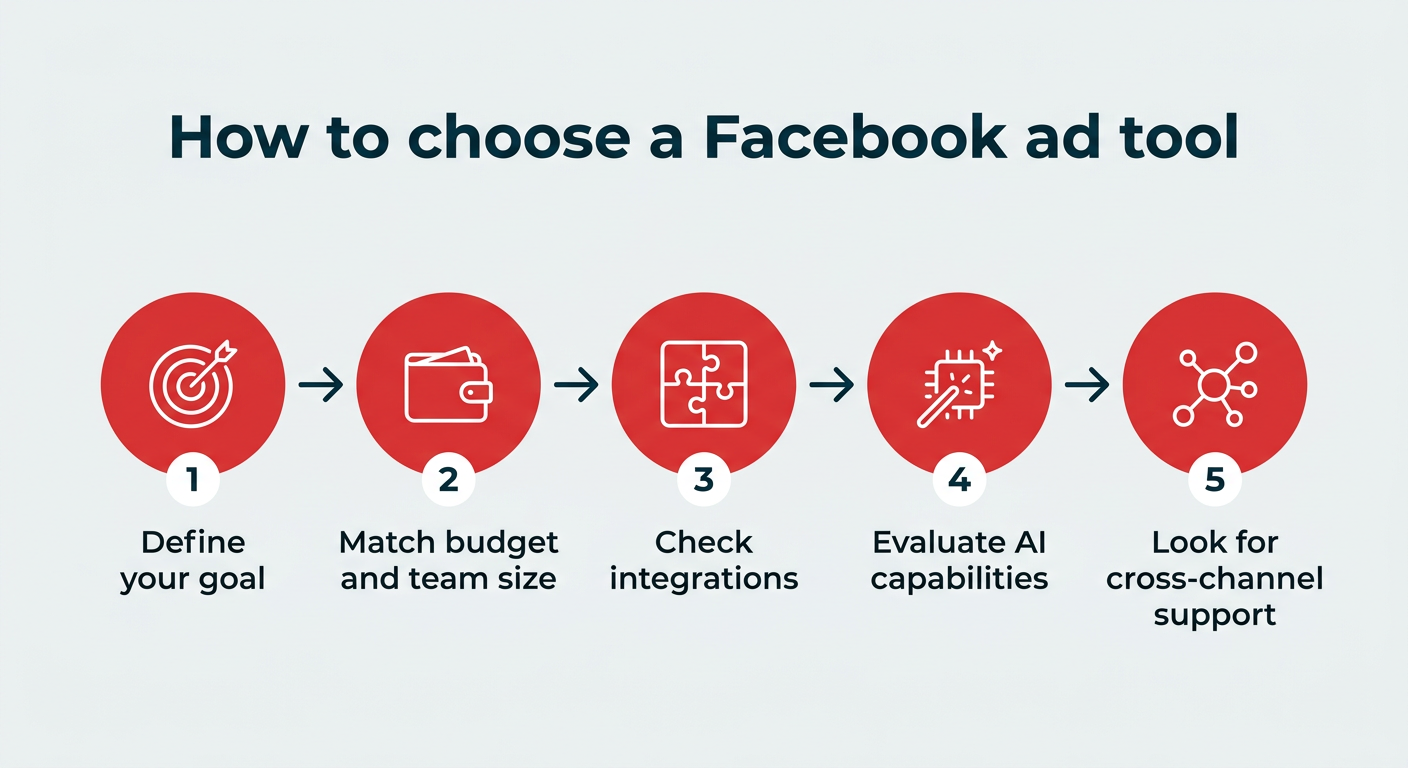
How to choose a Facebook ad tool

One more practical filter: pick tools that reduce the number of tabs your team keeps open. Consolidation is usually worth more than any single feature.

Facebook ad tools comparison table

Tool

Best for

Starting price

Free plan?

Key differentiator

Meta Ads Manager

Everyone running Facebook ads

Free

Yes

Native campaign setup plus Advantage+ AI

Hootsuite Social OS

Managing paid and organic together

$99/user/month

Free trial

Paid and organic in one connected system

Madgicx

Performance optimization

Varies by ad spend

Free trial

AI recommendations tied to your ad account

Customers.ai

Website visitor retargeting

Paid plans only

Free trial

Identifies site visitors for audience building

AdCreative.ai

AI ad creative at volume

$39/month

Free trial

Creative scored before you spend

TapClicks

Multi-source marketing reporting

Contact for pricing

No

Connects channels well beyond social

Funnel

Flexible cross-platform data modeling

$300/month, billed annually

No

Normalizes mismatched field names

Wisdom by Hootsuite

Ad copy and repurposing

Included in Hootsuite plans

Free trial

Repurposes top organic posts into ads

ChatGPT

Brainstorming and copy variations

Free tier

Yes

Fast, flexible general-purpose drafting

Facebook Ad Library

Competitive ad research

Free

Yes

Searchable database of live ads

Canva

Ad design and brand consistency

Free plan

Yes

Templates plus Magic Studio AI tools

Smartly.io

Creative automation at scale

Custom pricing

No

Dynamic creative built for large advertisers

RevealBot

Rule-based campaign automation

Varies by ad spend

No

Highly customizable automation rules

Adzooma

Multi-network campaign management

Paid plans only

Free trial

Opportunity alerts across Meta and Google

Best Facebook ads optimization and AI tools

Facebook ads AI tools identify opportunities to improve ads and make managing your campaigns faster and easier, either through recommendations or AI-powered automation. In 2026, that work is split between Meta’s own automated delivery and third-party platforms that give you more control and visibility.

1. Meta Ads Manager (and Advantage+)

As the official Meta ads management platform, Meta Ads Manager is a one-stop shop for creating, managing, and analyzing ad performance across Meta’s apps: Facebook, Facebook Messenger, Instagram, and WhatsApp.

It is also where you access Meta’s Advantage+ suite. Advantage+ sales and app campaigns let Meta’s AI handle most of the setup and delivery decisions, Advantage+ creative applies automatic enhancements like cropping, text variations, and music to your assets, and Advantage+ audience uses your targeting input as a suggestion rather than a hard limit so delivery can expand where it performs. For many advertisers, these features are now the default starting point rather than an experiment. Meta reported that campaigns using its generative AI features saw an 11% higher click-through rate on average.
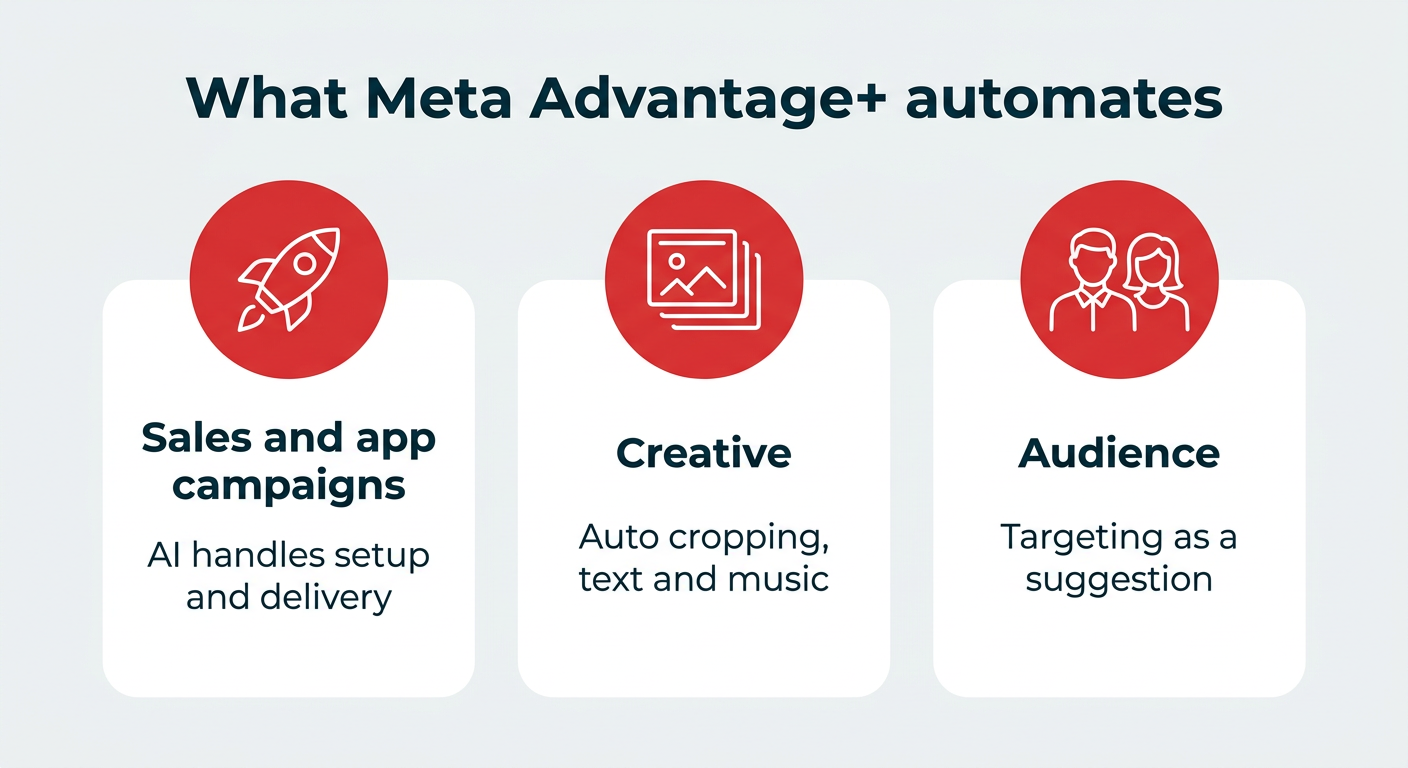
What Meta Advantage+ automates

Best features:

  • Built-in tooltips help you learn the platform and Facebook ad best practices quickly.
  • Easy-to-use interface is great for beginners.
  • Keyboard shortcuts are great for power users.
  • Advantage+ campaign types automate targeting, placement, and creative decisions.
  • Advantage+ creative generates and tests asset variations without extra design work.

Who it’s for: Everyone running Facebook ads will need to use Facebook Ads Manager to some degree. How much depends on which other Facebook ad tools you use in addition.

Pricing: Free; only pay for the cost of your ads.

2. Hootsuite Social OS

Speaking of all-in-one Facebook ad tools, Hootsuite’s social advertising tools give you everything you need to create, manage, optimize, and measure your Facebook, Instagram, LinkedIn, and X ads along with all your organic social media content in one place.

View paid and organic content together in Perch, Hootsuite’s publishing and scheduling app, and manage ad campaigns without needing to leave Hootsuite. You can even create new campaigns and tweak existing budgets and targeting for all campaigns. Perch also schedules your organic posts at your personalized best time to publish, so your audience actually sees them.

Social media managers and execs alike appreciate the ability to measure accurate social media ROI across organic and paid campaigns for all your profiles with Hootsuite analytics. Set up automated reports and never have to dig through multiple platforms’ analytics to cobble together a unified report again. Easy ad scheduling combined with insightful analytics means you can tell how a campaign is or isn’t working and make tweaks, fast.

Along with Lumen for social listening and Wisdom for AI content creation, Hootsuite Social OS helps you efficiently plan, create, and manage everything you do on social media, and makes it easy to report to your boss too.

Best features:

  • Manage and measure all your paid and organic social media content in one easy-to-use dashboard.
  • Create advanced and lookalike audiences using detailed audience insights.
  • Automate your ad workflow by automatically turning organic posts into ads with auto-boosting based on your criteria.
  • See your organic content and ads side-by-side in Perch for full visibility of all your social media marketing efforts.
  • Fast, customizable analytics that show both organic and paid performance and how each is impacting the other.
  • Built-in audience engagement, social listening, collaboration, analytics, and AI tools.

Who it’s for: Anyone who wants to simplify and speed up their social media management, as well as measure the full impact of paid and organic efforts, together.

Pricing: Advertising tools are included with all Hootsuite plans, starting at $99 per user per month for the Standard plan. The Advanced plan is $249 per user per month, and Enterprise pricing is custom.
facebook

Ready to grow your business on Facebook?

3. Madgicx

Madgicx is a powerful Facebook ads AI tool for optimizing everything from ad targeting with first-party data collection to ad performance. The real “magic” of its AI comes from its ability to analyze your Facebook ad account and suggest specific actions to improve performance, instantly.

Madgicx dashboard

Source: Madgicx

Best features:

  • AI-powered assistant suggests personalized actions to improve performance.
  • Improve tracking with first-party data collection.

Who it’s for: Organizations already running Facebook ad campaigns wanting to take ad performance to the next level.

Pricing: Paid plans only, with a $0 free trial available and pricing that scales according to your average monthly ad spend. Check Madgicx’s site for current tiers.

4. Customers.ai

Customers.ai helps you build retargeting audiences from your website visitors. It uses AI to identify visitors so you can sync warmer audiences into Meta, and the platform positions its identity resolution as privacy-compliant. Verify how it handles consent and data in your own markets before you connect it, since privacy requirements vary by region and continue to shift.

Customers.ai dashboard

Source: Customers.ai

Best features:

  • Automatically syncs your audience with Meta to keep your Facebook ad campaigns current.
  • Works alongside the official Meta Pixel to fill in visitor data gaps.
  • Identifies the same user across platforms and devices.

Who it’s for: Experienced Facebook advertisers who want to test improving conversions with AI tools, and who have a clear process for reviewing data privacy obligations.

Pricing: Paid plans only, with a free trial available (no credit card required). See Customers.ai for current pricing tiers.

5. AdCreative.ai

AdCreative.ai generates Facebook ad visuals and copy from your brand assets, then scores each variation so you can prioritize the creative most likely to perform before you spend anything on it. It is built for teams that need a steady supply of fresh ad assets without a steady supply of designer hours.

Sharp creative example

Best features:

  • Generates dozens of on-brand ad creative variations from a single brief.
  • Predictive scoring ranks creative before launch.
  • Built-in A/B testing support for creative variations.

Who it’s for: Performance marketers and ecommerce teams who burn through creative quickly and need volume without sacrificing brand consistency.

Pricing: Paid plans start at $39 per month, with a 7-day free trial available. Pricing scales by number of brands and credits.

Best Facebook ads reporting tools

Analytics and reporting Facebook ad tools tell you how a campaign is performing. Accurate reports mean you can check in often and make tweaks, if needed, before a campaign is over, maximizing your ad spend. Meta’s native reporting covers Facebook well, but these tools help when you need Facebook data sitting next to everything else you run.

6. TapClicks

If you track analytics and data from multiple sources, such as Facebook ad performance, website analytics, and sales data, TapClicks can help you streamline reporting inside one tool. Track KPIs you care most about in custom dashboards and easily export reports with custom branding and templates.

TapClicks dashboard

Source: TapClicks

Best features:

  • Connect multiple data sources to measure cross-channel analytics in one platform.
  • Not limited to Facebook ad analytics; add search, web, radio, TV, and other data sources.

Who it’s for: Brands who want full-scale tracking across all touchpoints.

Pricing: TapClicks does not publish rates; contact their team for pricing, with higher tiers available for advanced analytics.

7. Funnel

Funnel is another great Facebook ads reporting tool for multiple platforms. By connecting and viewing analytics from all your sources together, Funnel makes it easy to see trends in your data and how your campaigns are driving performance across channels.

Funnel dashboard

Source: Funnel

Best features:

  • Their AI matches up field names that may vary between platforms, ensuring all clicks and costs are recorded accurately, no matter what they’re called on each platform.
  • Endless ways to model, export, and update reports by currency, metric, location, and more without damaging the original data.

Who it’s for: Organizations wanting insightful, cross-platform analytics with flexible reporting options.

Pricing: There is no free plan. The Starter plan begins at $300 per month, billed annually, with higher Business tiers at $600 per month for larger data volumes; check Funnel’s site for current trial availability.

Best Facebook ads copywriting and AI content tools

Repurpose top-performing organic content into effective ads with copywriting and Facebook ads AI tools that help you brainstorm, plan, and draft campaigns. The tools below are the fastest way to get from a blank campaign brief to a set of testable ad variations.

8. Wisdom by Hootsuite

When it comes to repurposing your top social content into effective ads, Wisdom, the AI layer inside Hootsuite Social OS, saves tons of time. Write Facebook ads (and organic posts) from scratch, or based on an existing post or external link, like a blog post or product page. After Wisdom drafts it, you can edit or schedule the post with only a few clicks.

Besides writing copy, Wisdom is also a strong ad copy brainstorming and trend discovery tool, and a place to see your top performing posts for inspiration.

Wisdom goes beyond general-purpose generative AI apps because it draws on years of our first-hand expertise as a leading social media management platform to generate social content that actually achieves your goals.

Best features:

  • Instant Facebook ad copy and social media content that aligns with your brand.
  • Generate ad copy based on a link, such as a product page.
  • Brainstorm ad ideas and generate options in minutes, to use as-is or as inspiration.
  • Discover your top performing posts and repurpose them into new posts or ads.
  • Schedule Wisdom content in a few clicks inside Hootsuite.

Who it’s for: Social media managers who enjoy saving time and having access to all the social media tools they need to grow in one easy-to-use dashboard.

Pricing: Wisdom is included in all Hootsuite plans.

9. ChatGPT

Perhaps the best known generative AI tool, ChatGPT is a conversational assistant that understands text prompts and delivers relevant answers. When it comes to Facebook ads AI tools, ChatGPT can help you brainstorm ideas, write copy, repurpose one ad into several variations, and more.

ChatGPT interface

Source: OpenAI

Best features:

  • Brainstorm creative Facebook ad ideas.
  • Easy to use and a good entry point for exploring generative AI for ad copy.

Who it’s for: Marketers wanting to brainstorm Facebook ad ideas or quickly generate test copy variations.

Pricing: There is a free tier with limited use of OpenAI’s current models. Paid individual and team plans unlock higher limits and more advanced models; check OpenAI for current pricing.

Best Facebook ads design tools

Keep your brand consistent across channels with facebook ad design tools for editing, templates, and collaboration that allow everyone on your team, regardless of design skill, to produce high quality content. If you also need source imagery, these free stock photo sites pair well with the design tools below.

10. Facebook Ad Library

Wondering what ads your competition is running? Stuck in a rut and need inspiration from your favorite brands? Facebook’s Ad Library is a searchable database of every ad currently running on Facebook, plus social issue and election ads that have run in the past.

You can search ads by country, category, and keyword, such as a topic or brand name.

Meta Ad Library search results

Source: Facebook

Best features:

  • Conduct competitive analysis of your competitors’ ads and ensure yours will stand out against them.
  • Filter by Meta platform, media type, language, and more.
  • Save searches for regular research.

Who it’s for: Anyone who needs inspiration for their next campaign, or conducting competitive research for their social media audit.

Pricing: Free.

11. Canva

A staple in the design world for social media managers and businesses of all sizes, Canva is an excellent Facebook ads design tool for both individuals and teams. Canva makes creating Facebook ads easier and faster, with a shared online workspace to store branded templates so all your ad creative stays consistent.

Its Magic Studio AI features are the biggest reason to revisit Canva if you have not in a while. With 260 million monthly users in 2025, most teams already have an account to build on. You can generate images from a text prompt, remove or replace backgrounds, and use Magic Resize to adapt one ad design into every Facebook and Instagram placement size in a few clicks. Starting from a set of Facebook templates keeps the output on brand.

Canva design interface

Source: Canva

Best features:

  • Anyone can easily create ads and social content for Facebook and beyond.
  • Magic Studio AI tools for image generation and instant ad resizing.
  • Directly integrates with Hootsuite, so you can create and add designs from your Canva account to social posts as you schedule them.

Who it’s for: Individuals or teams wanting to maintain brand consistency with creative assets.

Pricing: There is a free plan. Paid plans are available for individuals and teams; see Canva for current rates.

12. Smartly.io

Smartly.io is a creative automation platform built for advertisers running Meta campaigns at scale. It handles dynamic creative optimization, automated creative testing, and templated production so one concept can become hundreds of localized or audience-specific variations without manual rework.

Best features:

  • Dynamic creative optimization across Facebook, Instagram, and other networks.
  • Templated creative production for localization and large catalogs.
  • Automated creative testing tied to performance data.

Who it’s for: Enterprise and high-spend advertisers who need creative volume across markets and placements.

Pricing: Custom pricing based on ad spend and requirements.

Best Facebook ads scheduling and automation tools

Smart facebook ads scheduling tools help your ads find the right audience and speed up campaign creation. They are also where you offload the repetitive work of starting, pausing, and adjusting campaigns based on rules you set once.

13. RevealBot

RevealBot allows you to set up rules to automate campaign scheduling, such as running a specific campaign when the weather hits 20 degrees in a specific area. Plus, upload and schedule bulk ads, including images and videos.

RevealBot automation rules

Source: RevealBot

Best features:

  • Highly customizable automation rules to start/stop campaigns based on your criteria.
  • Ability to bulk schedule.

Who it’s for: Established Facebook advertisers who want to automate more of their ads management workflow.

Pricing: Paid plans only, with pricing that varies based on monthly ad spend. Check RevealBot’s site for current tiers.

14. Adzooma

Adzooma manages and automates campaigns across Facebook, Google, and Microsoft Ads from one place. Its opportunity alerts flag specific changes worth making, and you can set automation rules to adjust budgets or pause underperformers without logging into each network.

Best features:

  • Opportunity alerts with one-click fixes across multiple ad networks.
  • Automation rules for budget and status changes.
  • Scheduled performance reports for clients or stakeholders.

Who it’s for: Small teams and agencies managing Facebook ads alongside search campaigns who want fewer platforms to check daily.

Pricing: Paid plans only, with a free trial available. Check Adzooma’s site for current plans and rates.

Manage your Facebook ads with Hootsuite Social OS

Most of the tools above solve one slice of the problem. Hootsuite Social OS connects the whole workflow, so your Facebook ads do not live in a separate system from the organic content they support.

Perch handles publishing and scheduling for both paid and organic, Lumen brings listening and analytics together so you can see what is actually driving results, and Wisdom drafts and repurposes content across campaigns. Governed workflows and approvals keep larger teams aligned without slowing anyone down.

The practical benefit is simple: one view of cross-channel reporting, fewer tabs, and a clearer answer when someone asks what your social spend returned.

FAQ: Facebook ad tools

What are Facebook ad tools?

Facebook ad tools are software platforms that help you create, manage, optimize, and report on advertising campaigns across Facebook and other Meta platforms. Some are native, like Meta Ads Manager, and others are third-party tools that connect through Meta’s API.

What types of Facebook ads are there?

Facebook offers several ad types, including image ads, video ads, carousel ads, collection ads, lead ads, and Advantage+ shopping ads, each designed for different campaign objectives. The format you choose should follow the objective, not the other way around.

How do I run Facebook ads for free?

You cannot run Facebook ads without a budget, but you can use free tools like Meta Ads Manager, Facebook Ad Library, and Canva’s free plan to create and manage campaigns without additional software costs. That means your entire budget goes to media rather than tooling.

How do I check what ads a Facebook page is running?

You can check what ads a Facebook page is running by searching for the brand or page name in Meta’s Ad Library at facebook.com/ads/library. The results show active ads, the platforms they run on, and when they started.

What is Meta Advantage+ and how does it work?

Meta Advantage+ is a suite of AI-powered ad tools built into Meta Ads Manager that automates audience targeting, creative optimization, and campaign setup to improve performance with less manual effort. You supply objectives, budget, and assets, and Meta’s system handles most delivery decisions from there.

How much do Facebook ad tools cost?

Facebook ad tool pricing ranges from free, in the case of Meta Ads Manager and the Facebook Ad Library, to several hundred dollars a month for third-party platforms. Costs typically scale with features, ad spend volume, and team size.

Can I manage Facebook ads and organic posts in the same tool?

Yes, you can manage Facebook ads and organic posts in the same tool. Platforms like Hootsuite Social OS put paid campaigns alongside organic content in a single workspace, so you can see how each influences the other.

What is the best AI tool for Facebook ads?

The best AI tool for Facebook ads depends on your goal. Meta Advantage+ handles automated targeting and creative natively, Madgicx offers AI-driven performance optimization, and Wisdom by Hootsuite generates ad copy and repurposes top organic content into ads.

How do I track Facebook ad performance?

You can track Facebook ad performance through Meta Ads Manager’s built-in reporting, or use third-party tools like Hootsuite, TapClicks, or Funnel for cross-channel dashboards and automated reports. Third-party tools help most when Facebook is one of several channels you need to report on together.

Do I need a third-party tool for Facebook ads?

You do not need a third-party tool for Facebook ads, since Meta Ads Manager covers campaign creation and reporting. Third-party tools earn their place by adding cross-channel analytics, AI-powered optimization, creative automation, and unified organic-plus-paid workflow management.

Save time managing your social media marketing strategy with Hootsuite. Publish and schedule posts, find relevant conversions, measure results, and more â all from one dashboard. Try it free today.

The post Facebook ad tools: 14 best picks for 2026 appeared first on Social Media Marketing & Management Dashboard.


* This article was originally published here

Tuesday, November 3, 2026

Social media search engines: How to use them in 2026

Key takeaways

  1. A social media search engine is any social platform where people actively type queries to find information. TikTok, Instagram, LinkedIn, YouTube, Pinterest, and Reddit all function this way.
  2. Social SEO helps your brand appear in search results through keywords, location tags, alt text, and engagement signals.
  3. Each platform ranks search results differently, so tailor your approach to the two or three platforms your audience actually uses.
  4. Social listening tools reveal what people search for and say about your brand.

What is a social media search engine?

A social media search engine is any social platform people use to look things up by typing a query into a search box, rather than scrolling whatever the feed hands them.

This is a more active method of seeking out content than simply letting the algorithms deliver what they think you want to see. More than that, it’s a new way of thinking about navigating the vast quantities of information available online.

The behavior is well established. Pew Research Center found that 90% of U.S. teens use YouTube and 63% use TikTok, which makes social platforms a routine entry point for information, with one-in-five teens saying they are on TikTok and YouTube almost constantly. As Gen Alpha moves into the teen years, they arrive with the same expectations.

The platforms have leaned into it. TikTok, Instagram, and YouTube have all built out AI-assisted search features: suggested queries inside comment threads, keyword search that reaches beyond hashtags, and results summarized or grouped by topic. Search is no longer a secondary feature on these apps. It is a core surface.

Gens Z and Alpha want curated, easily scrollable results from brands and creators they trust. Social search far outshines traditional search engines like Google and Bing for those who want to discover, evaluate, and save information on mobile using just one thumb.

On the flip side, this means brands need to think beyond the algorithms, and beyond traditional search, to reach new audiences. As social media platforms become social media search engines, marketers need to adjust how they publish and tag everything they post.

Bonus!!!

Download a free social SEO checklist and follow pro tips for Facebook, Instagram, TikTok, YouTube, X (Twitter), and LinkedIn to get your posts seen by more people.

Social media search engines vs. traditional search engines

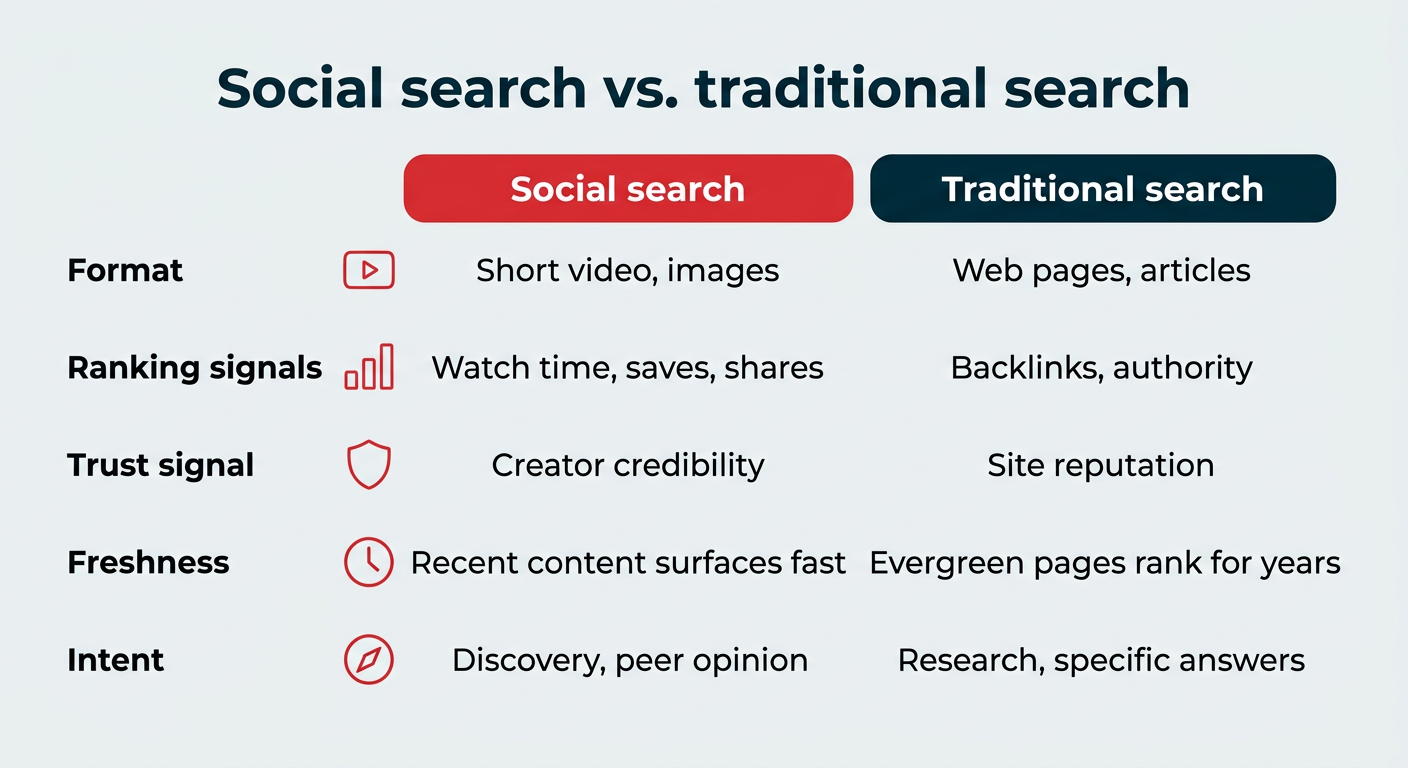
The short answer: social search rewards creators and engagement, while traditional search rewards websites and authority. Both matter, but they surface different kinds of answers.

On Google, a page ranks largely on links, domain authority, and how well it matches a query. On TikTok or Instagram, a post surfaces based on keywords in the caption and on-screen text, how long people watch, how many save or share it, and how closely it matches a user’s past behavior. A brand new account can outrank an established one if the content performs.

Dimension

Social media search engines

Traditional search engines

Dominant format

Short-form video, images, comment threads

Web pages, articles, structured data

Main ranking signals

Keywords, watch time, saves, shares, comments

Backlinks, domain authority, on-page relevance

Trust signal

Creator credibility and social proof

Site reputation and citations

Personalization

Heavy, shaped by individual viewing history

Moderate, shaped by location and history

Freshness bias

Strong, recent content surfaces fast

Mixed, evergreen pages can rank for years

Typical intent

Discovery, inspiration, peer opinion

Research, transactions, specific answers

These two systems also feed each other. Social posts from TikTok, Instagram, Reddit, and LinkedIn are regularly indexed by Google and appear on traditional results pages, which means one strong social post can earn visibility twice. We tested this ourselves in a social search experiment and in a follow-up look at which searches surface social content.

So you do not pick one. Traditional SEO captures people who already know what they want. Social search captures them earlier, while they are still deciding.

Social search vs. traditional search: comparison of format, ranking signals, trust signal, freshness, and intent

How search works on major social platforms

Search mechanics vary a lot between platforms, which is why a single optimization checklist rarely works across all of them. Here is what to know about the big ones, and the one change that matters most on each.

TikTok

TikTok search runs on keywords, not just hashtags. More than 3 billion searches happen daily on the platform, and the app reads captions, on-screen text, audio transcripts, and even comments to understand what a video is about. It also surfaces suggested searches directly under videos and in comment threads, which pushes users into search without them going looking for it.

TikTok also sells search ads, a clear signal of how central the search box has become. If you want to show up, say your keyword out loud in the video, put it on screen, and use it in the caption. Our guide to TikTok SEO covers the mechanics, and the latest TikTok usage data is worth a look if you are still sizing up the audience.

Instagram

Instagram search now works on plain keywords, not only hashtags and account names. Type “sourdough starter” and you get accounts, Reels, and posts, with Reels usually dominating the results.

Explore acts as a second discovery surface, serving content based on what you have engaged with before. Because Instagram reads captions, alt text, and on-screen text, the fastest win is writing captions that describe the content in the words people would actually search. See our Instagram SEO guide for specifics.

LinkedIn

LinkedIn search is built around three things: people, companies, and content. It leans heavily on profile and page fields, so job titles, skills, headlines, and company descriptions carry real weight in whether you appear.

For B2B marketers, this is the platform where search doubles as pipeline. Buyers research vendors and individuals here before taking a call, and filters let them narrow by industry, company size, and role. Fill out every field with the language your buyers use. LinkedIn SEO goes deeper on profile and page optimization.

YouTube, Pinterest, and Reddit

YouTube behaves as much like a search engine as it does a social platform. Titles, descriptions, chapters, and transcripts all influence rankings, and watch time decides whether you stay there.

Pinterest functions as a visual search engine for planning and purchase intent, where boards, pin titles, and descriptions do the heavy lifting. Our breakdown of Pinterest SEO and top keywords is a good starting point.

Reddit has become a search destination in its own right, with more search momentum than any other social network, partly because Google surfaces Reddit threads so prominently for opinion and review queries. Brands cannot optimize threads the way they optimize a profile, but you can monitor relevant subreddits and participate honestly where it makes sense.

Why social media search matters for brands in 2026

Social search shapes whether people find you at all, and it does so earlier in the buying process than Google typically does. With 73% of Gen Zers saying social media is their main source for learning about new products, three things make it worth your attention: it drives discovery, it amplifies word of mouth, and it feeds traditional search results.

It also changes what your content needs to do. A post optimized only for your existing followers reaches your existing followers. A post optimized for search keeps surfacing for months to people who have never heard of you. That is the core argument for building a social SEO practice rather than treating it as a bonus.

How social search drives brand awareness

On a trip to New York, a Gen X marketer chatting with a local Gen Z bartender about what to do in the city received a telling recommendation. First, she said to search TikTok. Then she recommended Summit One Vanderbilt since she was seeing it on her own TikTok For You page on the regular.

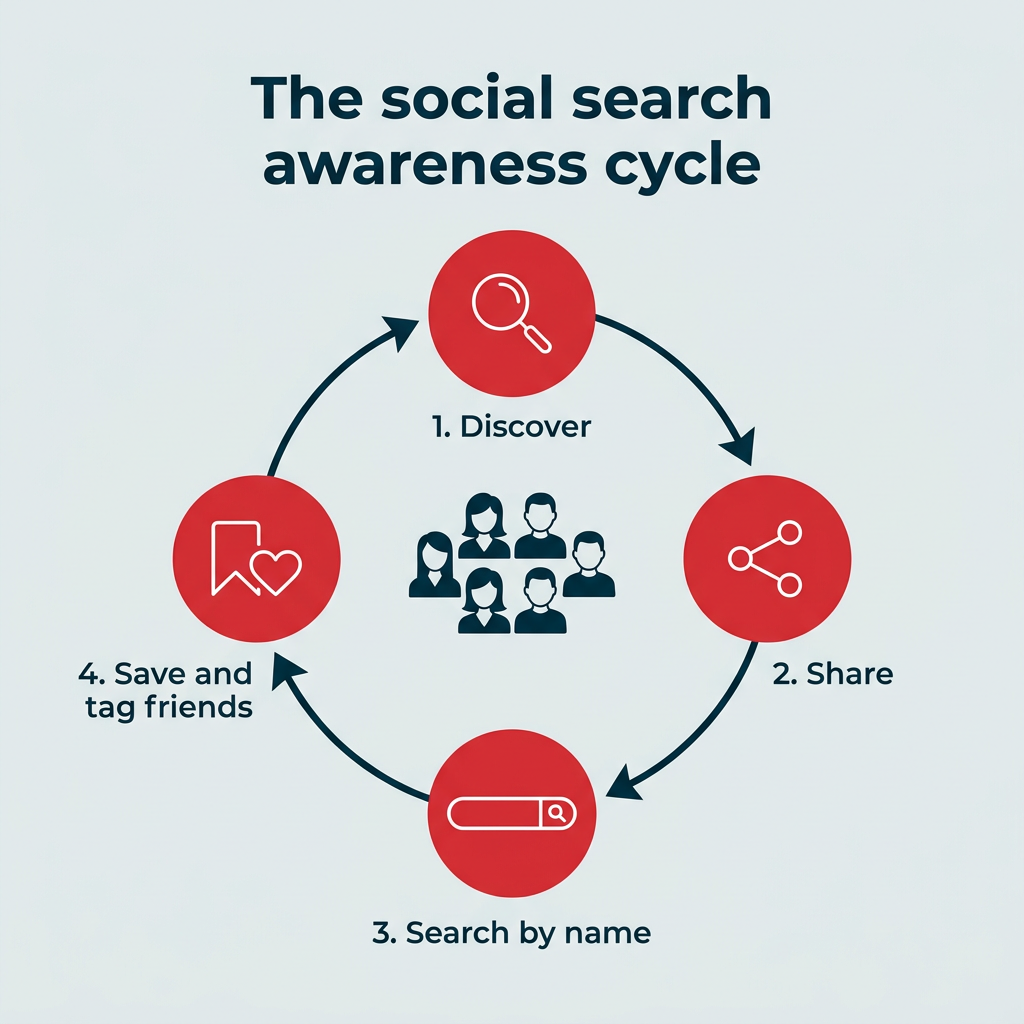
It is one anecdote, but the layers underneath it explain how brand awareness compounds through social search:

Digital natives discover your brand through either social media lookup or algorithm-based content discovery.

    TikTok

    Source: SUMMIT One Vanderbilt on TikTok

    They share that information with other digital natives. But they also share it with others who don’t (yet) think of social platforms as their primary search tool. If they’re into your brand, or you reach out to them for a partnership, they may even start creating their own content about you.

      TikTok

      Source: katecuppy

      Word of mouth drives social media account search for your brand, often by name. Those searches surface content created both by you and by other social users.

        Summit One Vanderbilt search

        Social searchers like and save these posts and tag friends in comments like, “This is the place I was telling you about!” and the cycle begins again.

          8989

          Source: TikTok

          comment

          Social search affects your brand awareness even among people who never use social search themselves. And optimizing for the search function gets your content in front of people who were not already following you.

          The social search awareness cycle: discover, share, search by name, save and tag friends

          TikTok and Instagram content also gets indexed by regular search engines and shows up on traditional results pages, which is why a single well-tagged video can keep earning impressions long after it leaves the feed.

          Summit One Vanderbilt Google results

          Source: Google

          How social search fuels competitive intelligence

          Understanding who the competition is and what they are doing helps you stay ahead. A social media competitive analysis relies on the insights you’ll find through social searching.

          Social search helps you uncover the most relevant competitors in your niche, and regular searches surface new ones as they emerge. Once you know who your top competitors are, you can add them to benchmarking tools like Hootsuite’s analytics to look for opportunities and threats for your business. Standard plans track up to 5 competitors, while Advanced and Enterprise plans track up to 20.

          That same setup surfaces the hashtags and keywords your competitors lean on most. If you’re not already using, monitoring, or regularly searching those terms, that’s an easy gap to close.

          Hootsuite competitive benchmarking

          Zooming out, competitor research through social search tells you what kinds of conversations actually happen on each platform among your target audience and the brands they already love.

          How to monitor brand mentions through social search

          Understanding how people talk about your brand, product, or service on social media is essential. Social media monitoring and listening can give you a goldmine of actionable data.

          Done consistently, social listening tells you:

          • Search terms and hashtags: The exact words people use to look for solutions like yours.
          • Sentiment: Whether mentions skew positive, negative, or neutral, and what shifted when they changed.
          • Communities: The platforms, subreddits, and groups where your audience spends time.
          • Advocates and influencers: The people talking most, and most positively, about you.

          Social search also determines what to include in your broader listening strategy. Think hashtags, keywords, and accounts.

          Each brand has its own audience, and each audience has its favorite social media networks. Social listening helps you understand who you’re trying to reach. This, in turn, guides where you focus your social searches and social SEO.

          Before you start setting up your ongoing social media search tasks, spend some time defining your target market. If you’re targeting Gen Z, you’re most likely to find them on TikTok. If you want to reach women, X may not be your top choice.

          Keep in mind these are overall trends. Social listening and social search help you understand the social behaviors of your specific audience.

          The terms people use are their own kind of market research, and it’s free. They point to the problems your audience is trying to solve, the information they can’t find, and the communities they trust. A skincare brand that keeps seeing “dupe for” alongside its product name has a pricing conversation to address. A software company seeing “how to export from” has a documentation gap. Both are answerable with content.

          Social search also surfaces the people worth partnering with. Those are your potential influencers and brand advocates to reach out to for partnerships or user-generated content (UGC) campaigns.

          How to optimize your content for social search

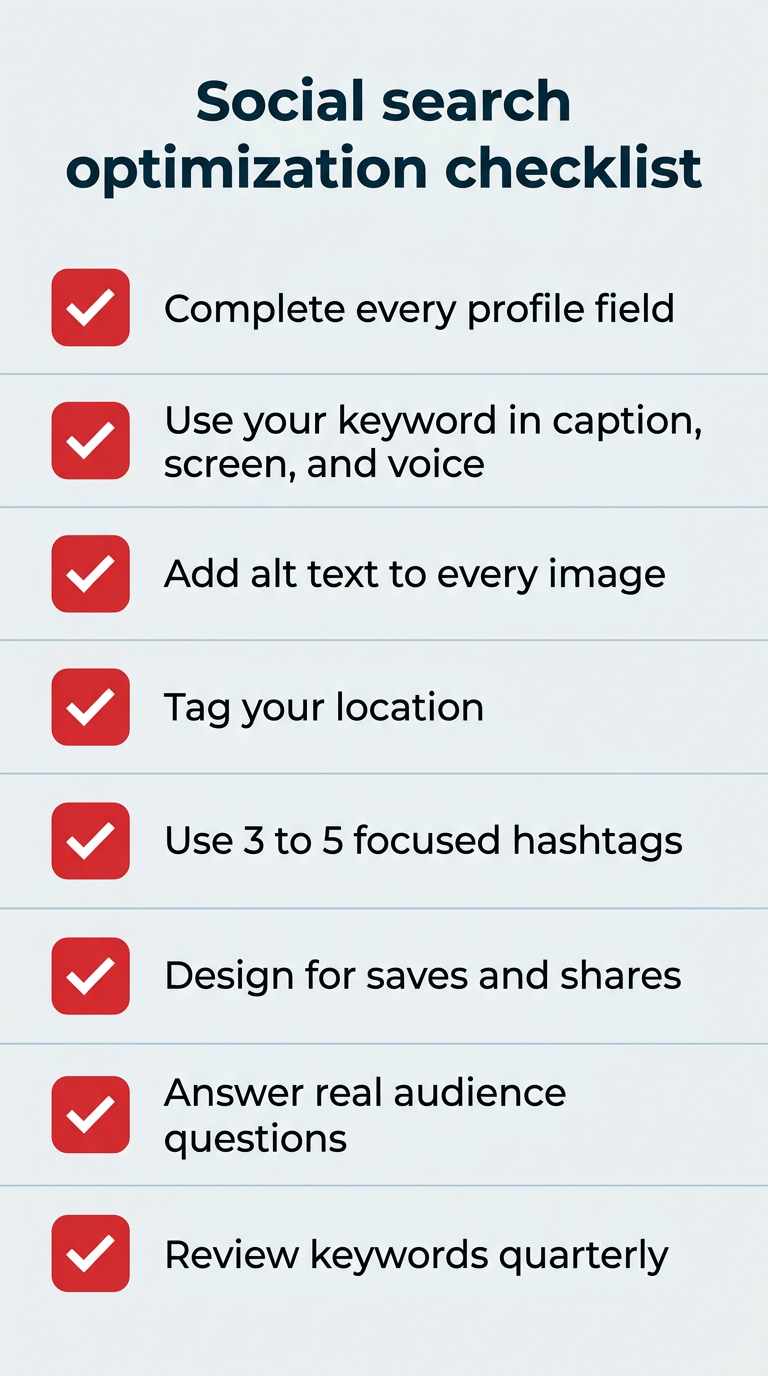
          Though social lookup varies by platform, a handful of universal moves will help your content rise to the top of the results page. Start here:

          1. Fill out every field in your profile with searchable language.
          2. Put your main keyword in the caption, on screen, and in the voiceover.
          3. Add alt text to every image and graphic.
          4. Tag your location when it’s relevant to the search.
          5. Use a small, focused set of hashtags rather than a wall of them.
          6. Design for saves and shares, not just likes.
          7. Answer real questions your audience asks, using their wording.
          8. Review your keyword list quarterly as platform search features change.

          Optimize your profile for search

          Your profile is the one asset that shows up in every brand-name search, so it deserves the most attention. Use relevant, descriptive keywords in your name, handle, bio, About section, and description, anywhere you can. Don’t get spammy, obviously, but make sure that people and algorithms can easily identify you and your niche.

          Complete all available fields, including category, location, and contact options. On LinkedIn, that extends to job titles and skills. Our guide to writing a social media bio has templates if you’re starting from scratch.

          Use keywords naturally in posts and captions

          Using natural-sounding language, include the most relevant keyword in each post and caption. For video, that means three places at once: the caption, the on-screen text, and the spoken audio. Platforms transcribe video, so saying the keyword out loud genuinely helps.

          Pick keywords the way your audience talks, not the way your product team does. “Waterproof hiking boots” beats “all-weather trail footwear system” every time.

          Leverage location tags, hashtags, and engagement signals

          Location tagging is one of the most underused levers in social search. TikTok, Facebook, and Instagram all have robust location-tagging capabilities that surface your content to high-intent searchers who are nearby or planning a trip.

          Alt text is primarily an accessibility aid, but it’s also another opportunity to tell the platforms what your content is about. Write it like a description, not a keyword list.

          Hashtags still help with categorization, but their role has narrowed as keyword search improved. Three to five specific, relevant tags now outperform twenty broad ones. Engagement signals carry more weight: saves, shares, comments, and watch time all tell the platform your content answered the query well. Content that prompts a save is content that keeps ranking.

          Social search optimization checklist with eight steps for ranking in social search

          Best social media search tools for 2026

          No single tool searches every platform well, so most teams pair a listening platform with a free search workaround or two. Here’s how the main options compare.

          Tool

          Coverage

          Key strengths

          Pricing tier

          Best for

          Lumen in Hootsuite Social OS

          Major social networks plus web sources

          Quick Search, sentiment analysis, theme detection

          Included in Hootsuite plans from $99/user/month

          Teams who want search tied to publishing and analytics

          Google advanced search

          Anything indexed by Google

          Boolean operators, site filters, date ranges

          Free

          Ad hoc research and username lookups

          Social Searcher

          Select social networks and web sources (free tier)

          Mentions, hashtags, username search

          Free tier plus paid premium

          Quick cross-platform spot checks

          Lumen by Talkwalker

          Social networks, news, blogs, forums, reviews, podcasts

          Visual and audio listening, historical data, API access

          Enterprise, custom pricing

          Large brands with crisis and global monitoring needs

          1. Lumen in Hootsuite Social OS

          Lumen is the integrated insights and listening app inside Hootsuite Social OS, and every Hootsuite plan includes the essentials you need to get started with social search.

          Use Quick Search to discover trending hashtags, brands, and events anywhere in the world, or dive deeper for personalized insights on your brand.

          You can track what people are saying about you, your top competitors, and your products, with keyword tracking across recent conversations.

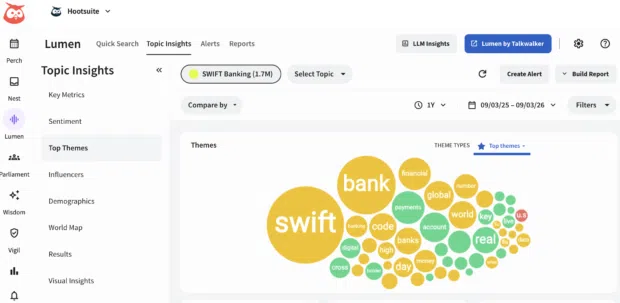
          lumen top themes dashboard

          Plus, you can use Quick Search to analyze things like:

          • Key metrics: Are more people talking about you this week? What’s the vibe of their posts? Lumen doesn’t just track what people are saying, it uses sentiment analysis to tell you how they really feel.
          • Top themes: How are people talking about you? What are the most popular positive and negative posts about? Which other conversations are you showing up in?
          • Results: Ready to get into specifics? The results tab shows you a selection of popular posts related to your search terms, and you can filter by sentiment, social media channel, and more.

          Because Lumen sits inside the same social operating system you publish and report from, what you learn in search can go straight into your content calendar without an export step.

          Meet the Suite

          Understand what matters, decide what to do next, and take action across every social workflow — all from one connected suite.

          work smarter

          2. Google advanced search for social media

          Google advanced search for social media

          Source: Google

          Does it seem counterintuitive to use Google for social media search, when we’ve just been talking about how social media is taking over search behavior?

          Google is still the largest search engine around, and its advanced search capabilities shouldn’t be ignored. It now surfaces Reddit threads and social posts more prominently than it used to, which makes it a decent proxy for finding social content. Knowing how to use both Google and native social search will yield the best results.

          Within Google, use Boolean operators (like AND, OR, and NOT) to focus on social results. We’ve got a free Boolean search generator to help you build queries.

          For instance, say you have an influencer in mind for a campaign but are unsure if they’re active on all the platforms you’re targeting. Time for a social media username search. Enter [influencer name] (site:instagram.com | site:facebook.com | site:tiktok.com) in the Google search bar to see if they have profiles on Instagram, TikTok, or Facebook.

          Or maybe you want to find posts from fans of your brand. Add keywords like love, favorite, or best to your search. Searching site:instagram.com [YOUR BRAND +love] will generate Instagram posts from people who say they love your company.

          3. Social Searcher

          Social Searcher

          Source: Social Searcher

          Social Searcher is a multi-platform social media search tool that lets you run a username search as well as look for mentions and hashtags.

          The free version pulls results from a selection of social networks and other web sources. A paid premium subscription opens up broader results from the major social platforms and lets you set up email alerts. It’s a reasonable spot-check tool rather than a full monitoring solution.

          4. Lumen by Talkwalker (enterprise)

          If you need a more advanced solution, Lumen by Talkwalker is the enterprise option.

          Its AI listening monitors 30+ social networks and 150+ million websites globally, across 239 countries and regions. That includes blog posts, forums, videos, news sites, and review sites, and it can dig back into up to five years of historical data.

          Text mentions are only part of the conversation around your brand, so Lumen by Talkwalker also listens visually, tracking any time your brand, logo, or product appears in images, videos, memes, or GIFs.

          It’s also one of the few AI social listening tools that literally listens, monitoring audio content in videos and podcasts for mentions of your hot topics. Using natural language processing, it can interpret human emotions, including irony and sarcasm, and turn them into tangible metrics.

          It also uses AI to spot social influencers with solid engagement, reach, and relevance to your brand.

          If your organization has enhanced needs, you can tap into it through the API, letting you integrate its data and insights with other connected systems. You can even build and train custom AI models tailored to your industry and goals.

          Finally, its crisis management tools can spot trouble early by flagging anomalies in social data, which gives teams a head start on a response.

          Privacy and ethical considerations for social media search

          Searching public social content is legitimate research, but how you collect and store that data is governed by platform rules and privacy law. A few things to keep in mind before you scale up monitoring:

          • Platform terms of service: Most platforms prohibit automated scraping outside their official APIs. Using an approved tool keeps you on the right side of those rules.
          • Privacy regulations: GDPR and similar laws treat social posts containing personal data as personal data. If you store mentions that identify individuals, you need a lawful basis and a retention policy.
          • Private versus public content: Only monitor publicly available posts. Accessing private accounts or closed groups under false pretenses creates legal exposure.
          • Individual targeting: Aggregate insight is fair game. Building profiles on named individuals without their knowledge is a different matter, and in regulated industries it can breach compliance obligations.
          • Competitive research limits: Public benchmarking is standard practice. Misrepresenting yourself to access a competitor’s gated content is not.

          When in doubt, loop in your legal or compliance team before you set up new monitoring. Governed workflows are easier to build at the start than to retrofit later.

          FAQ: Social media search engine

          What is a social media search engine?

          A social media search engine is any social platform where users actively type queries to find content, people, products, or information, rather than relying solely on algorithmic feeds. TikTok, Instagram, LinkedIn, YouTube, Pinterest, and Reddit all function this way.

          Is TikTok a search engine?

          Yes, TikTok functions as a search engine for millions of users who use its search bar to find product reviews, how-to content, local recommendations, and trending topics. TikTok also sells search ads and suggests queries inside comments, which reinforces the behavior.

          How is social media search different from Google search?

          Social media search differs from Google search in that it prioritizes creator-driven, short-form, and visual content, and results are heavily influenced by engagement signals and personalization rather than traditional domain authority. Google leans on backlinks and site reputation, while social platforms lean on watch time, saves, and shares.

          What is social SEO?

          Social SEO is the practice of optimizing your social media profiles and content with keywords, hashtags, alt text, and location tags so they appear in search results on social platforms. Our social SEO guide covers the full process, and we have platform-specific breakdowns for Facebook and X (Twitter).

          Which social media platform is best for search?

          The best social media platform for search depends on your audience and content type. TikTok and YouTube excel for video discovery, Instagram for visual and lifestyle content, LinkedIn for B2B and professional topics, Pinterest for planning and purchase intent, and Reddit for in-depth discussions and reviews.

          Can social media posts appear in Google search results?

          Yes, social media posts from platforms like TikTok, Instagram, Reddit, and LinkedIn are increasingly indexed by Google and can appear in traditional search results. That means one well-optimized post can earn visibility on both social and traditional search.

          How do I optimize my social media profile for search?

          To optimize your social media profile for search, include relevant keywords in your name, handle, bio, and About section, and complete all available profile fields including location and category. Use the language your audience searches with, not internal product terminology.

          What tools can I use to search across multiple social media platforms?

          Tools like Lumen in Hootsuite Social OS, Social Searcher, and Google advanced search operators let you search and monitor conversations across multiple social platforms from a single interface. Enterprise teams often add Lumen by Talkwalker for broader coverage and historical data.

          Does social media engagement affect search rankings?

          Yes, engagement signals like saves, shares, comments, and watch time influence how content ranks in social media search results on platforms like TikTok, Instagram, and YouTube. Content that holds attention and prompts saves tends to keep surfacing in search.

          How often should I update my social SEO strategy?

          You should review and update your social SEO strategy at least quarterly, because platform algorithms, search features, and user behavior shift frequently. Build a recurring check of your top keywords, profile fields, and best-performing search-driven posts.

          Save time managing your social media marketing strategy with Hootsuite. Publish and schedule posts, find relevant conversions, measure results, and more â all from one dashboard. Try it free today.

          The post Social media search engines: How to use them in 2026 appeared first on Social Media Marketing & Management Dashboard.


          * This article was originally published here
          How to make short-form videos that stand out in 2026

          Key takeaways Short-form video defined: Video content typically under 60 seconds, built for vertical, mobile-first platforms like TikTok, I...