Thursday, March 6, 2025

Best time to post on social media: Q1 2025 update

Are you wondering about the best time to post on social media? We were too — so we decided to crunch some data and find out.

The Hootsuite team partnered with data science agency Critical Truth for a comprehensive study. We analyzed over 1 million social posts — across industries and social networks — and we found the definitive best times to post for maximum engagement.

Overall best times to post on social media in 2025

Generally, the best time to post on social media in 2024 overall is 8:00 AM on Wednesdays. But every network has its own sweet spot.

  • The best time to post on Facebook is 4 AM to 6 AM on Saturdays.
  • The best time to post on Instagram is 4 AM to 6 AM on Wednesdays.
  • The best time to post on X (Twitter) is 5 AM to 6 AM on Mondays.
  • The best time to post on LinkedIn is 12 AM – 6 AM PM on Fridays.
  • The best time to post on TikTok is 11 AM on Saturdays.
  • The best time to post on Threads is 8:00 AM on Tuesdays.
  • The best time to post on Pinterest is 12:00 PM on Fridays.

Note: Time of day was localized across 118 countries where sample data came from, i.e. the stats and graphs featured in this post are accurate across time zones.

If you’re looking for industry-specific best days and times to post, check out our dedicated articles, where we dig into details on construction, hospitality, education, finance, government, healthcare, retail, and more.

Best time to post on Instagram

The universal best times to post on Instagram are:

  • 3 pm to 9 pm on Mondays
  • 5 am to 8 am and 3 pm to 7 pm on Tuesdays
  • 5 pm to 7 pm on Thursdays
Q4 2024 data: Heatmap of the best times to post on Instagram for maximum engagement overall

Planning on posting more than once a week? Here’s a breakdown of the best times to post on Instagram for each day of the week.

Day of the weekBest time to post on Instagram
Monday3 PM to 9 PM
Tuesday5 AM to 8 AM / 3 PM to 7 PM
Wednesday5 PM
Thursday4 PM to 5 PM
Friday4 PM
Saturday11 AM / 5 PM
Sunday12 PM / 3 PM

Best time to post on Facebook

According to Hootsuite data, the best top time to post on Facebook for maximum engagement is 5:00 AM on Tuesdays.

Q4 2024 data: Heatmap of the best times to post on Facebook for maximum engagement overall

With all that said, here are the peak optimal times to post on Facebook day by day:

Day of the weekBest time to post on Facebook
Monday5 PM
Tuesday5 AM
Wednesday6 AM
Thursday6 AM
Friday6 AM
Saturday6 AM
Sunday8 AM

Best time to post on LinkedIn

The best time to post on LinkedIn is between 8:00 AM and 9:00 AM on Tuesdays and Wednesdays.

Day of the weekBest time to post on LinkedIn
Monday11 AM
Tuesday6 AM to 8 AM
Wednesday9 AM
Thursday2 PM
Friday8 PM
Saturday4 AM to 5 AM
Sunday6 AM

Best time to post on X (Twitter)

According to our research, the best time to post on Twitter is from 10 AM to 1 PM on Mondays and Tuesdays.

Q4 2024 data: Heatmap of the best times to post on Twitter for maximum engagement overall
Day of the weekBest time to post on X (Twitter)
Monday5 AM
Tuesday3 AM to 5 AM
Wednesday4 AM to 6 AM
Thursday10 AM to 2 PM
Friday7 PM / 12 AM
Saturday2 PM to 7 PM
Sunday10AM to 2 PM / 12 AM to 2 AM

Best time to post on TikTok

According to our analysis, the best time to post on TikTok is at 3 PM on Thursdays.

Q4 2024 data: Heatmap of the best times to post on TikTok for maximum engagement overall
Day of the weekBest time to post on TikTok
Monday10 AM to 12 PM
Tuesday12 PM to 4 PM
Wednesday12 PM
Thursday4 PM to 6 PM
Friday10 PM
Saturday10 PM – 12 AM
Sunday12 AM and 12 PM – 2 PM

Best time to post on Threads

According to our data, the best time to post on Threads is 8:00 AM PST on Tuesdays.

Best times to post on Threads in 2025

When to post on Threads:

  • Monday: 9:00 AM PST
  • Tuesday: 8:00 AM PST
  • Wednesday: 12:00 PM PST
  • Thursday: 9:00 AM PST
  • Friday: 2:00 PM PST
  • Saturday: 12:00 PM PST
  • Sunday: 1:00 PM PST

Best time to post on Pinterest

The best time to post on Pinterest, according to our data, is 12:00 PM PST on Tuesdays and Fridays.

Best times to post on Pinterest in 2025

When to post on Pinterest:

  • Monday: 10:00 AM PST
  • Tuesday: 12:00 PM PST
  • Wednesday: 10:00 AM PST
  • Thursday: 6:00 PM PST
  • Friday: 12:00 PM PST
  • Saturday: 1:00 PM PST
  • Sunday: 4:00 PM PST
Always post at the right time

Find out when your audience is online and optimize your posting schedule for maximum engagement. It’s so easy.

Start free 30-day trial

What do experts say about the best times to post on social media?

We’ve interviewed the experts from Hootsuite’s very own social media team for additional insights on the best times to post. Here are their top tips for reaching your audience when they’re most active.

1. Instagram: Early mornings are best for brands, evenings for personal accounts

Eileen Kwok, Social and Influencer Marketing Strategist at Hootsuite, notes that the type of account you manage will determine the right approach:

If you’re managing a brand account, I think it’s always good to post on Instagram early in the day. However, I find that when it comes to personal accounts, your own Instagram account for example, most people prefer to post at night time — 8 or 9 p.m.

The team also believes that evening scrolling habits can be more beneficial for certain industries, such as real estate, retail, and entertainment:

People tend to house hunt, shop, and watch videos later in the day.

2. Facebook: Focus on time zones

Trish Riswick, Social Media Marketing Team Lead at Hootsuite, emphasizes the importance of aligning posts with your audience’s time zone:

Our biggest piece of advice is always to target the time zone where your audience is. For us, North America and the U.K. are our primary targets. If we’re posting things at 3 p.m. PST, that’s 10 p.m. in the U.K. We have to be a bit more morning-focused to make sure we’re reaching our U.K. audience.

That said, the nature of Facebook gives brands a lot of flexibility:

The good news is that almost half of all users check Facebook multiple times a day, and they spend longer on this social media platform than many others.

3. LinkedIn: Mornings are for reads, afternoons for videos

For LinkedIn, Trish suggests tailoring your content type to different times of the day:

We tend to post more written content in the morning and videos in the afternoon.

She also highlights the evolving audience on the platform:

You would think that early mornings would tend to do better on LinkedIn, but we’ve found that our afternoon posts do sometimes blow up. While it used to be primarily professionals who are up and scrolling at 5 a.m., LinkedIn now has a lot of young professionals who are browsing in their leisurely time, too.

4. X (Twitter): Timing is key for trends and news

The recency-focused nature of X means that mornings can often be the best time to post. As Trish notes:

We recently ran a poll that suggested we should be posting more readable things in the morning when people are just getting ready for work or on their lunch break.

However, keeping an eye on real-world events is crucial for X’s fast-paced environment. Eileen says:

It’s smart to keep in mind what’s going on in the world as a basis of when you should be posting. For example, if it’s the Super Bowl and social media will be really busy with content, maybe you don’t want to post on that specific time or even on that day of the week because you will get less engagement.

5. TikTok: Patience pays off

TikTok’s algorithm takes some time time to deliver content to the right feeds, which means patience is key. Here’s Eileen’s advice on managing expectations:

Don’t get discouraged if your post doesn’t garner a lot of views in the first couple of hours it’s posted. TikTok videos tend to need 24 hours to be fully pushed out, so we recommend keeping the post out even if it doesn’t receive high engagement right off the bat.

Trish adds that timing your posts earlier than you’d expect can help:

Sometimes TikTok can take a little bit to actually get your video out because it’s trying to figure out what your video is, whose algorithm it should fall on, that kind of stuff.

6. Pinterest: Focus on SEO over timing

Unlike other platforms, Pinterest prioritizes content through searchability rather than recency. Eileen’s advice is to focus on optimizing your posts for search:

In my experience, the platform prioritizes your SEO strategy over the time you post. If you’re inputting the right keywords in your caption and optimizing your profile, your posts will get prioritized by the algorithm.

Eileen Kwok Social and Influencer Marketing Strategist at Hootsuite

What determines your best time to post?

Finding the best time to post to social media isn’t just about picking a random time and hoping for the best. It’s a blend of art and science, influenced by a variety of factors that shape your audience’s online behavior.

Let’s dive into what makes the timing tick.

1. Your unique audience

Your audience isn’t just a statistic; they’re real people with their own quirks and habits. Understanding who they are is the first step to figuring out when they’re most likely to be scrolling through their feeds.

When determining your personal best time of day to post on social media, think about your audience’s demographics (age, gender, location, interests), as well as their social media habits.

Are they night owls or early birds? Do they work 9-to-5 jobs or have flexible schedules? Knowing these details can give you clues about when they’re most active online.

But don’t stop there — use analytics tools provided by social media platforms to dig deeper.

Look for patterns in when your audience is most engaged. Maybe they’re more active on weekdays during lunch breaks or evenings after dinner.

By tapping into these insights, you can tailor your social media calendar to catch their attention at peak engagement times.

2. Your industry

Different industries have different rhythms when it comes to social media activity. What works for a fashion brand might not be the best social marketing strategy for a tech startup.

Take a moment to consider the nature of your business and how your audience interacts with similar businesses.

For example, if you’re in the fitness industry, you might find that your followers are most active in the early morning or late afternoon when they’re squeezing in workouts.

On the other hand, if you’re in the entertainment industry, evenings and weekends might be peak times for the most engagement when people are winding down and looking for something to do.

It’s worth keeping an ear to the ground in your industry, whether you learn tactics worth emulating, or just spot some pitfalls to avoid. (You might even consider adding publishing schedules to your ongoing social listening endeavors.)

3. The competition

Keep an eye on what your competitors are doing, too. While you don’t want to copy them outright, monitoring their posting schedules can give you insights into when your shared audience is most active.

Take a survey of their high-performing social media posts (or even do a full social competitive analysis) and see what patterns crop up, or perhaps reverse-engineer your competitors’ strategies.

Here at Hootsuite, for instance, we’ve learned to avoid publishing on the hour, because that’s when a lot of brands post.

Instead, we post on the :15 or :45 mark to give our social media content a little breathing room.

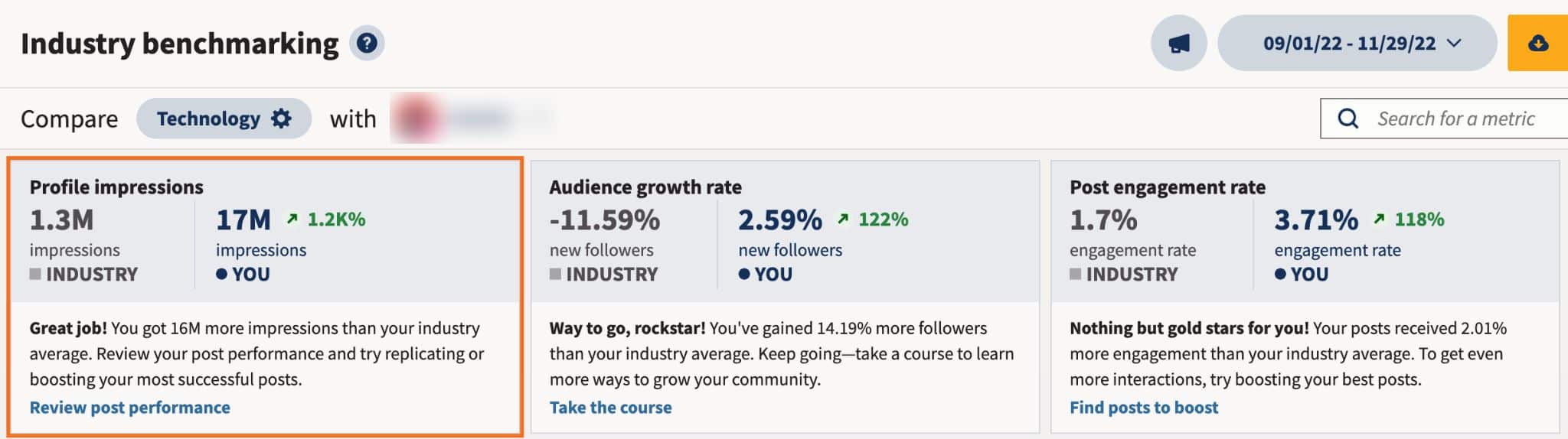
Hootsuite’s industry benchmarking tool within Analytics shows you how you stack up to the competition. It’ll even give you personalized tips for how to gain an edge against the leaders in your industry.

4. Time zones

Understanding your target audience’s time zones is crucial for ensuring that your posts reach them when they’re most likely to be online.

If your followers are scattered across the globe, you’ll need to consider the different time zones they live within.

For example, if you’re based in Vancouver but have followers in New York, London, and Tokyo, posting at 9:00 AM local time might mean reaching your East Coast audience bright and early, but missing out on social media engagement from your international followers who are fast asleep.

At Hootsuite, our channels strive to catch people across North America (PST through EST) by posting in the morning or early afternoon, Pacific Time.

For channels that also want to catch the UK, the earlier in the morning, the better.

Meanwhile, brands with a substantial audience in a specific region might consider creating a separate handle for that audience. (This may have the added benefit of allowing you to post in a target language, too.)

To accommodate everyone, you’ll need to find a balance that maximizes visibility across multiple time zones.

This might involve scheduling posts at different times throughout the day or using social media management tools that allow you to schedule posts in advance and target specific time zones.

5. Platform algorithms

Social media platforms are constantly tweaking their algorithms to deliver the best possible experience for users. While the specifics are often shrouded in mystery, one thing’s for sure: timing matters. Social platforms like Facebook, Instagram, and Twitter reward content that generates engagement shortly after it’s posted. That means if you want your post to get maximum visibility, you’ll need to time it just right.

Pay attention to when your audience is most active and aim to publish during those peak periods. But don’t forget about the lifespan of your content either.

While some posts might have immediate impact, others — like evergreen content — can continue to attract engagement over time. Experiment with different posting times and track the results to find what works best for your audience and content strategy.

6. Current events and trends

Social media is a dynamic landscape, shaped by current events, holidays, and trends. Paying attention to what’s happening in the world can help you capitalize on timely opportunities to connect with your audience.

Is there a big industry conference happening? A national holiday or observance? A viral meme or trending topic? Incorporating these events into your posting schedule can help your content feel relevant and timely, increasing the likelihood of engagement.

Just be mindful of the context and tone of your posts — what might be appropriate for one event could be off-putting for another. Keep your finger on the pulse of what’s happening and be ready to adapt your strategy accordingly.

Paige Schmidt, Hootsuite’s Social Engagement Coordinator, has noticed that events and trends are big in 2024. “There’s a growing demand for relevant and timely content that aligns with pop culture events such as sports events, award shows, and music/movie releases. Brands that plan content around these events or mark them for scheduling stand to capture audience attention effectively,” she says.

7. Experimentation and analysis

At the end of the day, there’s no one-size-fits-all formula for the perfect posting time. What works for one brand might not work for another. That’s why it’s essential to approach your posting strategy with a spirit of experimentation and a willingness to learn.

Test different posting times, frequencies, and types of content to see what resonates most with your audience.

Use analytics tools to track key metrics like engagement, reach, and click-through rates, and use that data to refine your approach over time.

You should also take a look at your top-performing posts from the past, and see what can be mimicked or improved upon there. Take a close look at posts that did the best in terms of:

  • Awareness (i.e., posts that have high impressions)
  • Engagement (i.e., posts that earned the highest engagement rates)
  • Sales/Traffic (i.e.,posts that attracted a lot of clicks)

Next, take a look at what time of day or week you posted successful content, and see what kind of patterns emerge.

Pro tip: Hootsuite Analytics’ Best Time to Publish feature pulls your unique posting history automatically, without any data-crunching, and suggests times to post in order to maximize your ROI.

Remember, social media is a constantly evolving landscape, so be prepared to adapt and iterate as you go.

It can be gutting when you’ve worked hard on a post and it doesn’t land. My best piece of advice is to be patient. Sometimes the algorithm needs more time to place your content and sometimes your audience needs more time to warm up to the type of content you’re creating. Consistency is key, so keep trying!

Trish Riswick Social Marketing Team Lead at Hootsuite

How to find your unique best posting times with Hootsuite

Gone are the days of blindly tossing content into the digital ether and hoping for the best. Hootsuite offers two powerful tools – Best Time to Publish and Recommended Times in Composer – to help you schedule your posts at the best times for your audience.

Here’s how to take advantage of both.
#1 Social media tool

Create. Schedule. Publish. Engage. Measure. Win.

Free 30-day trial

Best Time to Publish

Imagine having your own personal social media strategist whispering in your ear, telling you exactly when to hit that “post” button.

That’s exactly what Hootsuite’s Best Time to Publish feature does for you.

Here’s how it works:

  1. Tailored suggestions: Hootsuite analyzes your social media performance over the last 30 days to provide personalized recommendations for the best times to publish your posts.
  2. Cross-platform compatibility: Whether you’re managing Facebook Pages, Twitter accounts, Instagram Business profiles, LinkedIn Pages, Pinterest, YouTube, or TikTok, Hootsuite can tell you exactly when your audience is most active on each individual platform.
  3. Simple Implementation: Once you have your suggested posting times, scheduling your posts is a breeze. Just hop over to the scheduling tool in Hootsuite and plug in your content for those optimal times.
hootsuite best time to publish feature showing best times and days to post on facebook, using a heat map

Recommended Times in Composer

Ever find yourself staring at a blank screen, wondering when on earth to schedule your next post? Say goodbye to that uncertainty with Hootsuite’s Recommended Times in Composer.

Here’s how it can simplify your life:

  1. Smart recommendations: When creating or scheduling a post in Composer, simply select “Schedule for later” and let Hootsuite do the heavy lifting. You’ll be presented with recommended times based on your audience engagement data.
  2. Continuous improvement: The more you post, the smarter Hootsuite’s recommendations become. As your engagement data grows, so too does the accuracy of your suggested posting times.
recommended times to post shown as suggestions in hoostuite composer

Get personalized recommendations for the best time to post on every network and manage your Facebook presence alongside other social channels with Hootsuite. From a single dashboard, you can schedule and publish posts, engage the audience, and measure performance. Try it free today.

The post Best time to post on social media: Q1 2025 update appeared first on Social Media Marketing & Management Dashboard.


* This article was originally published here

Wednesday, March 5, 2025

Master your 2025 social media strategy [free template + expert tips]

A social media marketing strategy is a summary of everything you plan to do and hope to achieve on social media. It guides your actions and lets you know whether you’re succeeding or failing.

The more specific your plan is, the more effective it will be. Keep it concise. Don’t make it so lofty and broad that it’s unattainable or impossible to measure.

In this post, we’ll walk you through a seven-step plan for creating a winning social media marketing strategy. We’ve also included a completely free social media strategy template to download.

Plus, we’ve even got expert insights from Amanda Wood, Hootsuite’s Senior Manager of Social Marketing.

TL;DR? If you’re a social media or marketing manager looking for help with your strategy, you’re in the right place.

  1. A social media strategy maps out goals, tactics like influencer marketing, and metrics to align your efforts with business wins.
  2. Social is all about two-way engagement: building trust and community, not just pushing sales.
  3. Trends break fast on social. Your strategy must be able to flex with changing times and behaviors.

Psst: You can also get a primer from our free ebook on social media marketing basics — grab it below. No email required!

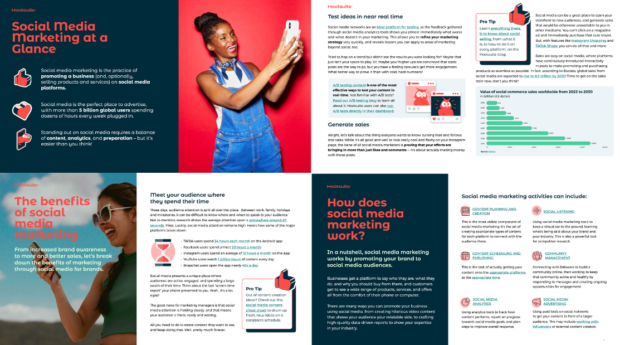
excerpts from Hootsuite's free ebook on social media marketing

What is social media marketing?

Social media marketing is the use of social platforms to grow your brand, connect with your audience, and achieve business goals. Unlike traditional advertising, it’s built on two-way conversations — brands don’t just talk at people, they engage with them.

A social media marketing strategy outlines your marketing goals, the tactics (like partnerships) you’ll use to achieve them, and the metrics you’ll use to track success. Without a strategy, you’re just posting for the sake of it. With one, you’re making every post, comment, and campaign count.

A strong social strategy should:

  • Set clear goals that align with your business objectives
  • Define the different platforms and kind of content that work best for your audience
  • Track key metrics like website traffic to measure what’s working (and what’s not)
  • Establish a workflow for planning, publishing, and reporting social media activities

Social media moves fast, and a good strategy with clear optimization helps you stay ahead of trends, connect with the right people, and drive real results.

#1 Social media tool

Create. Schedule. Publish. Engage. Measure. Win.

Free 30-day trial

Why build a social media strategy?

Posting without a plan is like sailing without a compass — you might move, but you won’t get far. A solid social media strategy turns chaos into results.

Here’s why it’s worth the effort:

  • Turns effort into impact. Random posts waste time, while a strategy ties every move — like social media campaigns — to what your business actually needs. It’s the difference between shouting into the void and speaking to the right crowd.
  • Builds trust that lasts. Social isn’t just ads — it’s where real conversations happen. A strategy helps you show up consistently, proving you’re a brand people can rely on, not just another sales pitch.
  • Keeps you in the game. Trends flip fast, and algorithms shift faster. With a strategy, you’re not guessing: you’re adapting and staying relevant while others scramble.
  • Proves your worth. No more “nice-to-have” debates. A clear plan shows the boss (and your budget) exactly how social moves the needle, making your wins impossible to ignore.

Think of it as your secret weapon when it comes to social media management: a good strategy sharpens your focus, amplifies your voice, and cuts through the noise.

Ready to see how? The next steps walk you through building a social strategy that works, starting with goals and ending with results you can measure.

How to create a social media marketing strategy: A 7-step guide

Step 1. Set goals for business success

A winning social media strategy starts with clear objectives — without them, you can’t measure ROI.

Hootsuite’s strategy doc tracks your SMART marketing goals — specific, measurable, attainable, relevant, and time-bound — and if you need help getting started, we’ve got social strategy guides for small businesses, financial services, government, higher education, healthcare, real estate, law firms, and non-profits.

Track meaningful metrics

Skip vanity metrics like follower count. Instead, focus on key performance indicators (KPIs) like conversion rate or click-throughs, which 69% of marketers in a recent Hootsuite survey prioritize for ROI (79% target brand awareness).

Not sure where to start? If you need inspiration, take a look at these essential social media metrics.

Pick metrics that prove your work’s value: think Story views on Instagram or CPC on Facebook.

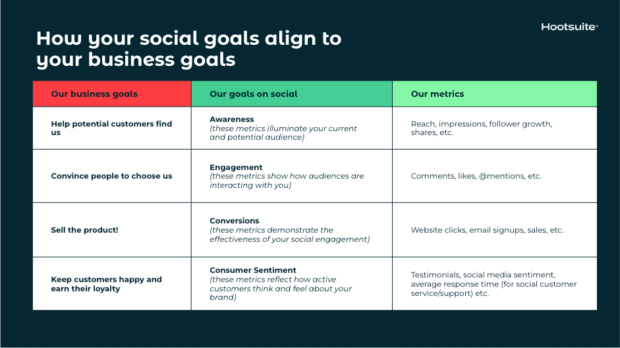
track your social media goals in a social media strategy doc, like this one.

Write down at least three goals to start, matching them to your business for boss buy-in.

It’s easy to get overwhelmed by deciding what to post and which metrics to track, but you need to focus on what you want to get out of social media to begin with. Don’t just start posting and tracking everything: match your goals to your business, and your metrics to your goals.

Amanda Wood Senior Manager, Social Marketing at Hootsuite

Step 2. Know your audience deeply

Get to know your fans, followers, and potential customers as real people with real wants and needs to target them effectively — for lead generation or loyalty.

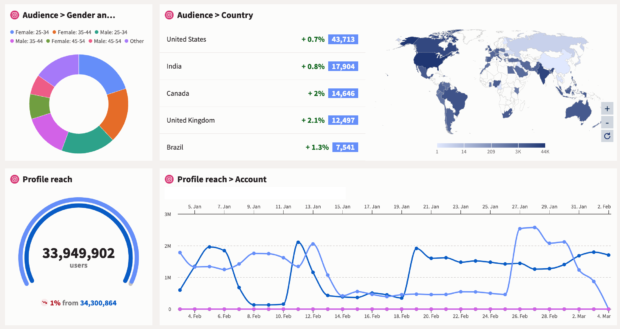
Hootsuite Analytics reveals who your followers are, where they live, and how they engage — 61% of organizations in a recent Hootsuite survey rely on AI-powered insights like these to help lighten the load.

Hootsuite Analytics showing Instagram audience reporting

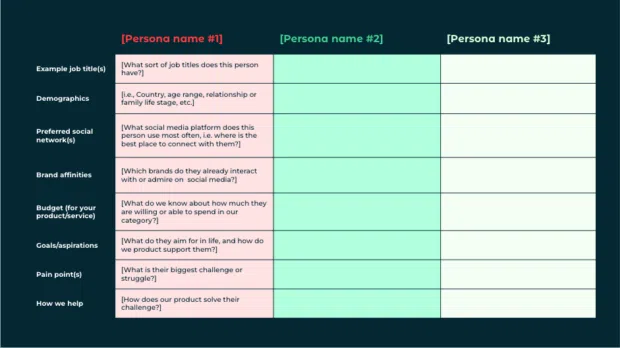
List audience demographics like age, location and interests using our free buyer persona template, and include this info on your target audience in your Hootsuite strategy doc.

Document important information about your target customers in your social media strategy doc

Jugnoo, an Uber-like service for auto-rickshaws in India, used Facebook Analytics to learn that 90% of their users who referred other customers were between 18- and 34-years-old, and 65% of that group was using Android.

They used that information to slash referral costs by 40% by targeting 18–34-year-olds on Android — your data can do the same.

Check out our guide to using social media analytics and the tools you need to track them.

Step 3. Assess your competitors’ performance

Odds are your competitors are already using social media — learn from them to sharpen your targets.

Conduct a competitive analysis

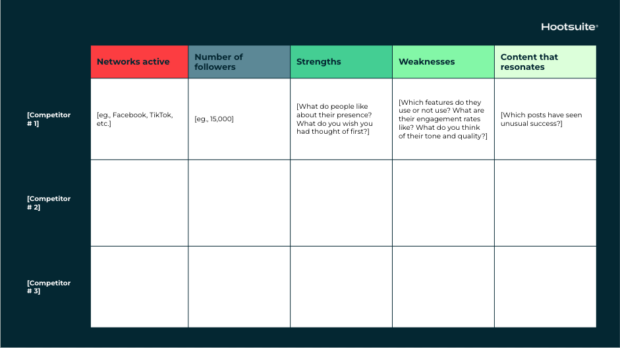
A competitive analysis allows you to understand who the competition is and what they’re doing well (and not so well). You’ll get a good sense of what’s expected in your industry, which will help you set social media targets of your own.

It will also help you spot opportunities and weaknesses you can document in your social strategy doc.

track essential information about your competitors in your social strategy doc

Maybe one of your competitors is dominant on Facebook, for example, but has put little effort into X (Twitter) or Instagram. You might want to focus on the social media platforms where your audience is underserved, rather than trying to win fans away from a dominant player.

Use social media listening

Social listening is another way to keep an eye on your competitors.

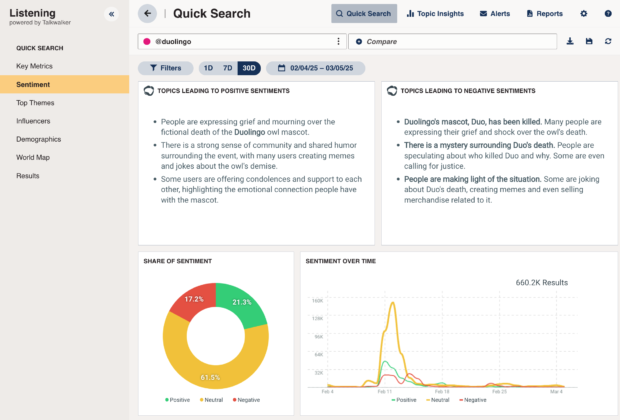
Hootsuite Listening tracks their moves, with 1/3 of brands in 2024 relying on it to stay ahead of trends. Search competitor’s company names, handles, and keywords, spotting gaps like a weak Instagram presence or shift in sentiment to exploit.

Hootsuite Listening sentiment report

Log these insights in your Hootsuite strategy doc to guide your next steps, but don’t overdo it: Amanda advises monthly checks to keep your focus.

Step 4. Boost your social presence

Before you focus on growing your social media presence, take stock of what’s already working — and what isn’t.

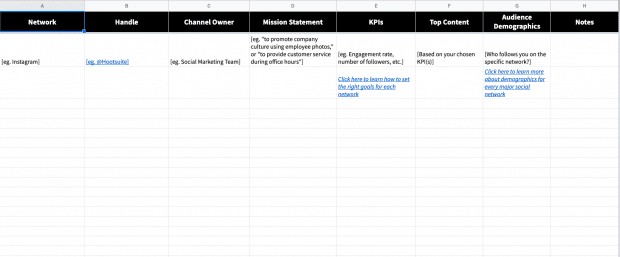
Hootsuite’s social media audit guide and template can help you spot gaps, uncover opportunities, and ensure your profiles are set up for success.

Screenshot of a social media audit spreedsheet for building an effective social media strategy

Review your current performance

  • Which platforms are driving the most engagement and traffic?
  • What type of content resonates best with your audience?
  • Are there inactive or underperforming social media accounts that need attention?

Use this info to double down on what’s working and rethink what’s not. If a platform isn’t delivering results, either adjust your approach or consider shifting focus to where your audience is most active.

Optimize your profiles for visibility and engagement

In 2024, 25% of American adults reported using social media as their primary search channel.

Gen Z is particularly big on social search, too — the same survey showed that roughly 46% of that generation prefers searching on social instead of traditional search engines.

Those numbers mean your social content needs to be optimized for social SEO.

  • Make sure your bio, profile images, and contact info are up to date
  • Use keywords in your descriptions for better social search visibility
  • Maintain consistent brand identity across platforms

A well-optimized profile makes it easier for potential followers (and customers) to find and trust your brand.

Look for impostor accounts

If fake accounts are using your brand name, they could be confusing customers (or worse, damaging your reputation). Check for copycat accounts and report them when needed.

You might also want to get verified on platforms where it’s available to add credibility and prevent impersonation.

Here’s how to get verified on:

A strong social media presence starts with a solid foundation. By auditing and optimizing regularly, you’ll ensure your strategy is built on a framework that supports growth, engagement, and results.

Step 5. Find content inspiration

While it’s important that your brand be unique, you can still draw content strategy inspiration from other businesses that are great on social.

Plus, pushing creative boundaries in content creation can help your social strategy soar. According to our 2025 Social Media Trends survey, 25% of respondents said that most of their social content is entertainment-driven.

“I consider it my job to stay active on social: to know what’s trending, which social media marketing campaigns are winning, what’s new with the platforms, who’s going above and beyond” says Amanda.

“This might be the most fun step for you, or the hardest one, but it’s just as crucial as the rest of them.”

Social media success stories

You can usually find these on the business section of the social network’s website. (Here’s Facebook’s, for example.)

Case studies can offer valuable insights that you can apply to your own social media plan.

Award-winning accounts and campaigns

You could also check out the winners of The Facebook Awards or The Shorty Awards for examples of brands that are at the top of their social media game.

Your favorite brands on social media

Who do you enjoy following on social media? What do they do that compels people to engage and share their content?

National Geographic, for example, is one of the best on Instagram, combining stunning visuals with compelling captions.

A sample post from National Geographic illustrating their social strategy on Instagram

Source: National Geographic on Instagram

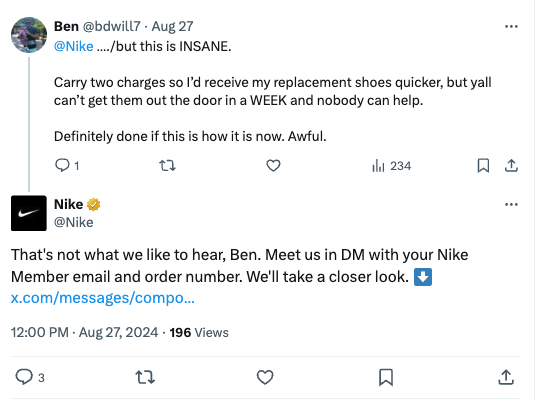
Nike is a great example of superior customer service on X. They use their 280 characters to share new product releases and celebrate sports victories, but they’re also available to answer customer questions and solve problems.

An example of how Nike's social strategy works on X: they use the platform for customer care

Source: Nike on X

Notice that these accounts have a consistent voice, tone, and style. That’s key to letting people know what to expect from your feed. That is, why should they follow you? What’s in it for them?

Consistency also helps keep your content on-brand even if you have multiple people on your social media team.

For more on this, read our guide on establishing a compelling brand voice on social media.

Ask your followers

Consumers can also offer social media inspiration.

What are your target customers talking about online? What can you learn about their wants and needs?

If you have existing social media channels, you could also ask your followers what they want from you. Just make sure that you follow through and deliver what they ask for.

Step 6. Craft engaging content

Creating great content is only half the battle. To see real results, you need to post strategically, delivering the right content to the right audience at the right time.

Plan your content mix

The best social media strategies balance different types of content to keep audiences engaged.

And while 34% of survey respondents said that “overly self-promotional content” is a major turn-off in how they perceive brands on social, 48% of marketers publish product or brand updates or news multiple times a week. Yikes.

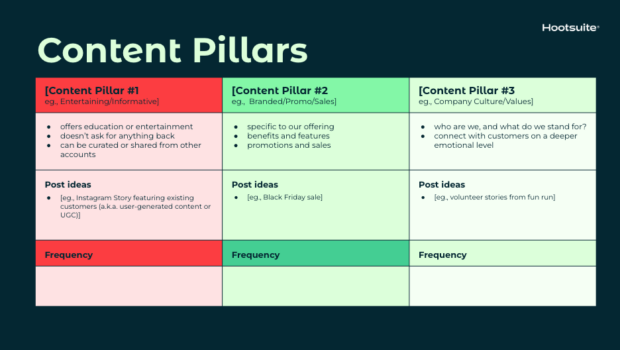
How do you find the balance? Try to think of your content as a mix of three general categories:

  • Educate and inform. Share tips, industry insights, and thought leadership.
  • Entertain and engage. Hop on trends, use humor, or share behind-the-scenes moments.
  • Promote and convert. Highlight your products, services, and customer success stories.

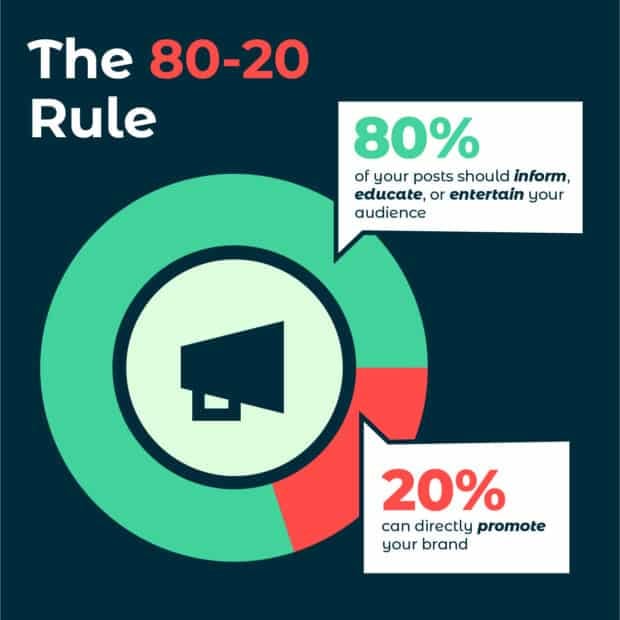
Not every post needs to be a sales pitch. Keep the the 80-20 rule in mind:

  • 80% of your posts should inform, educate, or entertain your audience
  • 20% can directly promote your brand.
The 80-20 rule of social media publishing

Whatever you decide on, be sure to document it in your strategy doc.

document your content pillars in your strategy doc

Create a content calendar

A social media content calendar helps you stay consistent without scrambling for last-minute ideas. Use yours to plan out:

  • Topics and formats (videos, infographics, carousels, etc.)
  • Posting frequency for each platform
  • Key dates and campaigns to align with industry events or product launches

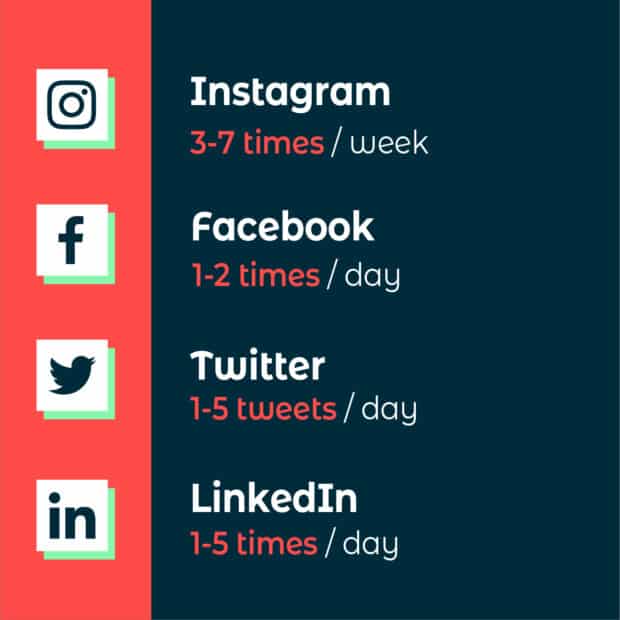
If you’re starting a social media marketing strategy from scratch, you may not have figured out how often to post to each network for maximum engagement yet.

Post too frequently and you risk annoying your audience. But, if you post too little, you risk looking like you’re not worth following.

Start with these posting frequency recommendations:

How often to publish on social media by each platform

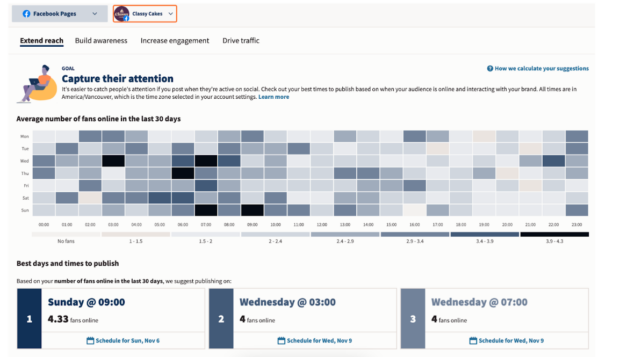
Hootsuite Planner helps you craft a balanced mix of posts and optimize timing based on engagement trends.

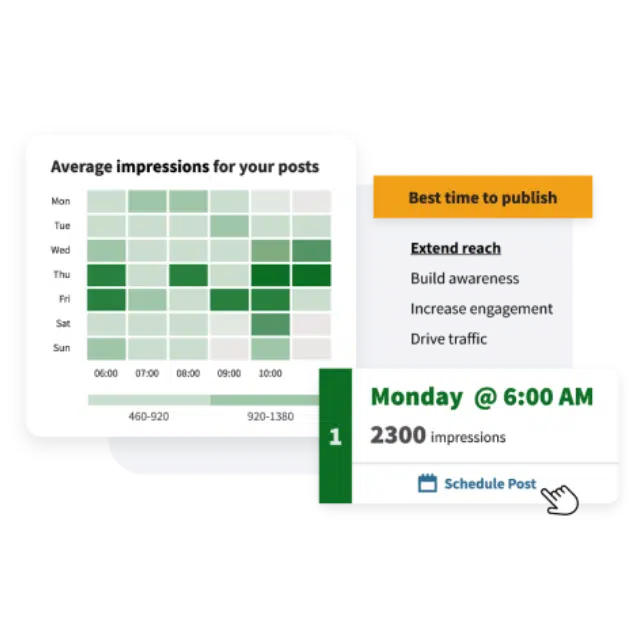
heatmap from hootsuite showing best time to post

Map out topics, formats, and key dates in your calendar, hitting our recommended frequencies to avoid annoying or overwhelming followers.

Optimize for engagement

Social media isn’t just about posting. It’s about sparking conversations and making meaningful connections with your audience.

Strong captions that encourage responses, trending hashtags that boost discoverability, and interactive elements like polls, Q&As, and user-generated content all help increase engagement.

When you create content that invites participation, rather than just broadcasting messages, you encourage more likes, shares, and comments, which in turn helps expand your reach.

Strategic content keeps your audience engaged and your brand top of mind. Plan ahead, stay flexible, and adjust based on what resonates most with your audience.

Step 7. Measure and refine your strategy

Your social media marketing strategy isn’t set in stone — refine it with data as you go.

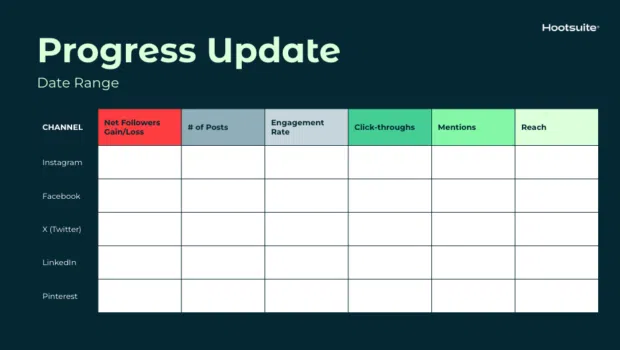
That’s why it’s important to document your progress along the way.

social media strategy progress update doc

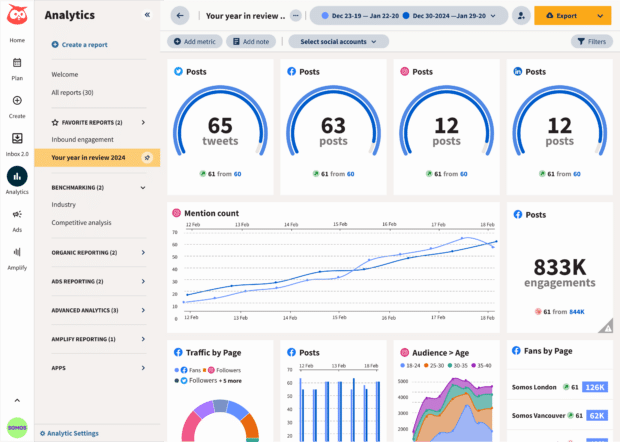
Hootsuite Analytics tracks your progress, spotlighting ROI worries shared by 68% of marketers in 2024, and benchmarks your performance with just a few clicks.

Look at performance metrics

In addition to the analytics within each social network, you can use UTM parameters to track social visitors as they move through your website, so you can see exactly which social media posts drive traffic to your website.

Benchmark your results

You’ve got your numbers, but how do they stack up to the competition in your industry? Industry benchmarks are a great way to evaluate your performance against other businesses in your category.

If you use Hootsuite Analytics as your management tool, you can use our built-in social media benchmarking tool to compare the performance of your social accounts against the average of brands in your industry.

You can set up custom timeframes, switch between networks — Instagram, Facebook, X (Twitter), LinkedIn, and TikTok — and look up benchmarks for metrics like followers, audience growth rate, engagement rate, clicks, shares, and much more.

You’ll also find resources to improve your performance right in the summary section:

Industry benchmarking in Hootsuite Analytics: Performance summary with dedicated resources for improvement

Re-evaluate, test, and do it all again

Once this data starts coming in, use it to re-evaluate your social media marketing techniques regularly.

You can also use this information to test different posts, social marketing campaigns, and strategies against one another. Constant testing allows you to understand what works and what doesn’t, so you can refine your social media marketing plan in real time.

Remember, effective social media marketing isn’t static. Your strategy should change over time.

You should check the performance of all your channels at least once a week. Once you learn the basics of social media reporting, you can track your growth over time.

Pro tip: If you use Hootsuite, you can review the performance of all your posts on every network in one place. Once you get the hang of checking your analytics, you may even want to customize different reports to show specific metrics over a variety of different time periods.

View the performance for all your networks in one place using Hootsuite

Surveys can also be a great way to find out how well your social media strategy is working. Ask your followers, email list, and website visitors whether you’re meeting their needs and expectations and what they’d like to see more of. Just make sure to deliver on what they tell you.

Finalizing your social media strategy

Spoiler alert: nothing is final.

Social media moves fast. New networks emerge, others go through demographic shifts.

Your business will go through periods of change as well.

All of this means that your social media marketing strategy should be a living document that you review and adjust as needed. Refer to it often to stay on track, but don’t be afraid to make changes so that it better reflects new goals, marketing tools, or plans.

When you update your social strategy, make sure to watch our 5-step video on how to update your social media strategy for 2025:

link to a youtube video for tips to update your social media marketing strategy

Free social media strategy template + video guide

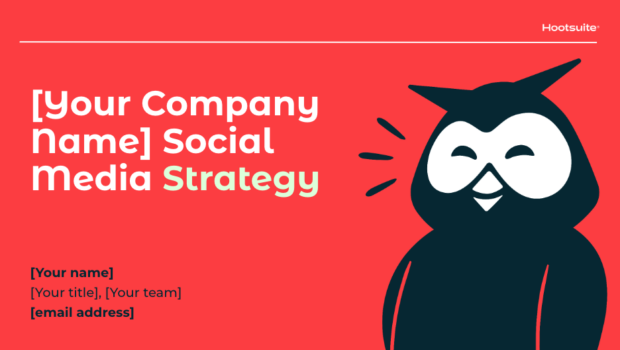
Ready to start documenting? Grab your free social marketing strategy template below!

the cover page of Hootsuite's social media strategy template

No time to read the whole article? Let Amanda Wood, Hootsuite’s own Senior Manager of Social Media Marketing, guide you through our free strategy template in less than 10 minutes:

link to a youtube video for social media marketing strategy tips

What’s next? When you’re ready to put your plan into action, we’re here to help.

Save time managing your social media marketing strategy with Hootsuite. From a single dashboard, you can easily:

  • Plan, create, and schedule posts to every network
  • Track relevant keywords, topics, and accounts
  • Stay on top of engagement with a universal inbox
  • Get easy-to-understand performance reports and improve your strategy as needed

With files from Liz Stanton.

The post Master your 2025 social media strategy [free template + expert tips] appeared first on Social Media Marketing & Management Dashboard.


* This article was originally published here
Monday, March 3, 2025

Hootsuite CEO Irina Novoselsky on marketing to Gen Z

Around this time every year, I like to reflect on my upbringing. I moved to the US from Ukraine at a young age, and my parents had less than $300 in their pocket to start an entirely new life. It shaped the way I see the world — and the way I approach business, even to this day.

It also taught me the value of adaptability and being open to new perspectives. These are two skills that leaders need now more than ever as we experience a massive shake-up in the business world, thanks to a generation that’s turning the status quo on its head.

Yes, I’m talking about Gen Z, the group responsible for breaking the marketing funnel and making the business playbooks we use every day obsolete.

It’s why I dedicated four months speaking to over 500 Gen Zers working at B2B organizations. Keep scrolling and I’ll let you know exactly what I learned and how you can do better business in a Gen Z-dominated market.

Bonus!!!

Get our 2025 Social Media Trends report for the insights you need to reach your goals in what’s shaping up to be social’s best year yet.

Why I’m paying close attention to Gen Z’s spending power

In 2023, Gen Z and millennials already made up 71% of B2B buyers, according to a Forrester survey. That’s huge — and that number continues to grow.

As someone who runs a B2B social media performance platform, that stat rang some alarm bells. Especially when pairing it with some of the other recent Gen Z data I had been seeing — like how Gen Z’s global spending is expected to grow to $12 trillion (yes, TRILLION) by 2030.

Forrester stat infographic

I needed to dig deeper, and those who know me, know I wouldn’t be able to rest until I did.

Connecting with 519 Gen Z members was incredibly eye-opening. The opportunity around Gen Z audiences is even bigger than I initially thought, and we need to start capitalizing on it right now to win in 2025 and beyond.

So, what exactly defines Gen Z? Key traits you need to know

Let’s talk about some key characteristics of zoomers (those born between the mid-1990s and early 2010s), or as many like to call them, “digital natives.”

  • What stage of life are they at? They’re getting married and starting to grow their families. They’ve established their careers — and want to advance. They’re even expected to make up more than a quarter of the global workforce by 2025.
  • What’s important to them? They love to travel. They’re passionate about sustainability, the environment, and social justice issues. They’re gaming fanatics and social media obsessed.
  • What do they worry about? Money, understandably, having been born into a financially unstable and uncertain era. Saving money is a big priority.

But perhaps more than anything, they’re a generation of contradictions. They grew up with phones in their pockets, but they rarely use them for talking. They want to come into the office, but definitely don’t want mandatory return-to-office policies. They’re AI enthusiasts but demand authenticity.

So you know what Gen Z are not? The same buyers as every other generation. And we have to stop treating them that way.

Think about how your own business has shifted in recent years. Are you experiencing longer buying cycles? Lower sales productivity? Higher customer acquisition costs?

Now think about how you’ve dealt with it. Using the same old sales methods? Hiring more business development reps and sales people? Throwing more money at paid acquisition?

Let me guess: It’s not working.

That’s because we’re using a B2B playbook designed for previous generations of buyers, and it’s not cutting it for Gen Z.

A new breed of buyers who research, scroll, and skip ads

With a unique generation of buyers comes the need to challenge everything we thought we knew about selling and business best practices. What we need now is something much more nuanced than a B2B framework — it’s a B2Z™ playbook.

The B2B buying journey is already a complex decision-making chain. And now, Gen Z employees are involved in making those purchasing decisions within their organizations. In fact, they’re often the champions that start the entire sales process. And they do things very differently.

Like other generations, they do extensive research on the products and software they’re considering. But social media is their search engine — not Google. They do their deep dives on Reddit to get the real tea on brands and businesses and watch hours of TikTok videos featuring B2B influencers who use the products.

That didn’t surprise me. (Though it’s valuable information businesses can use to build content that captures Gen Z buyers. They are, after all, the generation driving the demand for high-quality organic social content.)

My ‘aha’ moment came when I read that B2B audiences complete 60% of the purchase process before engaging with a sales rep — and the Gen Z members I personally spoke to confirmed it.

That’s when it hit me: Gen Z is the social self-service generation. And all the business shifts we’re experiencing started to make sense.

3 ways to win over Gen Z in the social self-service era

Gen Z B2B buyers are all about DIY (for more than just crafting and home renos). They don’t want to talk to you. They don’t want to sit through scripted pitches or product demos. They want to do it all themselves — bias-free.

So if you, as a business, want to be in control, put THEM in control.

Here are 3 ways to create an on-demand buying journey that does exactly that:

1. Double down on the research phase

Gen Z isn’t just shopping — they’re practically their own sales team. And although they have TikTok-short attention spans, they’ll still take the time to sift through multiple pieces of content before they even think about contacting you.

Bottom line? You must be everywhere they’re looking — think Reddit, TikTok, YouTube, and Instagram — with the right info at every stop. By the time they reach out to you, they’ve already done the legwork.

2. Build a seamless on-demand experience

Gen Z buyers demand on-demand. It’s time to ditch the old-school demos and create intuitive, interactive experiences that let them discover the value of your products on their own terms.

Remember, they’re not sizing you up against other B2B brands — they’re comparing you to the effortless shopping experiences they know.

When they order clothes on Amazon, the items appear at their doorstep in a matter of days, even hours. They can then try them on and if they don’t fit, send them back without a fuss. If they can do that with jeans, you better believe they’ll expect that same level of ease and convenience with digital products.

At Hootsuite, we’re ramping up our efforts to ensure we’re meeting our Gen Z and millennial audiences where they are (and appealing to their short attention spans). One of those efforts includes our “Fastest Hootsuite demo EVER,” which lives on YouTube, as well as some of our other social channels:

3. Embrace social selling

Over the last year, one of my top pieces of advice for brands was to build an executive presence on LinkedIn. It’s a goal I even had for myself in 2024. So I committed to it and saw incredible results, reaching 15,000 followers and driving real leads and revenue.

Why was this so successful? According to LinkedIn, 77% of buyers are more likely to purchase from a company whose leadership team is active on social media. People buy from people.

A CEO friend of mine recently told me that social media wasn’t relevant for their B2B business because they don’t sell to consumers. It’s true, they don’t sell to consumers.

But they do sell to HUMANS, and about 5 billion of them spend multiple hours a day on social media. Moral of the story: Don’t let anyone tell you that B2B businesses shouldn’t prioritize social!

There are tons of B2B brands doing amazing, groundbreaking work on social media, including selling. And so can you!

TL;DR

In my conversations with real Gen Z professionals, I realized that we’re not on the verge of a major business shift — we’re already there. And we need to step up now to get ahead. The key to it all is putting Gen Z buyers in the driver’s seat as they embark on their path to purchase.

Right now, we’re standing at a game-changing moment in our industry, one of those rare crossroads where bold moves can reshape everything. My challenge to you is simple: Lean into this moment with confidence, optimism, and resilience because it’s an opportunity you can’t afford to miss!

Save time managing your social media presence with Hootsuite. Publish and schedule posts, find relevant conversions, engage your audience, measure results, and more — all from one dashboard. Try it free today.

The post Hootsuite CEO Irina Novoselsky on marketing to Gen Z appeared first on Social Media Marketing & Management Dashboard.


* This article was originally published here
Best Social Media Stocks To Watch Today - October 24th - MarketBeat

Best Social Media Stocks To Watch Today - October 24th    MarketBeat * This article was originally published here