Saturday, September 7, 2024

How to track, prove, and improve your social media ROI

Social media managers know the recurring nightmare of being pulled into a meeting with executives and asked to prove our social media ROI.

This scenario haunts us, and not because we don’t believe in the value of social. Proving a dollar-amount return on investment is a pretty complex process that involves some heavy data lifting.

Still, we know that social does make an impact. We’re not alone on this, either. 96% of marketers agree that social media delivers positive returns. And now, it’s time to prove it.

In this post, we’ll walk you through the steps to calculate and improve your social media ROI (including a list of our go-to tools). Nightmares, begone!

Free downloadable guide: Discover 6 simple steps to calculating your social media ad campaign ROI.

What is social media ROI (and why does it matter)?

ROI stands for return on investment. For our purposes, social media ROI means the business value returned from social media marketing and advertising.

In other words, social media ROI measures the results of social media marketing compared to its costs. It’s a way to assess whether your social media strategy is generating a positive outcome for your financial or strategic goals.

In Hootsuite’s 2024 Social Media Trends report, we found that social media ROI remains a big concern for marketers, with 68% reporting they worry about proving ROI from their social efforts.

bar graph showing most marketers are concerned about social media roi

But, social IS bringing returns.

Data from Statista forecasts social commerce to keep growing 30% year-over-year. Plus, they estimate sales via social channels to reach US$2.9 trillion by 2026.

So, what’s all the fuss about?

Understanding social media ROI is crucial for several reasons:

  1. It helps you determine where your time and money is best spent.
  2. You’ll know what works and what doesn’t, based on the metrics that really matter to your business.
  3. It helps you adapt to trends and market changes more quickly.
  4. You’ll be able to advocate for more investments into your social program, and feel justified doing so.

In essence, social media ROI matters because it bridges the gap between social media activities and business outcomes, proving how social marketing contributes meaningfully to the organization’s success.

And if you want to earn more budget and resources to scale up your social media strategy? You’ll need to communicate your results to key stakeholders and executives. If you want to hang onto your budget, you better be able to prove why you need it.
#1 Analytics Tool for Growth

Beautiful reports. Clear data. Actionable insights to help you grow faster.

Start free 30-day trial

How to calculate ROI on social media

The exact social media ROI formula varies from business to business because measuring ROI depends on which objectives matter most to your company. These priorities might include brand awareness, revenue, or customer satisfaction.

Calculating social ROI using math

Here’s a simple formula to calculate social media ROI:

Social media ROI = ((Value generated from social media – Costs of social media investment) / Costs) * 100

Here’s what the components of the formula mean:

  • Value generated from social media can include increased sales, leads, conversions, or cost savings due to effective social media engagement. We expand on this more below.
  • Costs of social media investment includes all costs associated with executing your social media strategy. It can include advertising budgets, the cost of creating content, employee salaries, software & tool subscriptions, and other resources related to social media activities.

The result of the formula (a.k.a. your ROI) is usually expressed as a percentage.

Any ROI percentage greater than 0 means that your social media efforts are profitable, i.e. you have generated more value than the resources you invested.

In contrast, a negative ROI means you invested more than you made back (aka you lost money).

Practical examples for measuring social media ROI

Here are a few examples of how this social media ROI calculation might work IRL.

Example 1: E-commerce

An e-commerce business wants to measure the ROI of its latest social media campaign aimed at increasing sales. Here’s how they could do it:

  • Value Generated: $50,000 in sales from social media referrals
  • Costs: $10,000 on social ads, $5,000 on content creation, $3,000 on software subscriptions
  • ROI Calculation: ((50,000 – 18,000) / 18,0000) * 100 = 178%

This means the campaign generated 178% more value than the resources invested.

Example 2: B2B

A B2B company focuses on lead generation through LinkedIn. They want to calculate the ROI of their efforts:

  • Value Generated: 100 qualified leads, each valued at $200, totaling $20,000
  • Costs: $2,000 ad spend on LinkedIn, $1,500 on content creation, $500 on analytics tools
  • ROI Calculation: ((20,000 – 4,000) / 4,000) * 100 = 400%

This indicates a 400% return on their social media investment.

Measuring social ROI with Hootsuite

Obviously, crunching data manually is time consuming. And, in this modern age, mostly unnecessary.

The best way to track your social media ROI today is to take advantage of powerful social media analytics tools. Oh, by the way, have you heard of Hootsuite Analytics?

Here’s how Hootsuite’s tools can help you measure ROI in social media.

Use analytics to improve strategies

If you want to prove your social media ROI, you’ll need to know how your content is performing. And, if you want to know how your content is performing, you’ll need a robust social media analytics platform.

With Hootsuite’s powerful analytics tools, you can fine-tune your campaigns by examining how your content performs month after month and across different social media platforms. Then, get practical tips on how to expand your content’s reach and performance, so you can keep refining your social marketing strategy for even greater success.

hootsuite analytics dashboard with various bar and line graphs showing social media performance

With Hootsuite’s Advanced Analytics, boosting sales and engagement is easier than ever. The tool highlights what’s working, and what’s not, so you can zero in on your best-performing activities. Track sales, sign-ups, and conversions from specific posts and use this info to craft content that really hits the mark.

hootsuite advanced analytics dashboard showing roi analysis for facebook, twitter, and instagram

See what works for the competition

Want to stay ahead of the competition? Hootsuite lets you keep an eye on up to 20 competitors per social network. It shows you what’s clicking for them—like their top posts, trending hashtags, and favored content styles. This way, you can adjust your strategy based on what’s already proving successful for customers like yours. It’s like having a playbook of winning moves right at your fingertips.

hootsuite competitive analysis benchmarking report showing post performance between hannah macready and a competitor major tom

Plus, use Hootsuite’s social media benchmarking to see how you measure up against the industry at large. By checking metrics such as profile impressions, reach, followers, and engagement rates, you can spot areas for improvement and growth.

hootsuite industry benchmarking tool showing impressions, audience growth rate and engagement rate across industry

Pro tip: Want to see generalized results across industries? Check out Hootsuite’s Industry Benchmarking tool.

Tell a compelling story with reports

One of the best ways to sell your social media efforts to your stakeholders is through regular, in-depth reporting.

Hootsuite’s reporting tool helps you create visually appealing reports that clearly show the performance of your paid and organic social media channels. Start from scratch or use templates to produce professional reports that effectively communicate the impact of your social campaigns on your business.

hootsuite report showing changes in fans, followers, page reach, video views, and more

Track results beyond social

Social media ROI can come from anywhere, even outside of social media.

Luckily, Hootsuite doesn’t just limit you to social metrics. By integrating with platforms like Google Analytics or Adobe Analytics you can see how your social media efforts contribute to broader business goals. These integrations help you track essential actions like sign-ups and purchases, providing a clear view of how each social media post impacts your bottom line.

Link tracking and web attribution tools can also be helpful when tying social efforts directly to business outcomes. By associating unique post IDs with each social post, you can connect web conversion data—like completed goals or purchases—back to specific social activities.

hootsuite report showing link click data from a social media post

Free social media ROI calculator

Measuring social media ROI means measuring what you get back from the time and money you put into social media marketing. It helps you see which strategies are paying off and which ones might need adjusting.

Use this FREE social media ROI calculator to see where you land.

Using our ROI Calculator is simple:

  1. Enter your social media costs and results.
  2. Get instant insights into your ROI and what’s driving your success.
  3. Compare different campaigns to see which ones are delivering the best results for your business.

With the social media ROI calculator, you can:

  1. Prove the impact of your social media efforts in dollars and cents.
  2. Make smarter decisions based on clear data.
  3. Impress your team and stakeholders with tangible results.

Disclaimer: This tool provides estimates and is meant for informational purposes only. Results may vary based on your specific circumstances and goals.

hootsuite free social media roi tool homepage showing different fields to input to calculate your roi

5 ways to improve your social media ROI

Ready to tap the well of your social media marketing ROI? Here’s how to make posts make sales.

1. Test and optimize

“Social is a place where we are continuously testing new content, features, and learning what’s working/not working,” says Eileen Kwok. And she’s right.

Unlike other marketing channels, social media is a constantly changing landscape where testing and tweaking your approach is key to getting the most out of your efforts. It’s a place where you can try different types of content, features, and strategies to see what works best for your audience.

You can run A/B tests on social media to test different factors and optimize your content based on the outcomes. You can run experiments through organic social accounts and paid ad campaigns.

For example, we ran this experiment to test whether Instagram carousels perform better than Reels. After three weeks, we found carousels earned better engagement and reach!

Hootsuite YouTube

Check out all our social media experiments here.

There are many factors you can test, including:

Testing—and reviewing your social media analytics—helps you learn what types of content actually resonate with your followers. Based on those insights, you can scale up that content or ad and increase your social media advertising ROI.

2. Get inspired by competitors

One of the most tried and true rules in social media is: check out what your competitors are doing.

Lucky for you, social posts are public. You can literally see who liked what and how much on any public facing profile. Take it a step further with tools like Hootsuite Analytics that let you track competitor results across channels, and see industry benchmarking data that shows how you stack up in your niche.

Hootsuite instagram graphic showcasing what consumers have to say

3. Use UTM parameters

One of the easiest ways to track social media ROI is with Urchin Tracking Module (UTM) parameters. UTM parameters are tags you can add to the ends of your URLs that let you track exactly how much traffic a specific URL gets.

Hootsuite Instagram Reel

So, if you have a URL on your LinkedIn post that directs users to your online store, you’ll be able to see exactly how many people went to your store from that post, and who actually bought from you.

Now that’s what we call measuring social media ROI.

Hootsuite tweet

4. Don’t discount your followers

We know, we know. Everyone says followers are a vanity metric—and vanity metrics don’t count.

But, the truth is, followers matter. At least in the way that without them, you don’t get engagement, and without engagement, you won’t get sales.

Take it from TIME’s Social Media Strategist Tameka Bazile, who says that:

  • Follower count does determine trust and loyalty.
  • 75% of people who follow brands on social have plans to purchase from them.
  • 64% of consumers will buy or boycott a brand based on its position on a social issue.

Now tell us followers don’t affect your ROI.

5. Keep refining your goals

A wise marketer once said: a goal set is a goal set to forget. Or, something like that.

What we mean is, goals in social media marketing should be flexible, not set in stone. As Eileen Kwok points out, “The goals you have set for at the start of the year, could have already changed. Depending on the shifts your organization is making, or the changing social landscape, make sure you are revisiting your goals every quarter to see if any updates need to be made.”

Adjusting your goals as new information comes available helps you weed out the tactics that aren’t working, and pay more attention to the ones that are. The stronger your social media strategy, the stronger your results.

How social media marketers feel about tracking ROI

Social media marketers often have mixed feelings about tracking ROI. On one hand, it’s the best way to show the value of our efforts, and prove to higher-ups that all these memes, reports, and influencer partnerships are actually worth it.

hootsuite emoji LinkedIn post

On the other hand, it can be hard to accurately attribute sales to specific posts or campaigns. Not to mention, single posts might not always move the needle, but your wider social media presence could. How do you track that?

Still, data shows that 55% of marketers believe that using social media improves sales. Not to mention, all those increased traffic, exposure, and lead gen benefits that can indirectly boost the bottom line. Clearly, the proof is in the pudding. So, why do we still feel so unsure?

Eileen Kwok, Social Media Specialist at Hootsuite, points out that there are some common misconceptions about social media ROI. One big myth is that social media is only good for building brand awareness, not for driving actual sales.

“While awareness is important, social media can also drive leads and sales,” she explains. “Secondly, there’s the belief that going viral equals social ROI. However, virality doesn’t always translate to meaningful engagement with your target audience. It’s essential to focus on addressing audience pain points rather than chasing viral content.”

Eileen also notes that staying the course in an ever-shifting social landscape can be stressful. “Trends come and go, algorithms change… It can be a challenge to continuously prove how social is bringing in ROI as not every post is going to land with your audience..”

Setting clear goals is key. Whether aiming for brand awareness, customer engagement, or direct sales, defining your KPIs upfront gives you a roadmap to measure success. Eileen advises, “You don’t know what your ROI is until you’ve laid out the goals you are tracking towards.” In short, you can’t measure what you haven’t set.

Use Hootsuite Analytics to get plain-language reports of your social data to see exactly what’s driving results for your business—and where you can boost your social media ROI.

All your social media analytics in one place. Use Hootsuite to see what’s working and where to improve performance.

Free 30-Day Trial

The post How to track, prove, and improve your social media ROI appeared first on Social Media Marketing & Management Dashboard.


* This article was originally published here

Friday, September 6, 2024

Social media customer service: How to do it right in 2024

Social media customer service has never been more important. 81% of customers expect faster service thanks to new tech, and 65% expect it if they spend more than usual.

As customers continue to spend cautiously in the wake of post-COVID inflation, competition for their dollars is rising. But cost isn’t the main deciding factor if someone will buy from you. 80% of people say the experience a brand offers is just as important as their products or services.

Your customer service on social media helps shape that experience with your organization.

Learn what people expect in customer service in 2024, tools to make social media customer service easier than ever before, and tips to make sure you’re delivering a winning customer service experience on social—every time.

  1. Today’s customers expect quick, seamless service on social media; 81% want faster responses, and 80% say a brand’s experience is just as important as its product. 
  2. Businesses that respond quickly (ideally within 15 minutes) and engage consistently on social media are better equipped to build trust and create lasting relationships with their audiences.
  3. AI chatbots, social listening tools, and a social inbox can help you automate simple tasks, respond faster, and understand how customers feel about your brand — making it easier to provide exceptional social media customer service.

What is social media customer service?

Social media customer service is offering support or service to your customers through social networks, such as Facebook, Facebook Messenger, Instagram, TikTok, WhatsApp, or any other platform. It includes answering customer support questions in public social media post comments or discussing via private message.

Why is social media customer service so important?

It’s what people want

Almost a third of customers (28%) say they give up solving a problem if they can’t find the answer online by themselves. That number surges to 38% for Millennials and 39% of Gen Zers.

Of the ones who wouldn’t give up right away, an average of 26.5% across generations say they’d give up if they had to wait on hold to talk to someone.

Source: Gartner

By using social media on your customer service team, you can respond instantly with tools like AI chatbots to keep these quick-moving customers engaged and solve their problems. (More on setting up chatbots and other tools later in the article.)

It builds customer relationships

In our Social Media Consumer Trends 2024 research, over half (53%) of people say the most appealing thing a brand can do on social media channels is quickly respond to direct questions and comments.

Prioritizing speedy and effective service builds trust with potential and existing customers. It can even help turn angry customers into loyal brand fans, too.

graph showing that great service drives repeat purchases advocacy and even forgiveness

Source: Salesforce

It enhances brand awareness

Social media is by far the best bucket to spend your marketing dollars on. For B2B brands, social media is responsible for more customer acquisition than any other channel, including digital ads and email marketing.

B2B marketers top contributors to customer acquisition

Source: MarketingCharts / Stirista

When you respond to public comments from a customer service perspective, not only are you answering the question, but you’re also showcasing your expertise and personality to everyone who visits your public page.

Responding to comments also helps boost engagement, which can enhance your organic social post performance in various algorithms—especially on Instagram, where the more someone has interacted with you in the past, the more they’ll see your new posts.

How to provide great customer service on social media: 10 tips

Where should you focus your social media customer service efforts? How can you optimize your social media for customer service? How do you know if your customer service strategy is working?

Answers to these and more tips to succeed with social media customer service below.

1. Respond quickly

77% of customers expect an immediate response when they contact a company. Eeek.

Worried about keeping up? You’re not alone: 53% of social media marketers are feeling overwhelmed managing so many platforms. If you don’t have 10 hands and 20 thumbs to reply to comments and DMs manually all day, Hootsuite Inbox is here to help.

Hootsuite Inbox bridges the gap between engagement and customer service by allowing you to reply to comments and direct messages across all your social media platforms together in one place, right inside your Hootsuite dashboard.

More than only speeding up replies, your entire team can use Hootsuite Inbox to triage and assign conversations, set up alerts for messages that need answering right away, and see CSAT surveys alongside your other social media metrics in Hootsuite Analytics, so you can tell if your customer service is working.

Hootsuite Inbox admin settings virtual agents

Use Hootsuite Inbox’s generative AI chatbot to instantly answer FAQs like, “What are your business hours?” or, “Do you have free shipping?” which can reduce your team’s message volume up to 80%.

Plus, chatbots work 24/7, so you can actually turn your phone off while you sleep. (It’ll be okay, we promise.)

Phin Financial chatbot

Hootsuite Inbox has everything you need to make cross-platform replies and cross-team collaboration easy, fast, and delightful for your customers.

Reduce response time (and your workload)

Manage all your messages stress-free with easy routing, saved replies, and friendly chatbots. Try Hootsuite’s Inbox today.

Book a Demo

2. Use social listening to better understand your customers

Across all types of organizations, customers crave being listened to. Edelman’s 2024 Trust Barometer found that wanting concerns to be heard and the ability to ask questions ranked as a top three priority for customers across all sectors: business, non-profit, government, and media.

Listening to your customers makes them trust you more.

across institutions listening is a top 3 trust building action

Source: Edelman

How do you actively listen on social media? Using social listening tools, of course—and the world’s best is built right into Hootsuite, powered by Talkwalker.

Besides finding out what customers are saying in their comments and messages online, social listening allows you to get a big picture view of brand sentiment—what people think of your company—and how it changes over time. This can identify potential PR issues in their early stages, allowing you to respond swiftly, and provide valuable feedback during and after launches and events.

Social listening is also an excellent research tool. With Hootsuite Listening, you can find out what people want to know about certain topics and automatically scan billions of online sources for posts and mentions of you, your products, or any other keyword you specify. This allows you to build relationships and your audience by interacting with these posts.

For example, a Reddit thread of someone asking for recommendations. Chime in on these posts with a mix of promotional content, like the example below, and informational content, such as offering strategic advice (if that’s what the poster is asking for).

Whats your must have Android Apps

Source: Reddit

Hootsuite Listening makes it easy to find:

  • Trending hashtags and discussions for any topic.
  • What people are saying about you (or your competitors).
  • Insights, such as if more people are talking about you this week vs. last week.
  • Popular posts of both positive and negative sentiments, so you can address them.
sunscreen vs SPF social listening Hootsuite sentiment analysis

Hootsuite Listening gives you the concrete data you need to create and evaluate your social media customer service strategy. As well as valuable insights and feedback on everything from product features to how people talk about you vs. your competition.

Check out how social listening can move the needle for you:

3. Consider separate social media customer service channels

Depending on your current audience size or how you manage comments and messages, you may want to create separate customer service channels. This can help speed up customer service replies if they’re not mixed in with other comments. Though, ideally, you’re aiming to get back to all types of comments as soon as possible (or instantly with AI chatbots, as mentioned earlier!).

If you go this route, the most common account name adds “Help” to your business name, like AirBNB’s @AirBNBHelp account on X:

Airbnb Help account on X

Source: @AirBNBHelp on X

Also consider options like @YourNameSupport or @AskYourName. Be sure to list your customer service channel in the bio of your main account so people know where to contact you.

Airbnb customer support channel in X bio

Source: @AirBNB on X

4. Set expectations

Unless you’re using an auto-reply or chatbot to answer incoming messages immediately (which you should…), make sure to clearly state when customers can expect a reply.

This can be in your bio, but of course, not everyone will see that before contacting you.

If you only answer messages during business hours, then state that. If you do offer 24/7 service, say that. Offer support in multiple languages? Awesome, say that too.

Binance customer support 24/7 live chat in 17 languages

Source: @BinanceHelpDesk on X

5. Understand geographic preferences

Facebook is the top social media customer service channel worldwide, according to research by Salesforce. However, there are wide gaps depending on location. WhatsApp is the most popular social customer service channel in many regions, including Germany, India, Italy, the Netherlands, and more.

In Japan, 95% of social media users message with LINE, while YouTube takes the top social platform spot with 88% of people using it.

This illustrates how important it is to know your audience and where they’re currently connecting with brands. It’s also important for global organizations to adopt a regional approach to social media customer service to ensure success.

6. Reply to everyone

This goes without saying, but do your best to reply to all comments and messages. Not only is it polite and helps to build relationships, but regularly replying to your audience can also boost your content in the algorithm. Win-win!

Plus, it boosts your own account engagement and to anyone viewing the post, shows you care about your customers.

Youtube comment replies boost engagement

Source: Shimoda Designs on YouTube

7. Scale up with AI for faster response times

How can you provide personalized and friendly service at scale? Answer: chatbots.

61% of people prefer to use self-service channels for simple problems and 55% are already using AI chatbots to interact with brands.

This is why 70% of business leaders plan to incorporate AI into customer touchpoints over the next two years, with 57% saying chatbots are their top priority.

AI chatbots aren’t simply for providing programmed responses anymore (although they’re still great for creating a fast, easy FAQ answering service for your customers).

Today’s AI chatbots understand context, remember an entire conversation to fully understand the issue, and adapt their language to respond clearly, accurately, and most importantly, warmly.

That personalization goes a long way toward making sure the customer-chatbot interaction is a good one, which is important since 68% of customers say they wouldn’t use a company’s chatbot again if they had a previous bad experience with it.

self service is preferred when it works graph of results

Source: Salesforce

You won’t have to worry about that with Hootsuite Inbox. Besides being able to manually respond to comments and DMs across all your platforms inside your Hootsuite dashboard, you can set up automatic replies and your own custom, language learning AI chatbot that will wow your customers, not send them walking away.

Check out how Hootsuite Inbox can save time for you and your customers:

8. Monitor social media customer service analytics

Marketers have a saying: you can’t know where you’re going unless you’ve tracked the analytics reports of where you’ve been.

While you’re most likely already tracking things like follower growth, engagement rate, comments, likes, and so on, are you tracking metrics that’ll tell you if your social media customer care is working or not?

The customer service metrics you should track are:

  • Average response time
  • Customer satisfaction score (CSAT)
  • Net promoter score
  • Message volume
  • Percent of automated responses vs. human responses (if you’re automating with a chatbot or auto-reply solution)

Y’know what saves you a ton of time putting together those reports? Hootsuite Analytics.

Hootsuite Analytics tracks all your key social media metrics and makes sense of your true social ROI, including as it applies to customer service. Measure organic and paid campaigns, comments, messages, engagement, and much more. Customize beautiful looking reports in no time, automate delivery via email, and sit back with the juicy data (and matcha latte) you deserve.

Hootsuite Analytics inbound engagement messages

Tracking customer service metrics over time will show you how you’re improving and when your social customer service strategy needs tweaking.

9. Know how to handle negative feedback

Mostly we’d say the internet is an inspiring, friendly place but once in awhile, it seems like a certain commenter is just trying to stir stuff up. Don’t play into it.

That doesn’t mean ignore negative comments. In fact, you should respond as quickly as possible to unhappy customers so you can prevent it happening again, and to try to turn the situation around.

Time is often of the essence with negative experiences: a delivery error, a faulty product, etc. Responding quickly shows you care about making it right.

But there’s a difference between real negative feedback and an untrue story meant to smear your reputation or brand image. That difference can even become the legal definition of defamation, like the case of a Canadian man ordered to pay $90,000 in damages to a business he posted negative reviews about online.

While legal action based on a review is rare, it’s important to protect your reputation without “fanning the flames” trolls love.

When replying to a negative comment or review, remember to:

  • Keep it professional: Don’t let emotion get the best of you. It’s upsetting to read a negative comment, especially if you know it’s untrue, but keep your response as neutral as possible, while still sounding friendly and helpful.
  • Put the ball back in their court: Thank them for their feedback and offer to personally discuss their issue via private message or phone. Now it’s up to them to speak directly with you instead of hiding behind a screen. If it’s genuine, they’ll reach out.
  • If possible, address any blatant falsehoods: Did a commenter claim your washroom was out of order (and it’s not)? Thank them for their feedback but politely suggest they may be confused with another establishment, as your washroom was fully operational on the day in question. This helps minimize the effect the review will have on others who read it.

Remember: Hootsuite Listening is your friend when it comes to monitoring channels other than your social profiles, like Yelp and Google Reviews, plus over two billion sources, including podcast mentions.

10. Be accessible

Automating social media customer service tasks is necessary to reply to everyone quickly. Many customers also prefer instant answers to common FAQs, whether it’s delivered by a person or a bot.

But sometimes, customers need to talk to a real human being. Complicated situations where there isn’t a clearcut “if this happens, then that” logic path need to be talked through person-to-person.

Besides ensuring every customer can reach a human member of your team for support in some way, you could consider offering a premium support option. Almost half of customers (47%) are willing to pay more if they receive better customer service. Offering a V.I.P. account with faster access to human support can be a major differentiator between you and your competition.

human connection prized as customer service grows as a differentiator

Source: Salesforce

When customers do interact with your customer support team, don’t be afraid to actually be human too. Admit and apologize for mistakes and allow your team members to show their own personalities (professionally) when working with customers.

Social customer service stats

Social media customer service examples from brands that do it right

1. Bank of America’s personalized replies

Sometimes a customer may private message you and post about their issue publicly. Here, Bank of America answers with a personalized reply letting the customer know they see them and where they’ll be responding.

Bonus points for signing the customer service representative’s name at the end of all their interactions so customers know who they’re talking to.

Bank of America personalized comment reply

Source: Bank of America on Instagram

2. Tesla shines with social listening

It’s easy to see public posts that people tag you in. Take it a step further with social listening tools that scan the web for non-tagged mentions of your brand (or other keywords).

Tesla offered an extra tip in their unexpected reply, further enhancing this customer’s experience.

Tesla reply on X with personalized tip

Source: Tesla on X

Reminder: Social listening is included in all Hootsuite plans!

3. Proactive updates from Spotify

On their dedicated customer support channel, Spotify posts about known issues as well as invites users to private message them with account-specific problems.

By sharing information proactively, Spotify can cut down the number of messages they get and show their dedication to problem solving.

Spotify Cares post on X

Source: @SpotifyCares on X

4. TELUS’ clear next steps

When a customer comments on social media with a problem, you probably need to discuss it via private message to actually resolve it. Letting customers know to message you is a basic, but important, thing to include in a reply.

But sometimes, directing them to a link is a more helpful solution. In either case, be clear about what a customer should do next.

TELUS customer comment reply directing to link

Source: TELUS on Facebook

5. GoPro’s super quick answers for a new product launch

While you should strive to respond quickly all the time, pay special attention to big posts, like announcements of new products. GoPro answered product questions—and follow-up questions—in real-time on their latest launch announcement.

GoPro comment reply for HERO 13 product launch

Source: GoPro on Instagram

Ready to ramp up your social media customer service? Use social listening to discover what people really think of you and ensure quick replies to all comments and messages with team collaboration, alerts, auto-replies, and chatbots in Hootsuite Inbox. Plus, schedule content across all your social accounts in one place. Try Hootsuite free today.

Do it better with Hootsuite, the all-in-one social media tool. Stay on top of things, grow, and beat the competition.

Free 30-Day Trial

The post Social media customer service: How to do it right in 2024 appeared first on Social Media Marketing & Management Dashboard.


* This article was originally published here

Wednesday, September 4, 2024

2024 social media image Sizes for all networks [CHEATSHEET]

Social media image sizes seem to change constantly.

One moment you have the perfect cover page for your account. The next, it’s been resized and looks all pixelated and wrong.

It doesn’t help that information about official dimensions and image sizes is harder to find than a civil discussion on politics on Facebook.

But, it’s not difficult if you consult this guide to social media image sizes on all important social media platforms!

Below are the most recent social media image dimensions, as of September 2024.

#1 Social Media Tool

Create. Schedule. Publish. Engage. Measure. Win.

Free 30-Day Trial

Quick social media image sizes

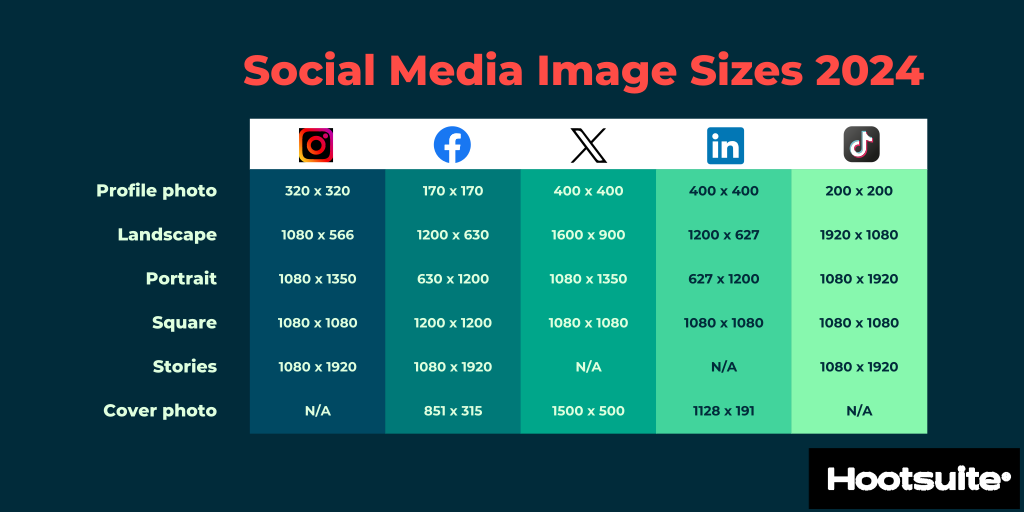
We go into more detail for every single network below, but this image includes the social media image sizes you probably look up most often.

Social media image sizes in 2024: Instagram, Facebook, X (formerly Twitter), LinkedIn, TikTok

Basic Instagram image sizes

  • Profile photo: 320 x 320 px
  • Landscape: 1080 x 566 px
  • Portrait: 1080 x 1350 px
  • Square: 1080 x 1080
  • Stories and Reels: 1080 x 1920

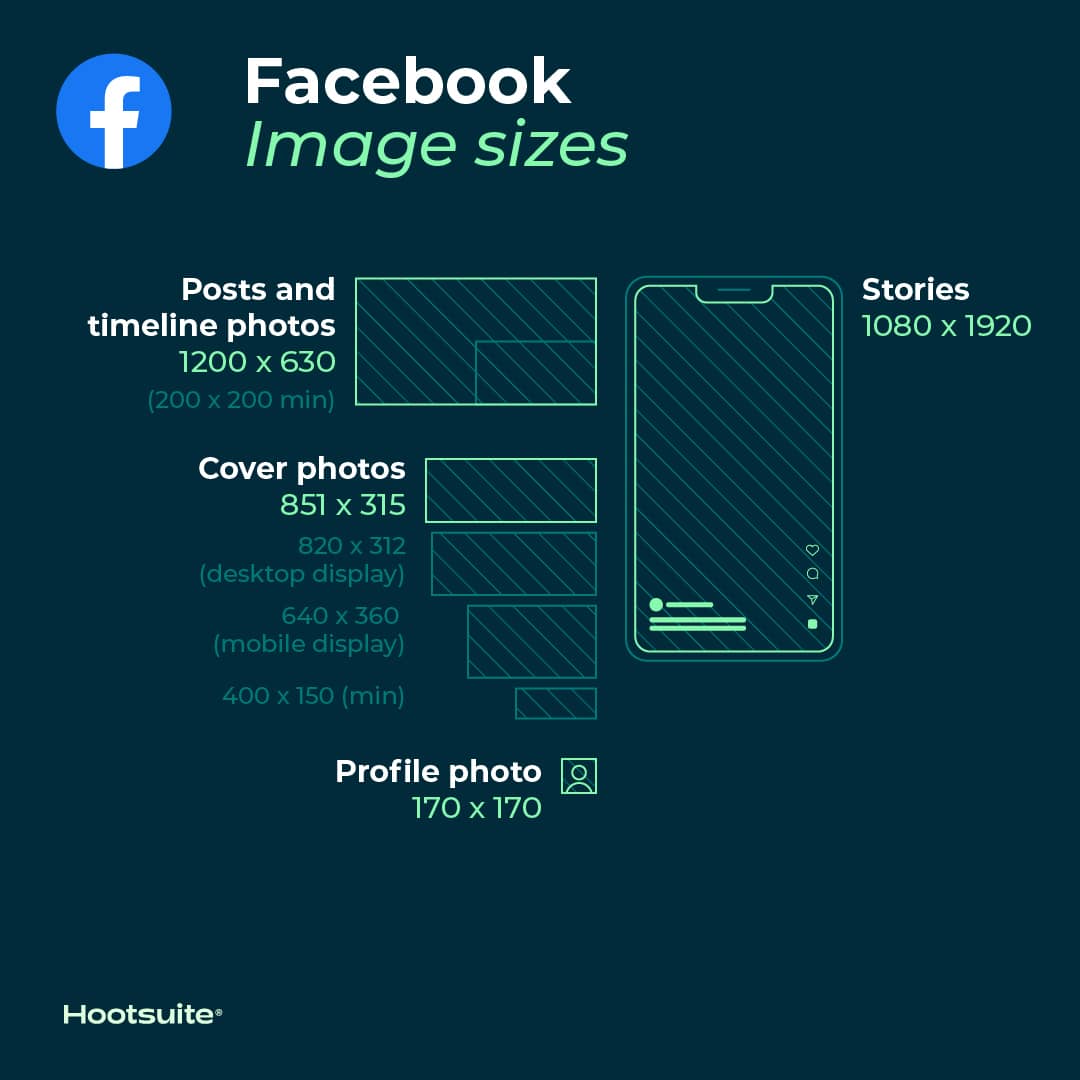
Basic Facebook image sizes

  • Profile photo: 170 x 170 px
  • Landscape: 1200 x 630 px
  • Portrait: 630 x 1200 px
  • Square: 1200 x 1200 px
  • Stories and Reels: 1080 x 1920 px
  • Cover photo: 851 x 315 px

Basic X (formerly Twitter) image sizes

  • Profile photo: 400 x 400 px
  • Landscape: 1600 x 900 px
  • Portrait: 1080 x 1350 px
  • Square: 1080 x 1080 px
  • Cover photo: 1500 x 500 px

Basic LinkedIn image sizes

  • Profile photo: 400 x 400 px
  • Landscape: 1200 x 627 px
  • Portrait: 627 x 1200 px
  • Square: 1080 x 1080 px
  • Cover photo: 1128 x 191 px

Basic TikTok image sizes

  • Profile photo: 200 x 200 px
  • Landscape: 1920 x 1080 px
  • Portrait: 1080 x 1920 px
  • Square: 1080 x 1080 px
  • Stories: 1080 x 1920 px

Bonus: Get the always-up-to-date social media image size cheat sheet. The free resource includes recommended photo dimensions for every type of image on every major network.

Instagram image sizes

Instagram image sizes

Instagram supports horizontally and vertically oriented images. It also still supports square images, which was what the platform was known for when it first launched.

This increases your brand’s options. But it also makes image dimensions a little trickier to get right. Follow these guidelines to make sure your images end up looking their best.

Instagram profile picture size: 320 x 320 pixels

Instagram profile photos are displayed at 110 x 100 pixels, but the image files are stored at 320 x 320 pixels, so make sure to upload an image that’s least that big.

Even though the dimensions are in a square format, Instagram profile photos are displayed as a circle. Make sure any elements you want to focus on in the photo are centered so they don’t get cropped out.

Instagram post sizes (feed photos):

  • Landscape: 1080 x 566 pixels
  • Portrait: 1080 x 1350 pixels
  • Square: 1080 x 1080 pixels
  • Supported aspect ratios: Anywhere between 1.91:1 and 4:5
  • Recommended image size: Width of 1080 pixels, height between 566 and 1350 pixels (depending on whether the image is landscape or portrait)

Tips:

  • If you want your images to look their best on Instagram, aim to upload an image that is 1080 pixels wide.
  • When you share an Instagram image that’s sized over 1080 pixels, Instagram will size it down to 1080 pixels.
  • If you share a photo that has a resolution lower than 320 pixels, Instagram will size it up to 320 pixels.
  • If your image is between 320 and 1080 pixels wide, Instagram will keep that photo at its original resolution, “as long as the photo’s aspect ratio is between 1.91:1 and 4:5 (a height between 566 and 1350 pixels with a width of 1080 pixels).”
  • If your uploaded Instagram image is a different ratio, the platform will automatically crop your photo to fit a supported ratio.

Resource: Learn how to edit Instagram photos like a pro.

Instagram photo thumbnail sizes:

  • Display size: 161 x 161 pixels
  • Recommended upload size: 1080 pixels wide

Tips:

  • Remember that Instagram stores versions of these thumbnails that are as large as 1080 x 1080.
  • To future-proof your Instagram feed and avoid pixelation, upload images that are as large as possible.

Instagram Stories image size: 1080 x 1920 pixels

Tips:

  • This is an aspect ratio of 9:16.
  • Uploading an image with a smaller pixel size (but the same aspect ratio) means the Story will buffer quickly.
  • If you don’t use this ratio, the Story might show with strange cropping, zooming, or leave large sections of the screen blank.
  • Instagram Reels use this same sizing.

Resource: Take your Instagram Stories to the next level with these free templates.

Instagram carousel image sizes:

  • Landscape: 1080 x 566 pixels
  • Portrait: 1080 x 1350 pixels
  • Square: 1080 x 1080 pixels
  • Aspect ratio: landscape (1.91:1), square (1:1), vertical (4:5)
  • Recommended image size: Width of 1080 pixels, height between 566 and 1350 pixels (depending on whether the image is landscape or portrait)

Instagram Reels sizes:

  • 1080 x 1920 pixels
  • This is an aspect ratio of 9:16.
  • Cover photo: 1080 x 1920 pixels
  • Keep in mind that Reels are cropped to a 1:1 image in your profile feed and a 4:5 image in the home feed.

Instagram ads image sizes:

  • Landscape: 1080 x 566 pixels
  • Square: 1080 x 1080 pixels
  • Minimum width: 320 pixels
  • Maximum width: 1080 pixels
  • Supported aspect ratios: Anywhere between 1.91:1 and 4:5

Tips:

Image sizes for Instagram Stories ads: 1080 x 1920 pixels

Tips:

The formula for going viral

Everything you need to make engaging content. AI support for captions, an AI hashtag generator, and access to Canva in Hootsuite.

Get 30 days for $0

X (f.k.a. Twitter) image sizes

Twitter Image sizes

Tweets that include images consistently get more click-throughs, more likes, and more Retweets than non-image Tweets. In fact, Tweets with visual content are three times more likely to get engagement.

So, choosing the right images and creating great visual content for X (formerly Twitter) matters. And, of course, that includes getting the image sizes right.

X (Twitter) image sizes for profile photos: 400 x 400 (recommended)

  • Minimum image size: 200 by 200 pixels
  • Maximum file size: 2MB

X (Twitter) header photo size: 1500 x 500 pixels (recommended)

Tips:

  • To future-proof the image, it’s best to use the maximum size.
  • Header images are cropped to an aspect ratio of 3:1.
  • Keep in mind that the way header images display changes depending on the monitor and browser being used.

X (Twitter) images sizes for in-stream photos: 1600 x 900 pixels (recommended)

  • Minimum size: 600 by 335 pixels
  • Recommended aspect ratio: any aspect between 2:1 and 1:1 on desktop; 2:1, 3:4 and 16:9 on mobile
  • Supported formats: GIF, JPG and PNG
  • Maximum file size: Up to 5MB for photos and GIFs on mobile. Up to 15MB on the web.

X (Twitter) card image size:

X (Twitter) recognizes when a post includes a URL. The platform then crawls that website, pulling in content, including an image for the summary card. (This is how it all works, by the way.)

  • Minimum size: 120 x 120 pixels
  • Supported formats: GIF, JPG, PNG
  • Maximum file size: 1MB

Tips:

  • You can test what your summary card will look like and see a preview using the card validator.
  • There is a range of different X cards, so also a range of sizes. As well as the regular summary cards, there are summary cards with large images, app cards and player cards.

X (Twitter) image sizes for ads:

  • Single and multi-image tweets: Minimum 600 x 335 pixels, but use larger images for the best results.
  • Website card image: 800 x 418 pixels for 1.91:1 aspect ratio. 800 x 800 for 1:1 aspect ratio. Max file size of 20MB.
  • App card image: 800 x 800 pixels for 1:1 aspect ratio. 800 x 418 pixels for 1.91:1 aspect ratio. Max file size of 3MB.
  • Carousels: 800 x 800 pixels for 1:1 aspect ratio. 800 x 418 pixels for 1.91:1 aspect ratio. Max file size of 20MB for 2-6 image cards.
  • Direct Message card: 800 x 418 pixels for 1.91:1 aspect ratio. Max file size of 3MB.
  • Conversation card: 800 x 418 pixels for 1.91:1 aspect ratio. Max file size of 3MB.

Resource: Find more information here on how to advertise on X (Twitter).

Facebook image sizes

Facebook updates its design and image dimensions constantly. The best strategy to future-proof your brand’s content is to always upload the highest-quality image you can. Stick to Facebook’s recommended file formats for the best results.

Facebook image sizes

Facebook profile picture size: 170 x 170 pixels (on most computers)

Your Facebook profile picture will display at 170 x 170 pixels on desktop. But it will display as 128 x 128 pixels on smartphones.

Facebook image sizes for cover photos: 851 x 315 pixels (recommended)

  • Display size desktop: 820 x 312 pixels
  • Display size smartphone: 640 x 360 pixels
  • Minimum size: 400 x 150 pixels
  • Ideal file size: Less than 100KB

Tips

  • To avoid any compression or distortion, upload a JPG or PNG file.
  • Use the recommended pixel sizes for the fastest load times.
  • Profile pictures and cover photos with logos or text work best when uploaded as a PNG file.
  • Don’t drag to reposition once you’ve uploaded your cover photo.

Resource: Get more tips on creating great Facebook cover photos.

Facebook timeline photo and post sizes:

Facebook automatically resizes and formats your photos when they are uploaded for the timeline to be 500 pixels wide and to fit the 1.91:1 aspect ratio.

But avoid pixelation or slow load times by remembering these sizes:

  • Recommended size: 1200 x 630 pixels
  • Minimum size: 600 x 315 pixels

Tips:

  • If you are sharing 2-10 images in your brand’s Facebook post using the carousel display, images should be 1200 x 1200.
  • This is a 1:1 ratio.

Facebook event cover photo image sizes: 1200 x 628 pixels (recommended)

Tips

Facebook image sizes for panorama or 360 photos:

Tips

  • Facebook automatically recognizes and processes these images based on “camera-specific metadata found in photos taken using 360-ready devices.”
  • Files for these Facebook images can be up to 45 MB for JPEGs or 60 MB for PNGs.
  • Facebook recommends using JPEGs for 360 photos and ensuring files aren’t bigger than 30 MB.

Facebook image sizes for Facebook Stories: 1080 x 1920 pixels (recommended)

Tips

  • Facebook Stories take up the full screen of a phone. That’s an aspect ratio of 9:16.
  • Don’t choose an image with a width smaller than 500 pixels.
  • For Stories with text, consider leaving 14% of the top and bottom text-free. (That’s 250 pixels.) That way any call-to-action won’t be covered by your brand’s profile photo or buttons.

Facebook image sizes for ads:

  • Sizes for Facebook Feed ads: At least 1080 x 1080 pixels. Minimum size 600 x 600 pixels. Ratio 1.91:1 to 1:1. Maximum file size of 30 MB.
  • Sizes for Facebook Right Column ads: At least 1080 x 1080 pixels. Minimum size 254 x 133 pixels. Ratio 1:1. (Remember: These are a desktop-only ad format.)
  • Facebook image sizes for Instant Articles: At least 1080 x 1080 pixels. Ratio 1.91:1 to 1:1. Maximum file size of 30 MB.
  • Image sizes for Facebook Marketplace ads: At least 1080 x 1080 pixels. Ratio 1:1. Maximum file size of 30 MB.
  • Image sizes for Facebook Search: At least 1080 x 1080 pixels. Minimum size 600 x 600 pixels. Ratio 1.91:1 to 1:1. Maximum file size of 30 MB.
  • Facebook image sizes for Sponsored Messages: At least 1080 x 1080 pixels. Ratio 1.91:1 to 1:1. Maximum file size of 30 MB.
  • Sizes for Messenger inbox ads: At least 1080 x 1080 pixels. Ratio 1:1. Minimum size 254 x 133 pixels. Maximum file size of 30 MB.
  • Sizes for Messenger Stories ads: At least 1080 x 1080 pixels. Ratio 9:16. Minimum width of 500 pixels.

Resource: Here’s more info on how to advertise on Facebook.

LinkedIn image sizes

When you use LinkedIn for business — whether it’s via your personal profile or a company page — pairing your LinkedIn updates with images has consistently been shown to increase comments and sharing.

Stick to the recommended sizes below for best results. And always make sure to look at your profile and content on multiple devices before finalizing.

LinkedIn image sizes

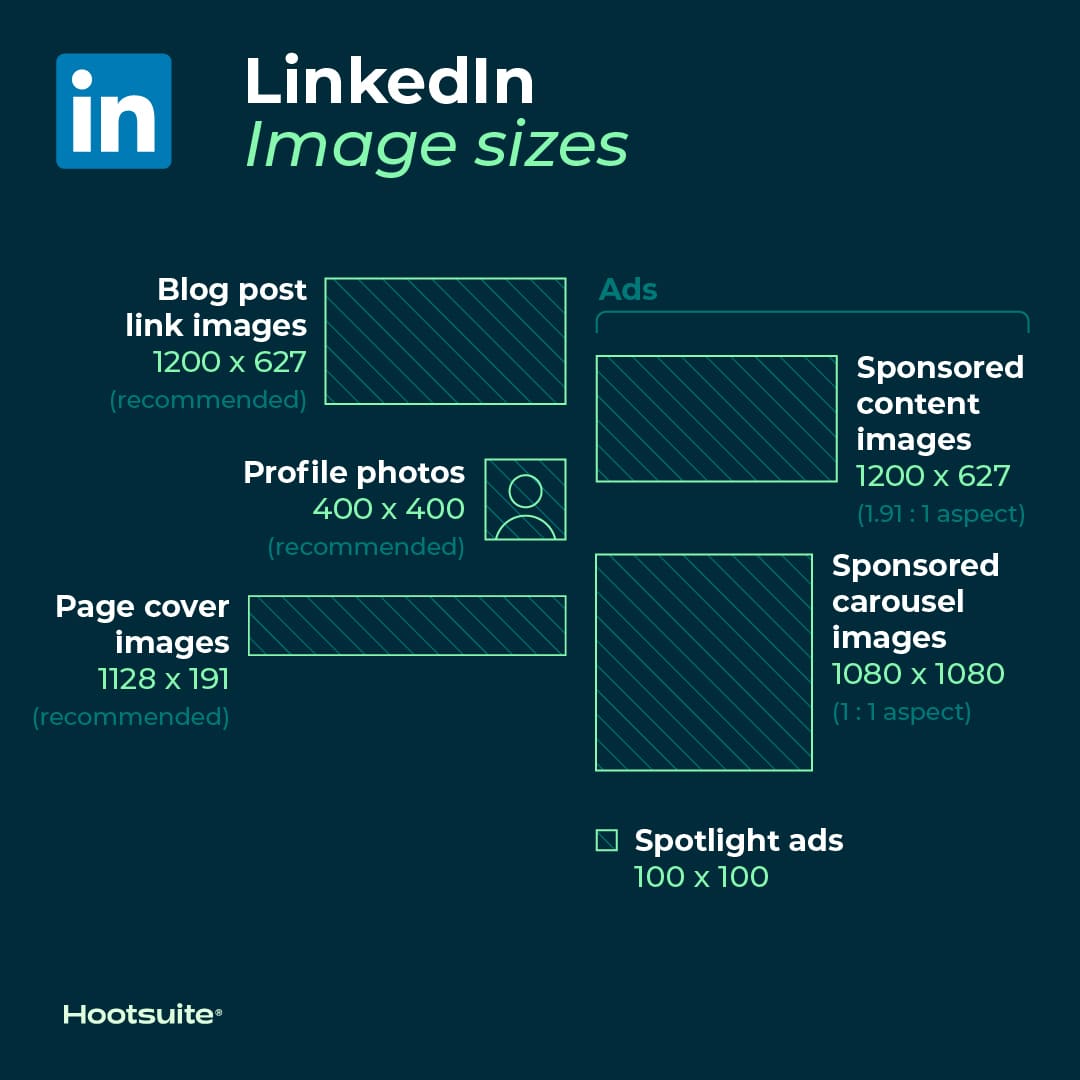
LinkedIn image sizes for profile photos: 400 x 400 pixels or larger (recommended)

Tips

  • LinkedIn can accommodate photos up to 7680 x 4320 pixels.
  • And it can handle files up to 8MB, so upload as large as you can to future-proof.

LinkedIn image sizes for personal profile cover photos: 1584 x 396 pixels (recommended)

  • Aspect ratio: 4:1

Tips

  • Make sure your file is smaller than 8MB.
  • Cover photos are cropped differently on mobile and desktop. Make sure to view your profile on both kinds of display before finalizing.

LinkedIn image sizes for company pages:

  • Company logo size: 300 x 300 pixels
  • Page cover image size: 1128 x 191 pixels
  • Life tab main image size: 1128 x 376 pixels
  • Life tab custom modules image size: 502 x 282 pixels
  • Life tab company photos image sizes: 900 x 600 pixels
  • Square logo: At least 60 x 60 pixels

Tips

  • When posting image updates to your company page, make sure to use PNG or JPG images.
  • Use an aspect ratio of 1.91:1.
  • The recommended LinkedIn post size is 1200 x 628 pixels.
  • This LinkedIn image sizing also applies to LinkedIn Showcase pages.

LinkedIn image sizes for blog post link images: 1200 x 627 pixels (recommended)

LinkedIn custom image size for sharing a link in an update: 1200 x 627 pixels (recommended)

When pasting a URL into an update, an auto-generated thumbnail image may appear in the preview if one is available, along with the article or website title.

But, you can customize it by clicking the Image icon below the text box and selecting a photo from your computer.

Tips:

  • The image should use a 1.91:1 ratio.
  • More than the minimum of 200 pixels wide.
  • If the image width is less than 200 pixels wide, it will appear as a thumbnail on the left side of the post.

LinkedIn image sizes for ads:

  • Company logo size for ads: 100 x 100 pixels
  • Spotlight ads logo size: 100 x 100 pixels
  • Spotlight ads custom background image: 300 x 250 pixels
  • Sponsored content images: 1200 x 627 pixels (1.91:1 aspect ratio)
  • Sponsored content carousel images: 1080 x 1080 pixels (1:1 aspect ratio)

Pinterest image sizes

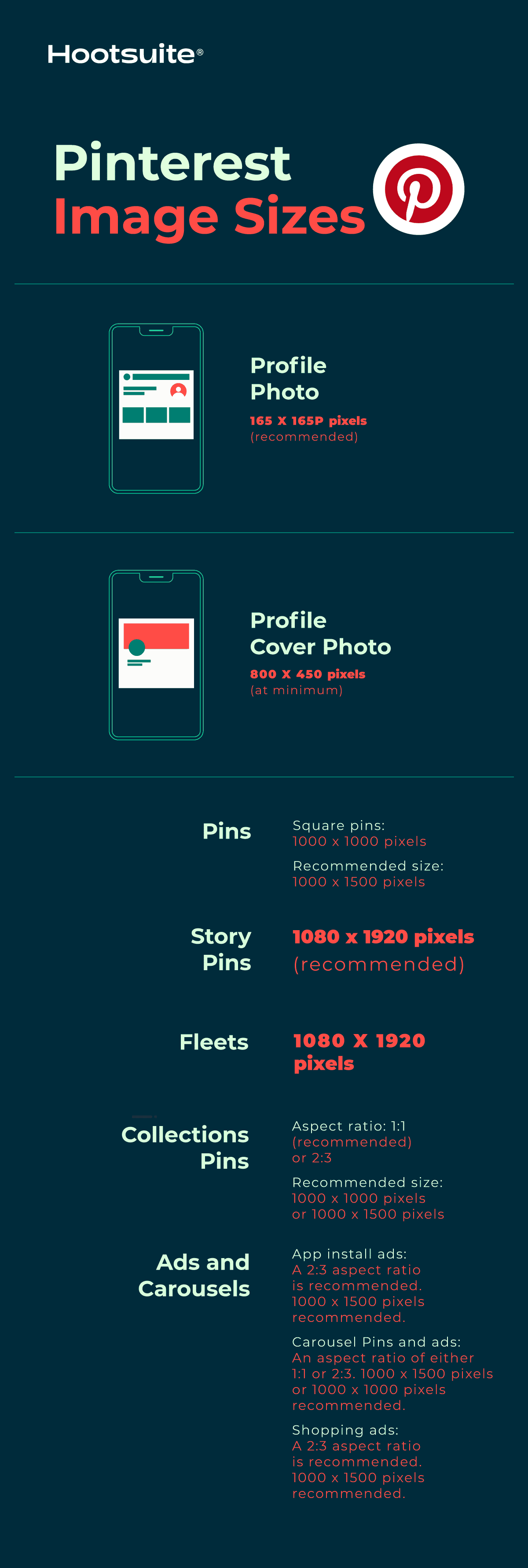
Pinterest profile image size: 165 x 165 pixels (recommended)

Pinterest image sizes

Tips

  • Remember that your profile photo will be displayed as a circle.

Pinterest image size for profile cover photo: 800 x 450 pixels (at minimum)

Tips

  • Try to avoid placing a portrait photo into the cover photo spot.
  • Instead, use a landscape photo with a 16:9 aspect ratio.

Pinterest image sizes for Pins:

  • Aspect ratio: 2:3 (recommended)
  • Square pins: 1000 x 1000 pixels
  • Recommended size: 1000 x 1500 pixels
  • Max file size: 20MB

Tips

  • Keeping the 2:3 aspect ratio ensures your brand’s audience sees all the image’s details on their feed.
  • On the feed, Pins are displayed with a fixed width of 236 pixels.
  • If you want to create Pins with a different aspect ratio, know that Pinterest crops images from the bottom.
  • Both PNG and JPEG files are accepted.

Pinterest image sizes for collections Pins:

  • Aspect ratio: 1:1 (recommended) or 2:3
  • Recommended size: 1000 x 1000 pixels or 1000 x 1500 pixels
  • Max file size: 10MB

Tips

  • This format appears as one main image, above three smaller images.
  • All images must have the same aspect ratio.
  • Collections appear in feeds on mobile devices.
  • Both PNG and JPEG files are accepted.
  • Collections can also be an ad format on Pinterest.

Pinterest image size for Story Pins:

  • Aspect ratio: 9:16
  • Recommended size: 1080 x 1920 pixels
  • Max file size: 20MB

Pinterest image sizes for ads and carousels:

  • App install ads: Same specs as standard Pins. A 2:3 aspect ratio is recommended. 1000 x 1500 pixels recommended.
  • Carousel Pins and ads: An aspect ratio of either 1:1 or 2:3. 1000 x 1500 pixels or 1000 x 1000 pixels recommended. Up to 5 images can be included in a carousel.
  • Shopping ads: Same specs as standard Pins. A 2:3 aspect ratio is recommended. 1000 x 1500 pixels recommended.

Resource: Get some advice on how to use Pinterest for business.

Snapchat image sizes

Snapchat image sizes

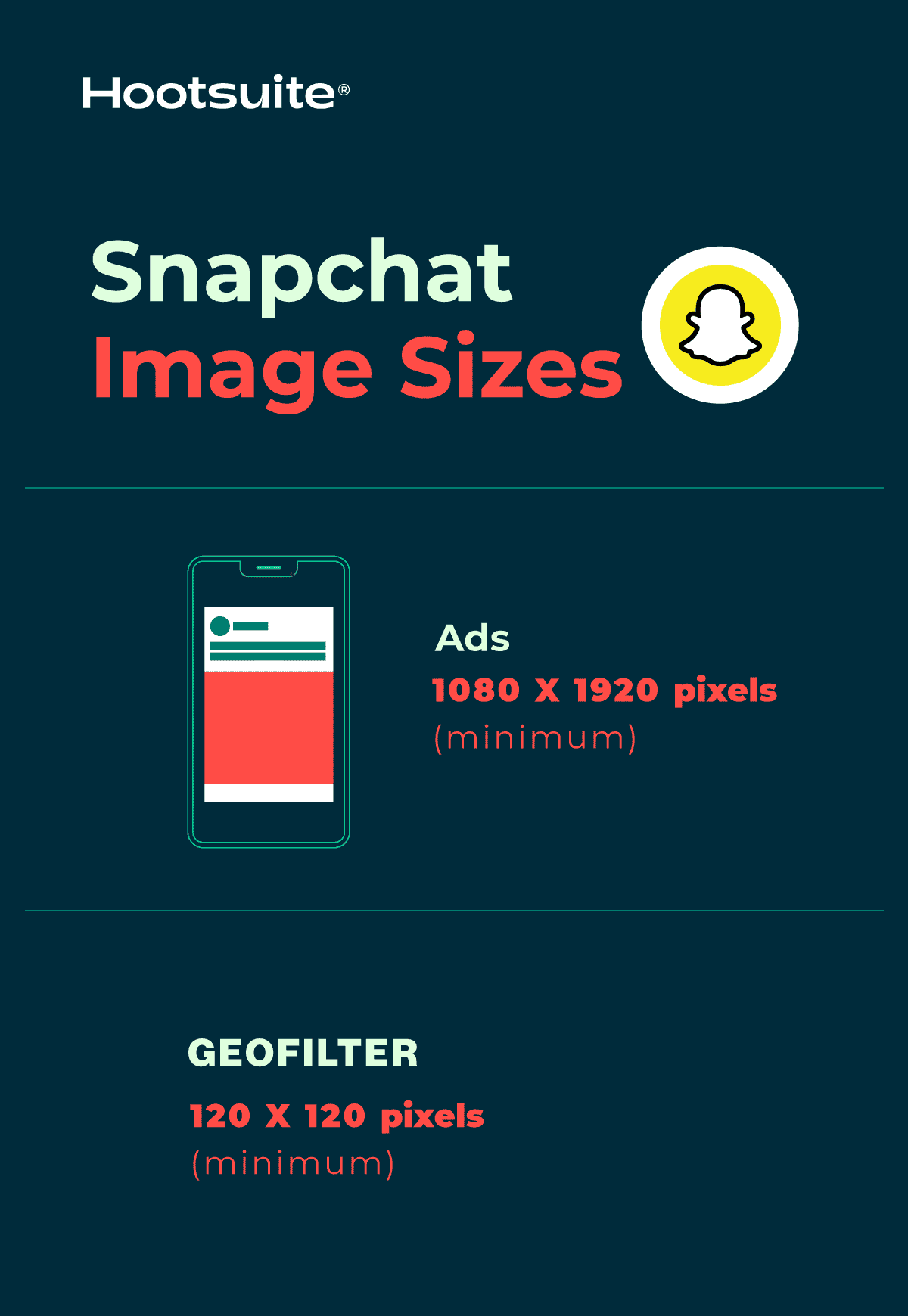
Snapchat ads image size: 1080 x 1920 pixels (at minimum)

  • Aspect ratio: 9:16
  • File type: JPEG or PNG
  • Maximum file size: 5MB

Snapchat Geofilter image size: 1080 x 1920 (at minimum)

  • Aspect ratio: 9:16
  • File type: JPEG or PNG
  • Maximum file size: 5MB

Resource: How to Create a Custom Snapchat Geofilter

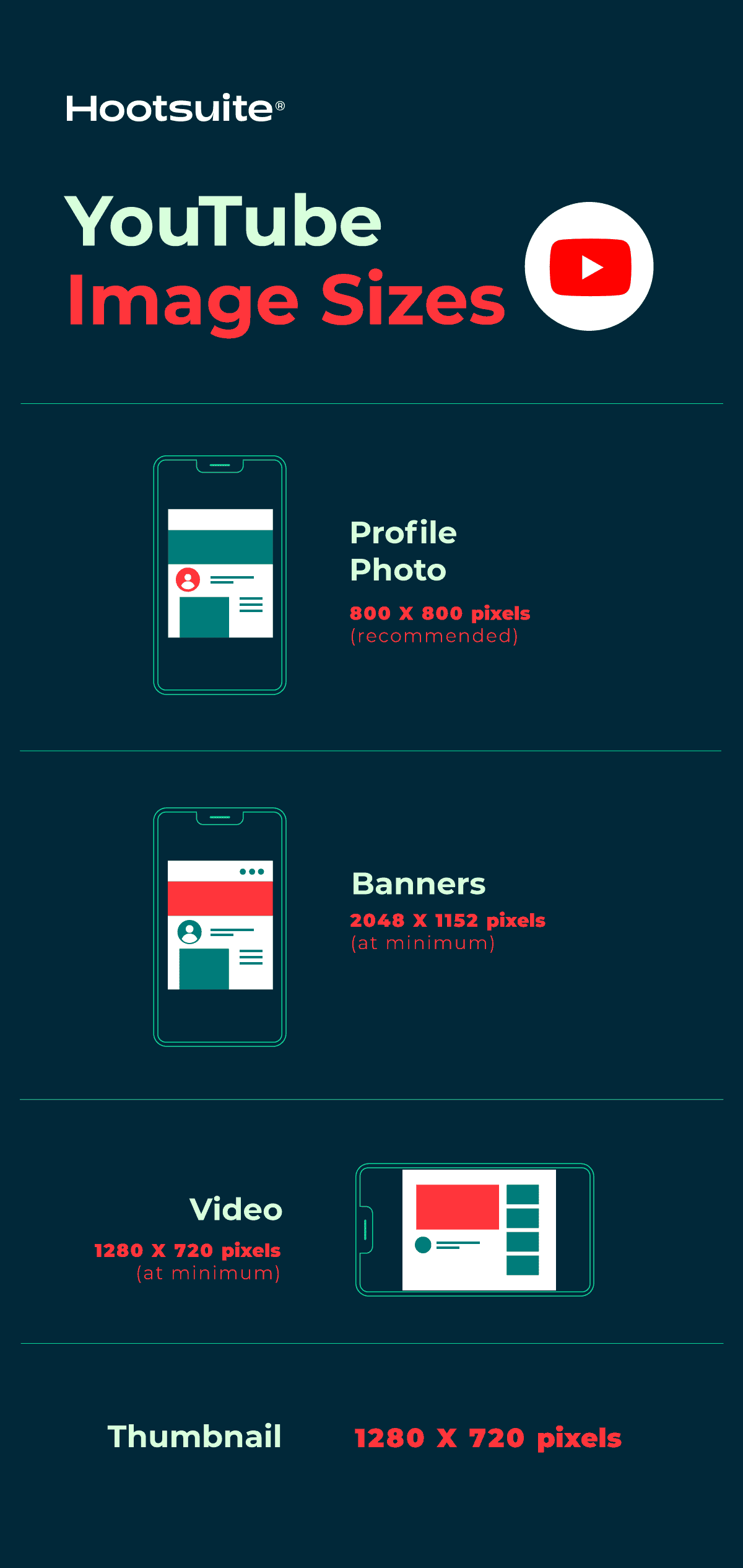
YouTube image sizes

YouTube image sizes

YouTube profile photo size: 800 x 800 pixels (recommended)

Tips

  • Make sure the focus of your photo is centered for best results.
  • Files should be JPEG, GIF, BMP or PNG. Animated GIFs won’t work.
  • Photos will render at 98 x 98 pixels.

YouTube banner image size: 2048 x 1152 pixels (at minimum)

  • Aspect ratio: 16:9
  • Minimum area for text and logos without being cut off: 1235 x 338 pixels
  • Maximum file size: 6MB

Resource: How to make the best YouTube channel art (plus 5 free templates).

YouTube video size: 1280 x 720 pixels (at minimum)

Tips

  • YouTube recommends that videos intended for sale or rental have a higher pixel count: 1920 x 1080 pixels.
  • YouTube requires videos to be 1280 x 720 pixels in order to meet HD standards.
  • This is a 16:9 aspect ratio.

YouTube thumbnail size: 1280 x 720 pixels

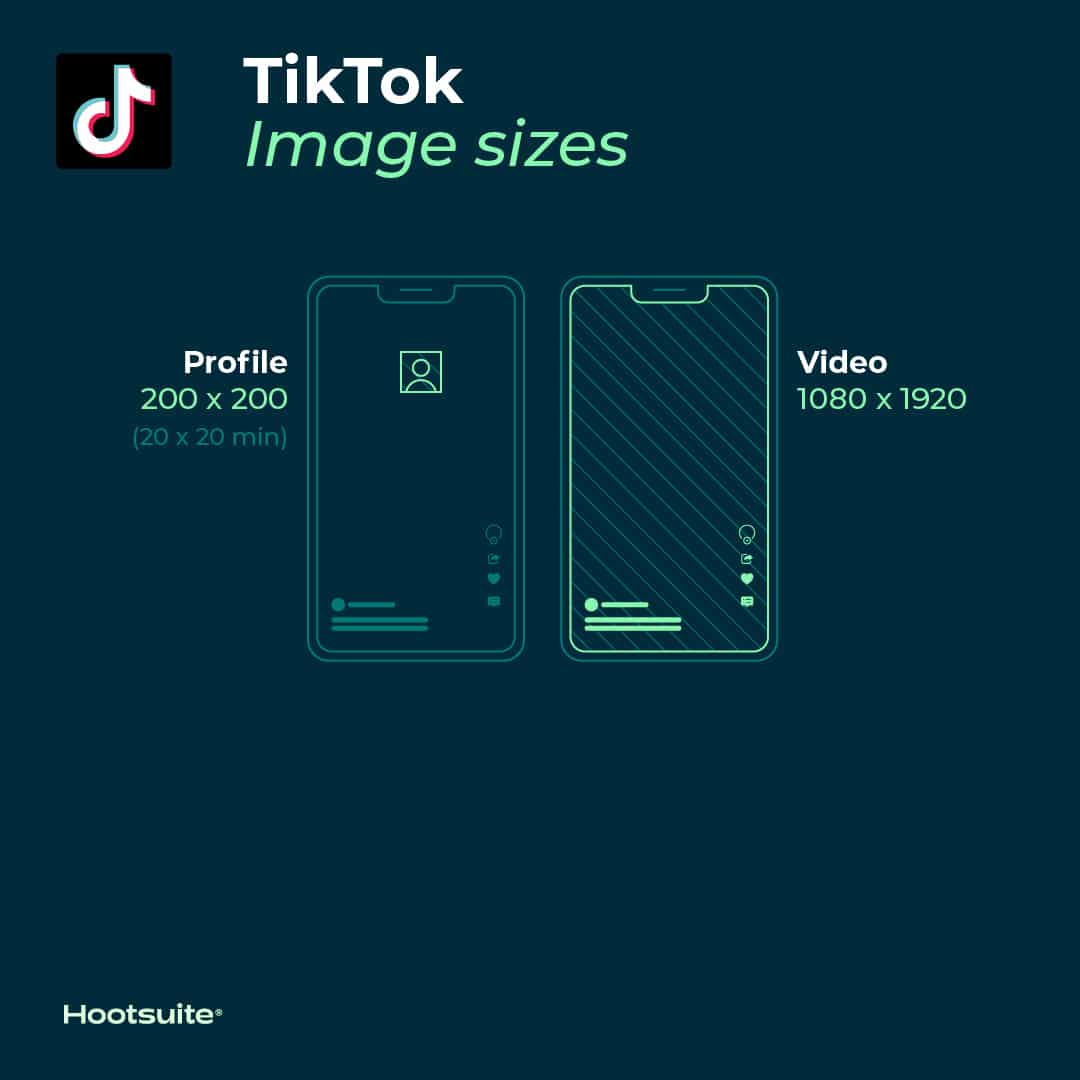
TikTok image sizes

TikTok image sizes

TikTok profile photo size: 20 x 20 pixels (minimum size to upload)

Tips

  • While 20 x 20 is the minimum upload size, upload a higher quality photo for future-proofing.

TikTok video size: 1080 x 1920 (portrait) or 1920 x 1080 (landscape)

Tips

  • The ideal aspect ratio for vertical TikTok videos is 9:16. You can post vertical videos with other dimensions, but the platform will add black bars to the top and bottom of the videos so they are full-screen.
  • The ideal aspect ratio for horizontal TikTok videos is 16:9. When you upload a video with these dimensions, a Full Screen button will appear that allows users to view the full video by flipping their screens sideways.

TikTok carousel image size: 1080 x 1920 (for best results)

Tips

  • The ideal aspect ratio for Tik Tok carousel images is 9:16 or 1:1, but you can also post images with a 4:5 ratio.

Why is it important to get social media image sizes right?

Social media marketers need to get many things right when creating visual content for social media.

You’ve got to make sure any images you use don’t defy copyright laws. If you don’t have original imagery, you’ve got to find high-quality stock photos. And you’ve got to figure out which tools out there can help elevate your social media images.

On top of that, you’ve got to get your social media image sizes right. And getting that right is really important because:

  • It avoids pixelation and awkward image stretching. And avoiding that keeps your images looking professional.
  • Your photos will be optimized for each social channel’s feed. This can help increase engagement.
  • It ensures your audience sees the full photo. Incorrect sizing could cut off some of your brand’s messaging.
  • It can future-proof your content. Being in-the-know with social media image sizes now could mean less work for your brand in the future, when network change up how images display again.

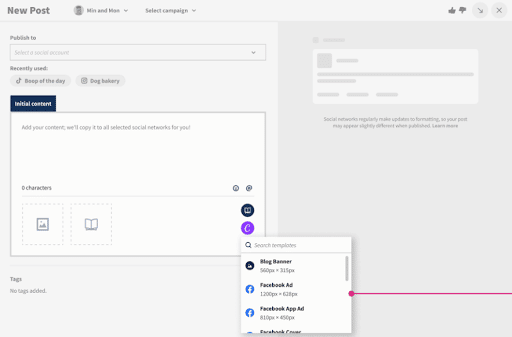
When building posts in Hootsuite, you never have to worry about getting the image size wrong. You can upload and refine your images using Canva’s editing tools right inside the Hootsuite dashboard. And the very first step of the process is selecting a network-optimized size for your image from a drop-down menu.

Here’s how it works:

  1. Log in to your Hootsuite account and head to Composer.
  2. Click on the purple Canva icon in the bottom right corner of the content editor.
  3. Select the type of visual you want to create. You can pick a network-optimized size from the drop-down list or start a new custom design. 
Using Canva in Hootsuite Composer
  1. When you make your selection, a login pop-up window will open. Sign in using your Canva credentials or follow the prompts to start a new Canva account. (In case you were wondering — yes, this feature does work with free Canva accounts!)
  2. Design your image in the Canva editor. 
  3. When you’re done editing, click Add to post in the top right corner. The image will automatically be uploaded to the social post you’re building in Composer.

Start your free 30-day trial

You can cancel anytime.

Don’t feel like memorizing all this info? Easily resize your social media images for publication through Hootsuite Compose, which includes up-to-date image dimensions for every social media network.

Get Started

Better content in half the time

Boost engagement and save time with an AI writer, hashtag generator, and Canva in Hootsuite.

Free 30-Day Trial

The post 2024 social media image Sizes for all networks [CHEATSHEET] appeared first on Social Media Marketing & Management Dashboard.


* This article was originally published here

Social Media Stocks To Follow Today - September 30th - MarketBeat

Social Media Stocks To Follow Today - September 30th    MarketBeat * This article was originally published here