How Proxies Can Enhance Social Media Marketing and Management TechiExpert.com
* This article was originally published here
Saturday, July 13, 2024

Friday, July 12, 2024
Thursday, July 11, 2024
The Best Time to Post on LinkedIn in 2024 (And Why)
Wondering what the best time to post on LinkedIn is in 2024?
Social media posting times vary from brand to brand, audience to audience, but there is one thing we know for sure: if you want your posts to be seen and engaged with, you need to post them when your audience is most active.
If you don’t time your posts correctly, you’ll end up speaking to an empty room — and an empty room can’t talk back, or follow your brand, or buy your products.
Keep reading to learn more about the overall best times to post on LinkedIn, and how you can discover the right time for your brand.
Bonus: Download our free, customizable social media calendar template to easily plan and schedule all your content in advance.
Why does timing matter when posting on LinkedIn?
Timing matters when posting on LinkedIn because in order for your audience to engage with your content, they have to see it.
If you post at a time when they are unlikely to be online, LinkedIn’s algorithm, which uses member activity as a ranking factor, may not prioritize your post in users’ feeds. This means your LinkedIn content could get buried before your audience even has a chance to interact with it.
As well, in early 2024, LinkedIn introduced “suggested posts,” a new feature that keeps important posts visible in feeds long after they’re posted. This marks a significant shift from the traditional newsfeed approach, and is part of LinkedIn’s effort to match content with users’ interests, rather than just showing the latest updates.
What does this mean for you? Well, if promoted to a suggested post, your posts could have a longer lifespan and more chances to get in front of user’s eyeballs — even weeks or months after posting. “It’s the latest step in our ongoing efforts to emphasize knowledge and advice over mere virality,” Tim Jurka, LinkedIn’s Senior Director of Engineering, told Entrepreneur magazine.
So, what does this mean for the best time to post to LinkedIn? Well, choosing the right posting time still matters. And here’s why:
- Visibility: Posting when your audience is active increases the chances of your content being seen in their feeds, and being engaged with.
- Engagement: Higher engagement shortly after posting can signal to LinkedIn’s algorithm that your content is valuable, potentially leading to broader visibility as a suggested post.
- Algorithm favourability: Timely posts that garner quick engagement are more likely to be promoted by LinkedIn’s algorithm, increasing their reach.
The best time to post on LinkedIn in 2024
So, when is the best time to post on LinkedIn?
According to our research, the best overall time to post on LinkedIn is between 8:00 AM and 9:00 AM on Tuesdays and Wednesdays.

Weekends are typically the worst days of the week to post on LinkedIn. The lower engagement may be because people view LinkedIn as a work-related social media platform and something to avoid on days off.
Planning on posting more than once or twice a week? Below is a breakdown of the best times to post on LinkedIn throughout the week, based on what the Hootsuite social team found:
When to post on LinkedIn:
- Monday: 11:00 AM PST
- Tuesday: 6:00-8:00 AM PST
- Wednesday: 9:00 AM PST
- Thursday: 2:00 PM PST
- Friday: 8:00 PM PST
- Saturday: 4:00-5:00 AM PST
- Sunday: 6:00 AM PST
Disclaimer: The above times are recorded in US Pacific Time, and our audience is spread across North America. You may need to adjust these times based on the geographic location of your target audience.
The best time to post on LinkedIn by day of the week
Want to break down the best day and time to post on LinkedIn even further? Here’s what engagement looks like on the platform every day of the week.
The best time to post on LinkedIn on Monday
The best time to post on LinkedIn on Monday is 11:00 AM. It seems like people are likely to start Monday off strong with work tasks and then move on to online networking between mid-morning and lunchtime.
The best time to post on LinkedIn on Tuesday
The best time to post on LinkedIn on Tuesday is between 6:00-8:00 AM. Tuesdays are also one of the best days to post on LinkedIn throughout the week.
The best time to post on LinkedIn on Wednesday
The best time to post on LinkedIn on Wednesday is 9:00 AM. Wednesday is also one of the best days to post on LinkedIn throughout the week.
The best time to post on LinkedIn on Thursday
The best time to post on LinkedIn on Thursday is 2:00 PM. Unlike the other days of the week, Thursday sees the highest engagement in the early afternoon.
Best time to post on LinkedIn on a Friday
The best time to post on LinkedIn on Friday is 8:00 PM. This one is a little surprising, because who’s spending the end of their week on LinkedIn? Everyone, it looks like.
Best time to post on LinkedIn on a Saturday
The best time to post on LinkedIn on Saturday is between 4:00-5:00 AM. Posting early helps brands capture the attention of LinkedIn users who check the app before heading into their weekend plans.
Best time to post on LinkedIn on Sunday
The best time to post on LinkedIn on Sunday is 6:00 AM. While weekends don’t get as much engagement as business hours, early mornings are your best bet on both Saturday and Sunday.
What affects the best time to post on LinkedIn?
Even once you have the best time of day to post on LinkedIn locked in, there are other, outside considerations, that can affect your post’s performance.
Here’s a breakdown.
Your unique audience
Just like every business has its own unique identity and goals, each businesses audience on LinkedIn is distinct. Their online habits, influenced by profession, interests, and time availability, dictate when they are most active. For instance, professionals in technology might engage more during weekdays, whereas creative industries might see more activity during evening hours.
Since no two audiences are exactly alike, you’ll need to do your research on what times are best for you to post.
Remember when we said that Tuesdays and Wednesdays are the best universal times to post on LinkedIn? Well, they do work for many businesses — but here at Hootsuite, we zeroed in on different times that work best for our audience.
Trish Riswick, Hootsuite’s Social Media Team Lead, spilled the tea: “Over the past few months, I’ve noticed that posting to the Hootsuite LinkedIn account on Mondays and Fridays generates the best performance.”
Trish also emphasized that experiments are the key to finding your optimal posting schedule.
“[Last year] I was posting on LinkedIn primarily before 12 pm PST. One time, after forgetting to get something out at noon, I posted an update at 2 pm and… it did great. Since then, I’ve noticed a positive increase in engagements at that time throughout the week. This just goes to show that you need to keep testing different schedules and monitoring what works for you and your content.”

To find out when your audience is most engaged, dive into your LinkedIn Analytics tool. Look for patterns in when your posts receive the most likes, comments, and shares. This data will help you pinpoint the times that work best for your specific audience.
Pro tip: Use Hootsuite Analytics to see all of your Linkedin post data, plus competitor benchmarking and best time to post data based on your unique audience.
Your industry
Different industries have different rhythms when it comes to social media engagement. What works for a tech startup may not necessarily resonate with a healthcare provider or a fashion brand. Understanding these nuances requires a keen eye on industry-specific trends and consumer behaviors.
Not sure where to start? A little social competitive analysis never hurt anyone. Lurking at your competitors’ profiles can give you an idea of what they consider the best times to post. If the products or services you offer are similar, your audiences might overlap — and you can learn from your competition’s findings, skipping the trial and error.
Check out the post below to learn what kind of engagement you can expect on LinkedIn.
Pro tip: You might notice that many brands schedule their posts to go live right on the hour mark. To avoid the competition, try posting a few minutes before or after the :00.
The LinkedIn algorithm
LinkedIn’s algorithm prioritizes posts that generate immediate engagement — likes, comments, and shares — shortly after they’re posted. This means that the initial response to your post plays a crucial role in determining its visibility and reach across the platform.
To optimize your posts for LinkedIn’s algorithm, focus on creating content that encourages immediate interaction from your audience. Timely and relevant posts tend to perform better, as they align with current discussions and trends within your industry. By posting when your audience is most active and likely to engage, you can increase the chances of your content being prioritized by LinkedIn’s algorithm and reaching a broader audience.
Pro tip: Not sure what to post? Here’s 12 LinkedIn post ideas you can have for free. Plus, try Hootsuite’s LinkedIn post generator to cut your content sourcing time in half.
Time zone considerations
LinkedIn users span the globe, so posting at times that work across different time zones can widen your reach. For instance, posting early in the morning from a PST time zone (say, 5 AM PST) might catch both West Coast and East Coast audiences when they’re getting up for work.
If you’re an international brand, make sure you are posting in your target audience’s time zone. This should go without saying, because your audience won’t see your post or interact with it when they’re asleep.
Pro tip: Using a social media management tool to schedule your posts in advance will help you get your LinkedIn posts live at the right time, no matter where you are located. In other words, if your best time to post happens to be 6 AM on a Tuesday, you won’t have to set an alarm.

Current events and trends
Posting about hot topics or industry events shows you’re in the know and keeps your content relevant. It’s like joining a conversation that everyone’s buzzing about. For example, if there’s a big tech conference or a new industry report out, posting related content can position you as a thought leader and get more eyes on your posts.

Social listening tools that keep track of trends and hashtags can help you stay ahead — like Hootsuite. By knowing what’s trending, you can tweak your content to fit your audience’s interests at the perfect time.

Just remember, while planning your LinkedIn posts around hot topics can be effective, make sure your content actually adds value to the conversation. This ensures your posts don’t just ride the wave of popularity but also genuinely contribute to your audience’s professional knowledge and interests.
How to find your unique best time to post on LinkedIn with Hootsuite
Figuring out when to post on LinkedIn for maximum impact is easier with Hootsuite. Use these tools to nail down the best times to share your content and boost your LinkedIn strategy.
Best Time to Publish
Hootsuite’s Best Time to Publish feature takes the guesswork out of scheduling your LinkedIn posts. It looks at how your audience has engaged with your past posts to recommend the times they’re most active.
Here’s how to use it:
Go to your Hootsuite dashboard and click on Analytics.

Select Best Time to Publish from the menu on the left.

Pick your LinkedIn account from the list to see when your audience is most likely to engage.

Now, you’ll get customized heatmaps showing the best days and times to post based on your audience’s habits. Hootsuite pinpoints the specific times when your LinkedIn posts will get the most likes, comments, and shares, tailored to what works best for your audience.
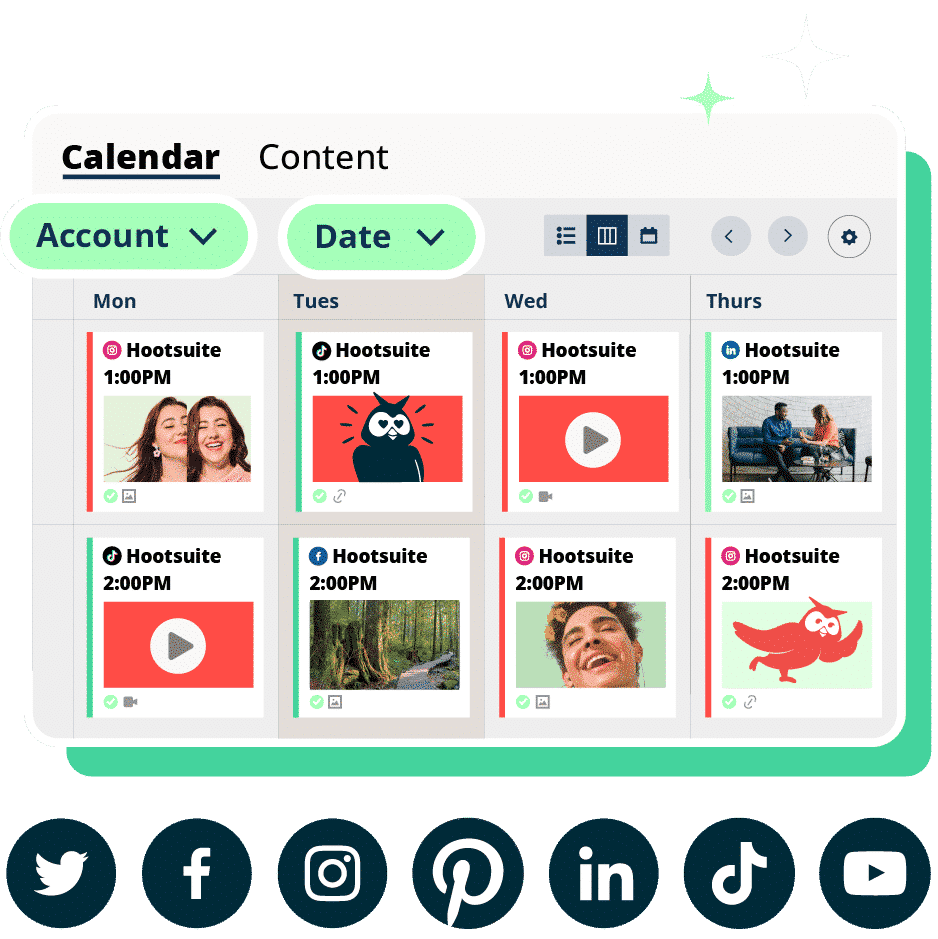
Recommended Times in Composer
When you’re ready to create a post, Recommended Times in Composer helps you decide when to post right from your draft.
Here’s how:
Start drafting your LinkedIn post in Hootsuite Composer. Add your content, images, hashtags, and anything else.

Click on Schedule for later at the bottom right.

Hootsuite suggests the best times to publish, based on when your audience is most active and how your previous posts have performed. Choose one of the recommended times or set a custom time that fits your LinkedIn strategy.

Easily manage your LinkedIn Page alongside your other social channels using Hootsuite. From a single platform you can schedule and share content—including video—engage your network, and boost top-performing posts.
Do it better with Hootsuite, the all-in-one social media tool. Stay on top of things, grow, and beat the competition.
Free 30-Day TrialThe post The Best Time to Post on LinkedIn in 2024 (And Why) appeared first on Social Media Marketing & Management Dashboard.
* This article was originally published here
Wednesday, July 10, 2024
Tuesday, July 9, 2024
Instagram Story Analytics: How to Measure the Metrics that Matter
With top-of-the-feed placement, links, and interactive stickers, Instagram Stories is a prime channel brands can use to drive awareness, traffic, sales, and engagement. And Instagram Stories analytics can prove it.
Instagram Stories last a mere 24 hours — here today, gone tomorrow. But just because these pieces of content disappear doesn’t mean they can’t have a lasting impact on your audience. Track the right metrics, and you’ll learn exactly how to optimize your Instagram Stories to achieve your social media goals.
And we’re here to show you how. Read on for everything you need to know about Instagram Story analytics.
What are Instagram Story analytics?
Instagram story analytics show you how your stories are performing. There are three different types of metrics: engagement, reach, and navigation. By understanding these metrics, you can better understand what works for your audience and the opportunities to improve engagement.
How to view Instagram Story analytics
You’re just a few taps away from viewing all the sweet, sweet stats from your latest Instagram Story — just grab your phone and follow along. (Psst: You’ll need a Professional or Creator account to access analytics on your Instagram content. Here’s how to set that up.)
1. Open the Instagram app and tap on your profile.
2. Tap the menu icon in the top right corner (three vertical lines).
3. Tap Insights.
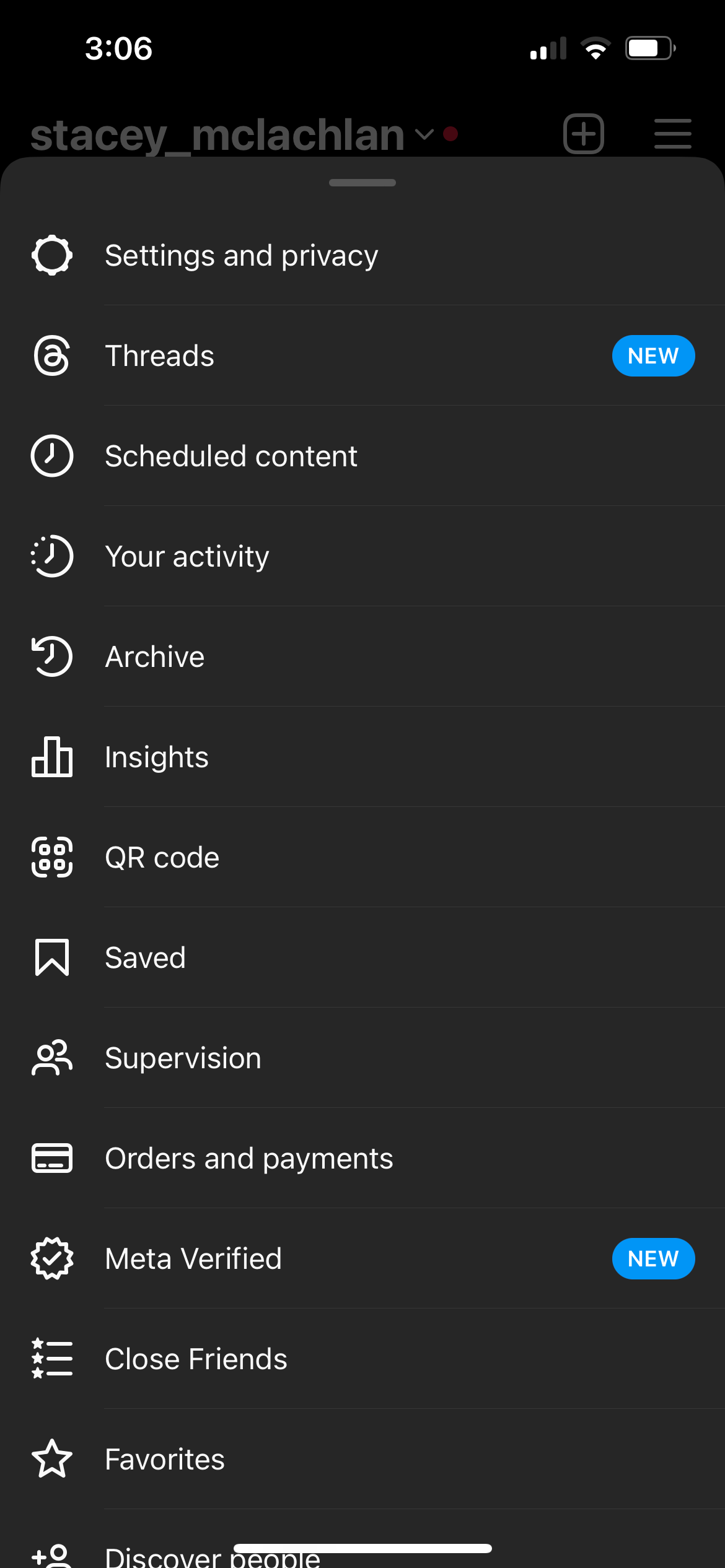
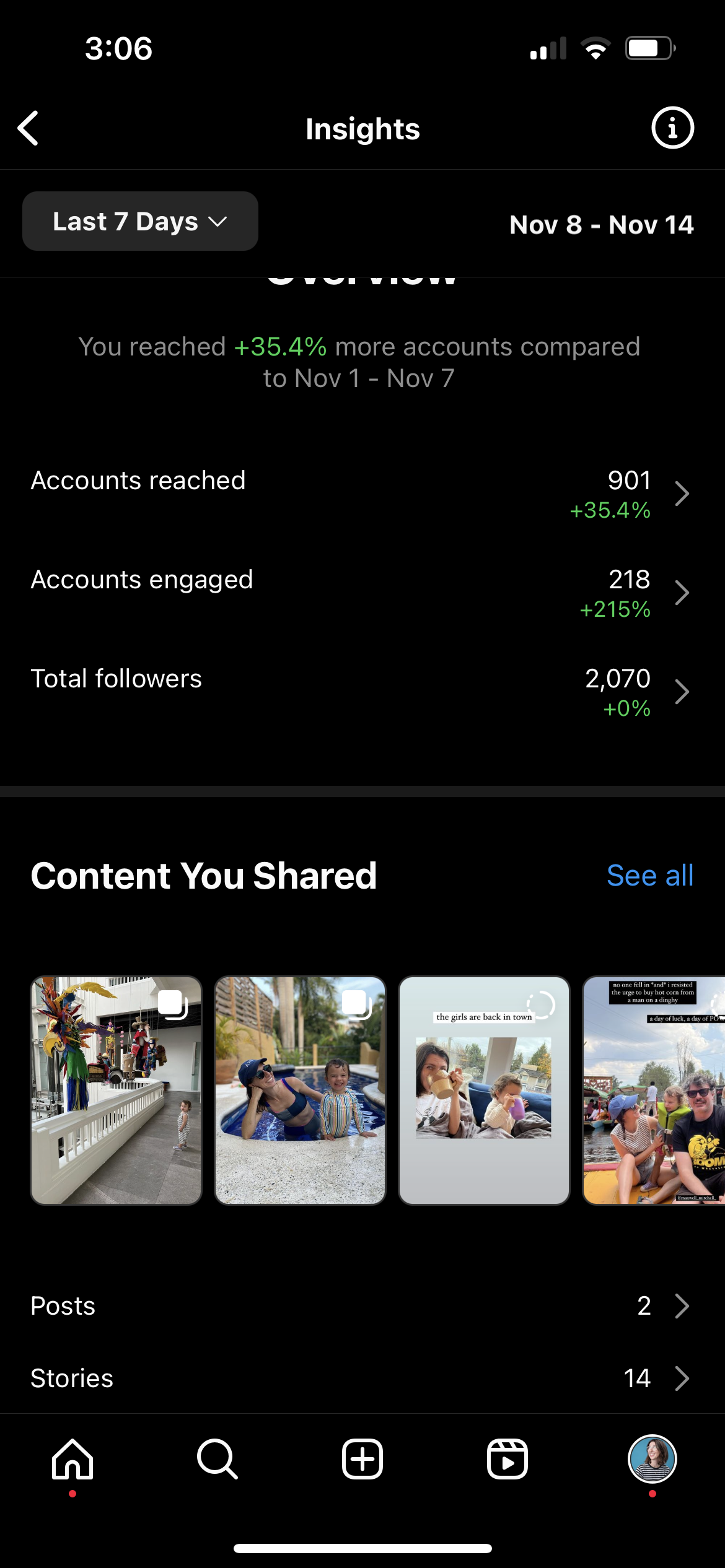
4. Scroll down to the section labeled Content You Shared and tap Stories.
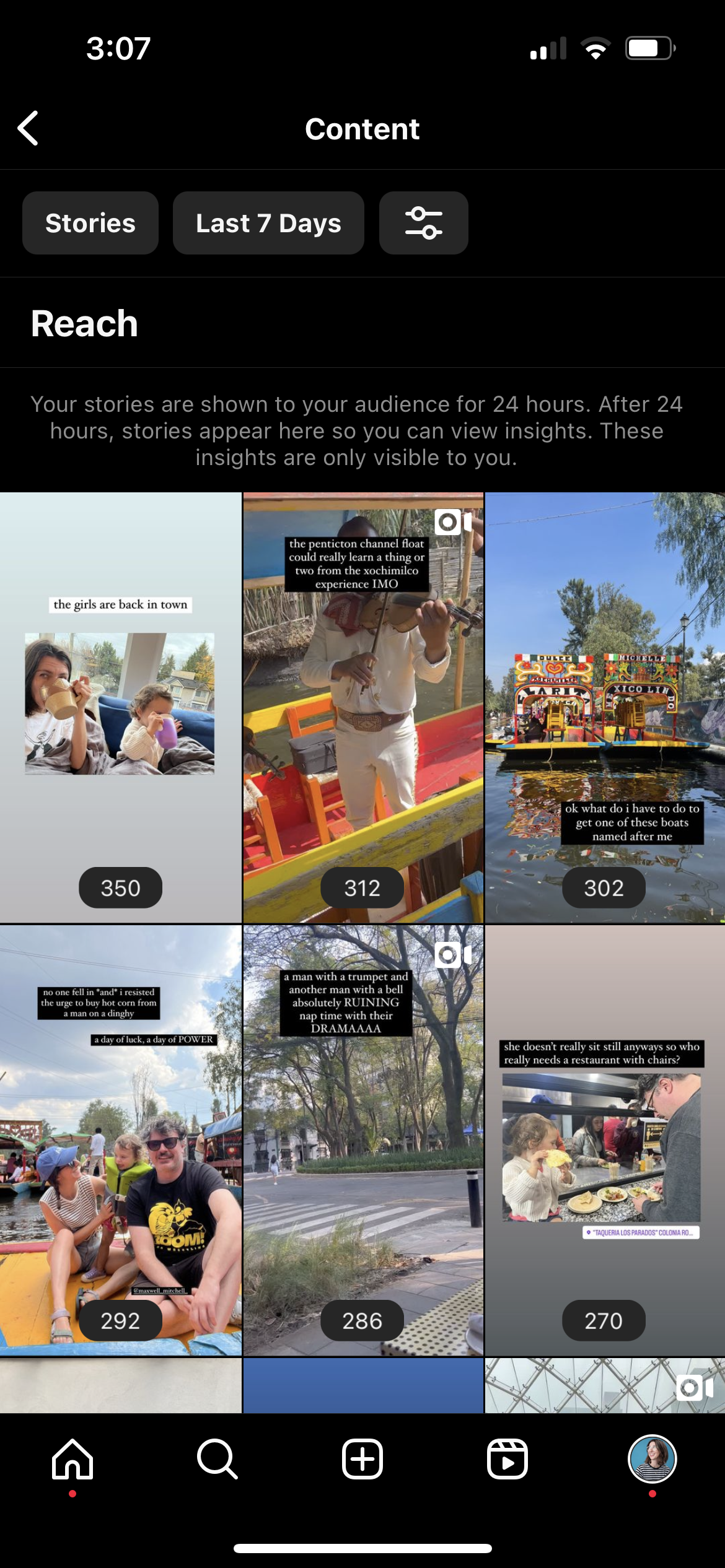
5. You’ll see a grid of your most recent stories, each labeled with their reach.
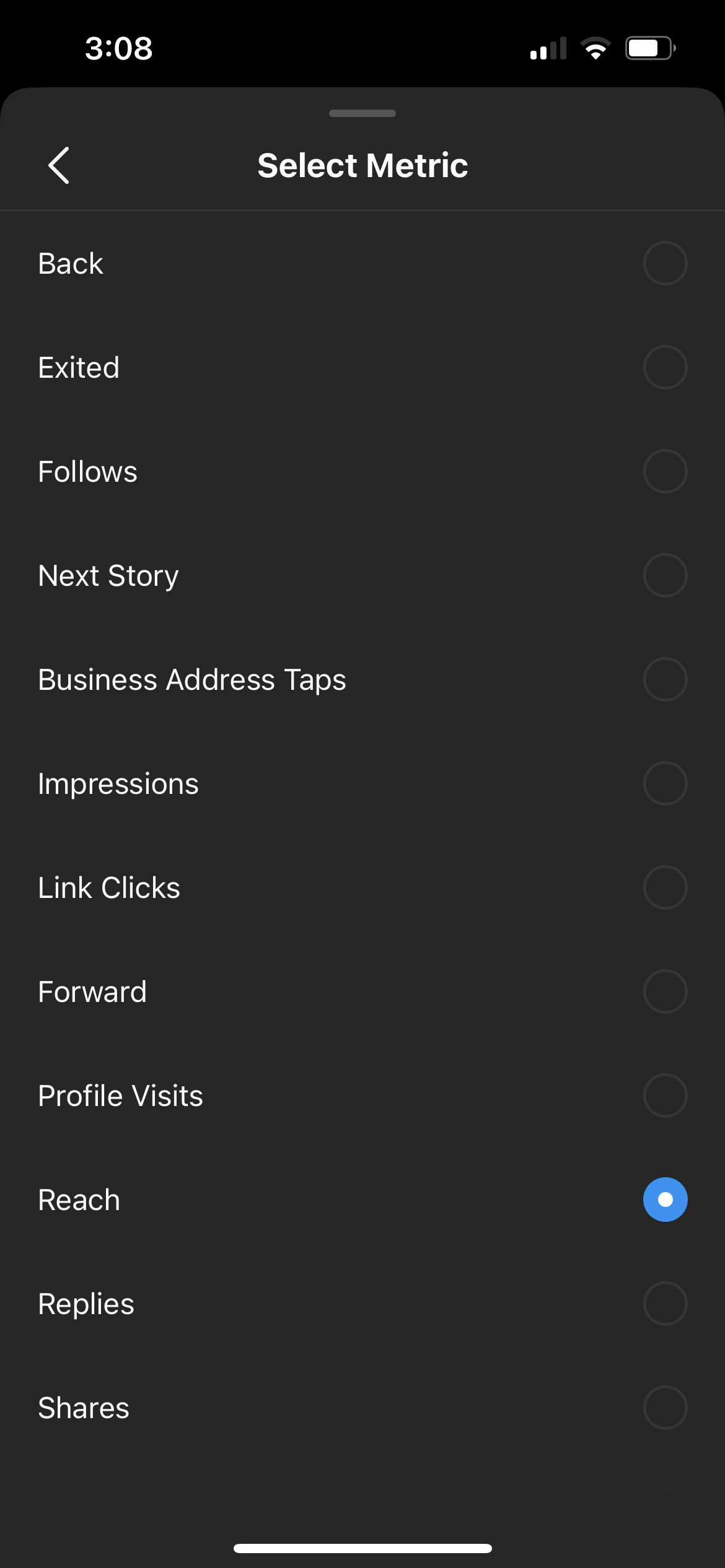
6. Tap the filter icon at the top of the screen to switch metrics. Current metrics include:
- Back
- Exited
- Follows
- Next Story
- Business Address Taps
- Impressions
- Link Clicks
- Forward
- Profile Visits
- Reach
- Replies
- Shares
- Website Taps
- Likes
- Story Interactions
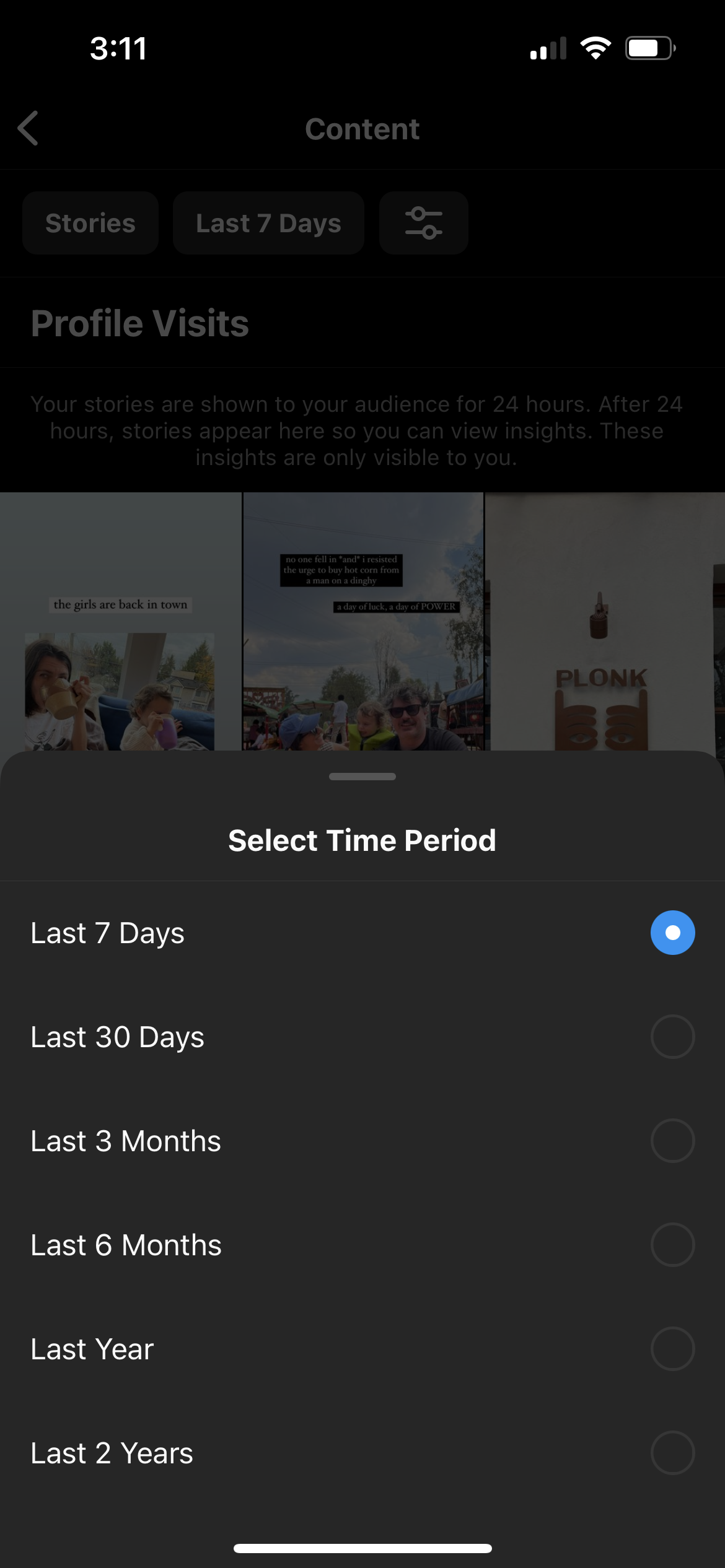
7. To change the time frame of the metrics, tap the button at the top of the screen that says Last 7 Days to view more options (like “Last 30 Days” or “Last 2 Years”).
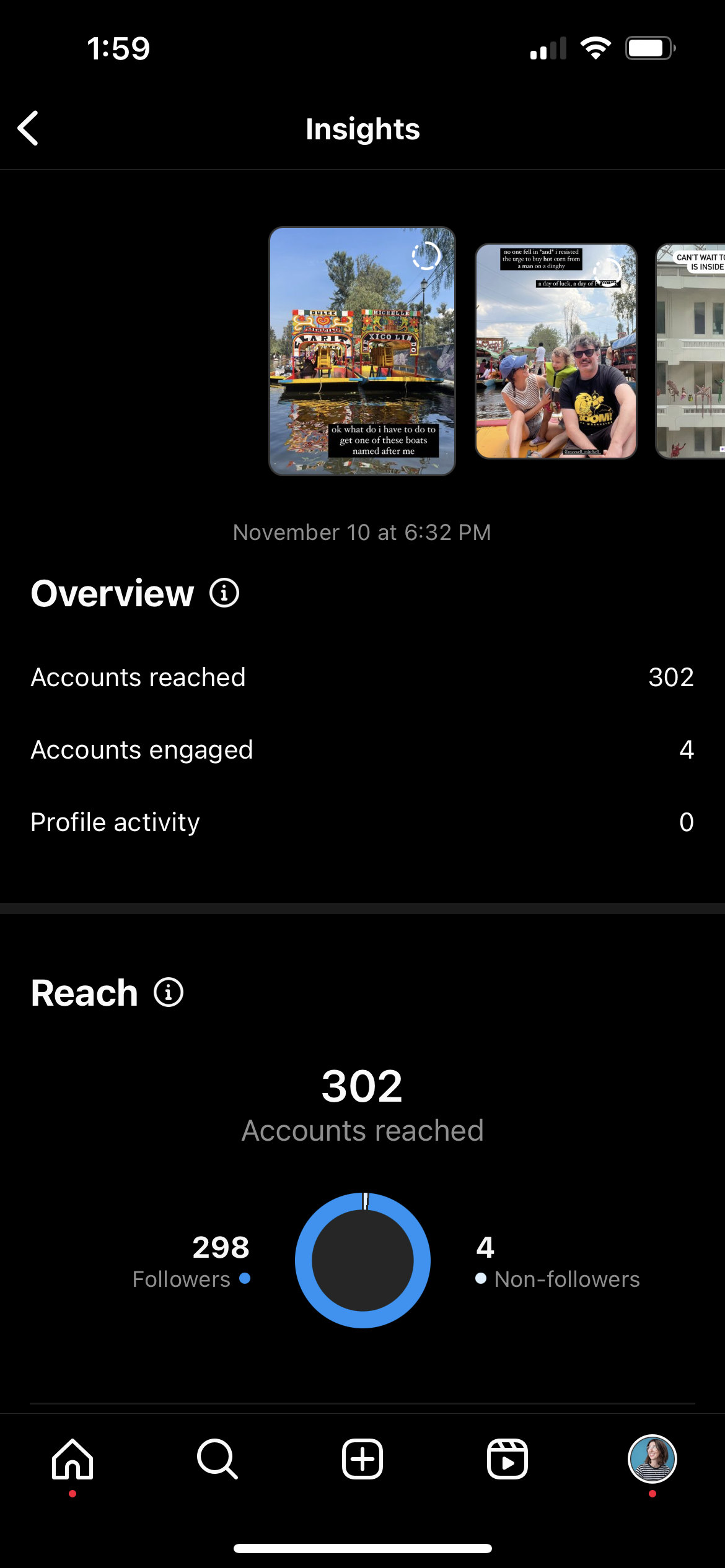
8. Tap on any Story to view detailed metrics of that particular piece of content. You can view how many accounts it reached, how many it engaged, how many interactions it got, and so on.
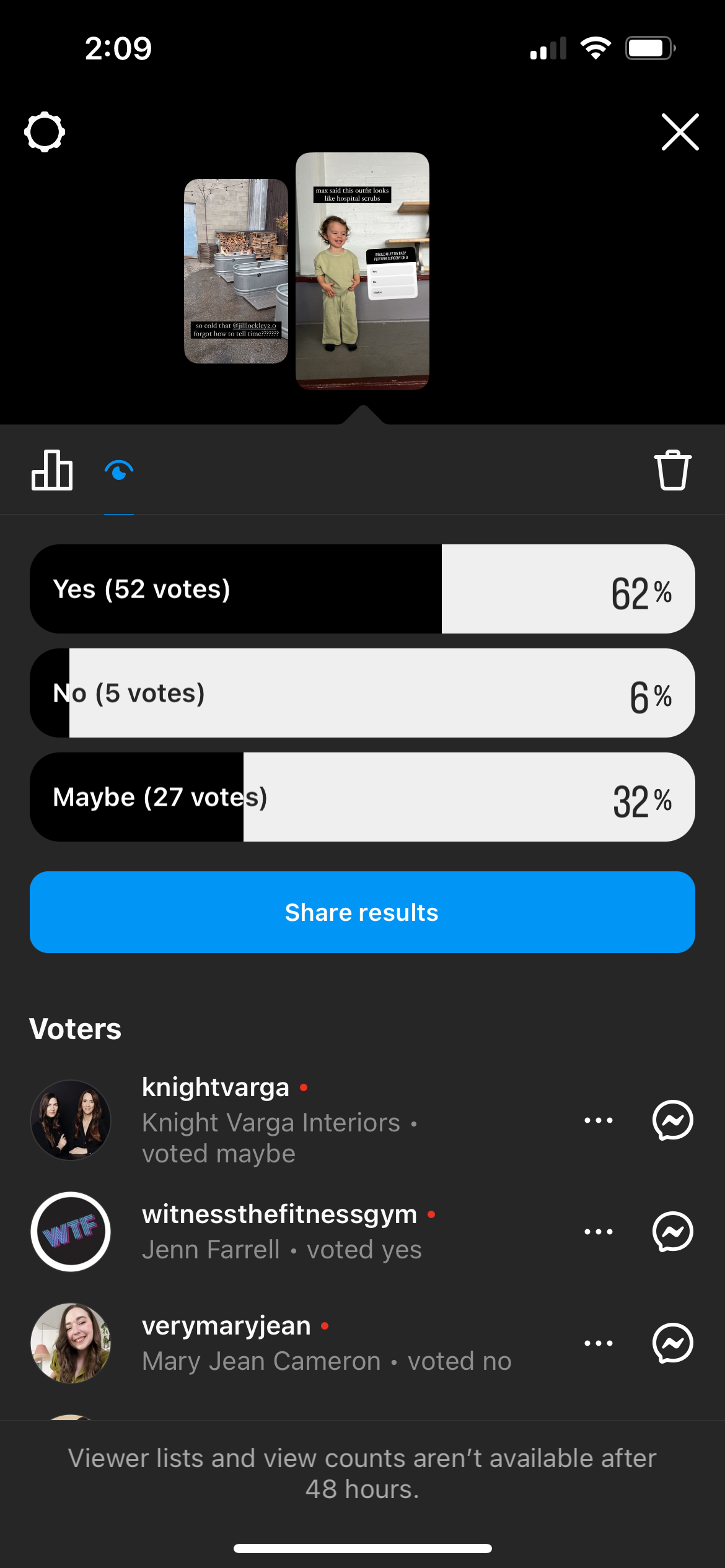
9. To view the results of a poll or interactive sticker, go into your Archives (via the three-vertical-line menu). Then, find the relevant Instagram Story and tap Activity in the bottom left corner.
If you’d rather have this (and the rest of the Instagram analytics-iverse) explained via video, we’re on the case:
15 Instagram Story metrics to track
There are 15 different metrics you can track for your Instagram Stories. But, not all metrics will be important to your brand or relevant to your social media goals.
Instagram Stories metrics are divided into Discovery, Navigation, and Interactions.
Instagram Story analytics: Discovery metrics
- Reach. The amount of accounts that saw your story. This figure is an estimate.
- Impressions. The total number of views on your story (including repeat views).
Why discovery stats matter: People use Instagram to discover brands. And 62% of people surveyed by Facebook say they’re more interested in a brand or product after seeing it in Stories.
Compare reach and impression numbers to your follower count to gauge how much of your audience is watching your Stories.
Instagram Story analytics: Navigation metrics
- Forward Taps. Number of times someone tapped to the next story.
- Back Taps. The number of times someone tapped back to see the previous story.
- Next Story Swipes. The number of times someone swiped to the next story.
- Exit Story Taps. The number of times someone exited your story.
Why navigation stats matter: Navigation metrics show you what’s working and what isn’t. If a lot of viewers exit or skip to the next story, it’s a not-so-great sign that your content isn’t capturing attention. Back taps, on the other hand, suggest your story shared content or info people wanted to see twice. If a story’s earned a lot of repeat views, it may be a good one to save to your Instagram Story highlights.
Instagram Story analytics: Interactions metrics
- Likes. The number of people who gave your Story a like.
- Profile Visits. The number of times your profile was viewed by someone who viewed your story.
- Replies. The tally of people who responded to your story.
- Follows. Number of accounts that followed you after viewing your story.
- Shares. The number of times your story was shared.
- Website visits. The number of people who clicked the link in your profile after watching your story.
- Link Clicks. The number of people who followed your link sticker.
- Business Address Taps. The number of times your business address was tapped by someone who viewed your story.
- Interactions. The total count of actions people took after viewing your story.
Why interaction stats matter: If your goals include a higher engagement rate or other measures, interaction stats help you gauge your success in achieving them. If your goal is to get more followers, compare Profile Visits with Follows. Did you want your story to drive traffic to your website? Website visits will show you how it fared.
4 Instagram Story metrics you can track in Hootsuite
Hootsuite isn’t just a great tool for scheduling your Instagram Stories. The dashboard can also help you collect and analyze your metrics. Use the Hootsuite Analytics tool to crunch the following numbers:
- Story exits. How many people exited your Story
- Story replies. How many people responded to your Stories in a given time frame.
- Story taps back. How many times did a viewer tap to view the previous Story?
- Story taps forward. How many times did a viewer tap ahead to the next Story?
These navigation-based metrics can show how engaged people are with your content. Are they going back for more? Are they bouncing out of here as quickly as possible?
Use their comings and goings to inform your Instagram Stories content strategy. Ideally, replies and taps back should be high, while exits and taps forward should be lowww.
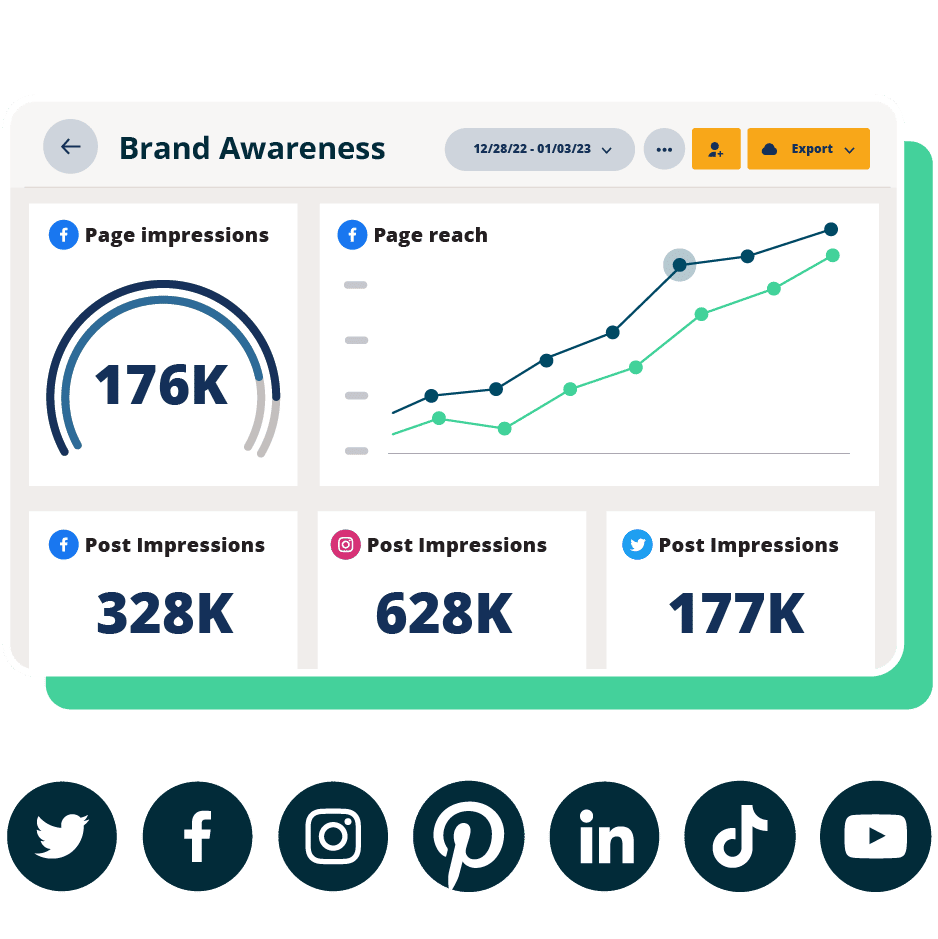
Beautiful reports. Clear data. Actionable insights to help you grow faster.
 #1 Analytics Tool for Growth
Effective tips to optimize Instagram Story analytics
Here’s how to use Instagram Insights to inform a great Instagram Stories content strategy.
Learn what works (and what doesn’t!)
Understanding your Instagram Stories performance over time will help you pinpoint top-performing posts. If you spot photos and videos that outshine other Stories, look for ways to recreate them.
Pop-up wine bar Vin Van knows its followers love wine reccos, so that’s the type of content it shares between events.

On the flip side, don’t panic if something flops. Stories are an ideal place to experiment and learn. Fortunately, if an idea doesn’t take off, it’s not on your feed forever.
Need some inspiration? Pick up tips from 7 of the best brands on Instagram Stories.
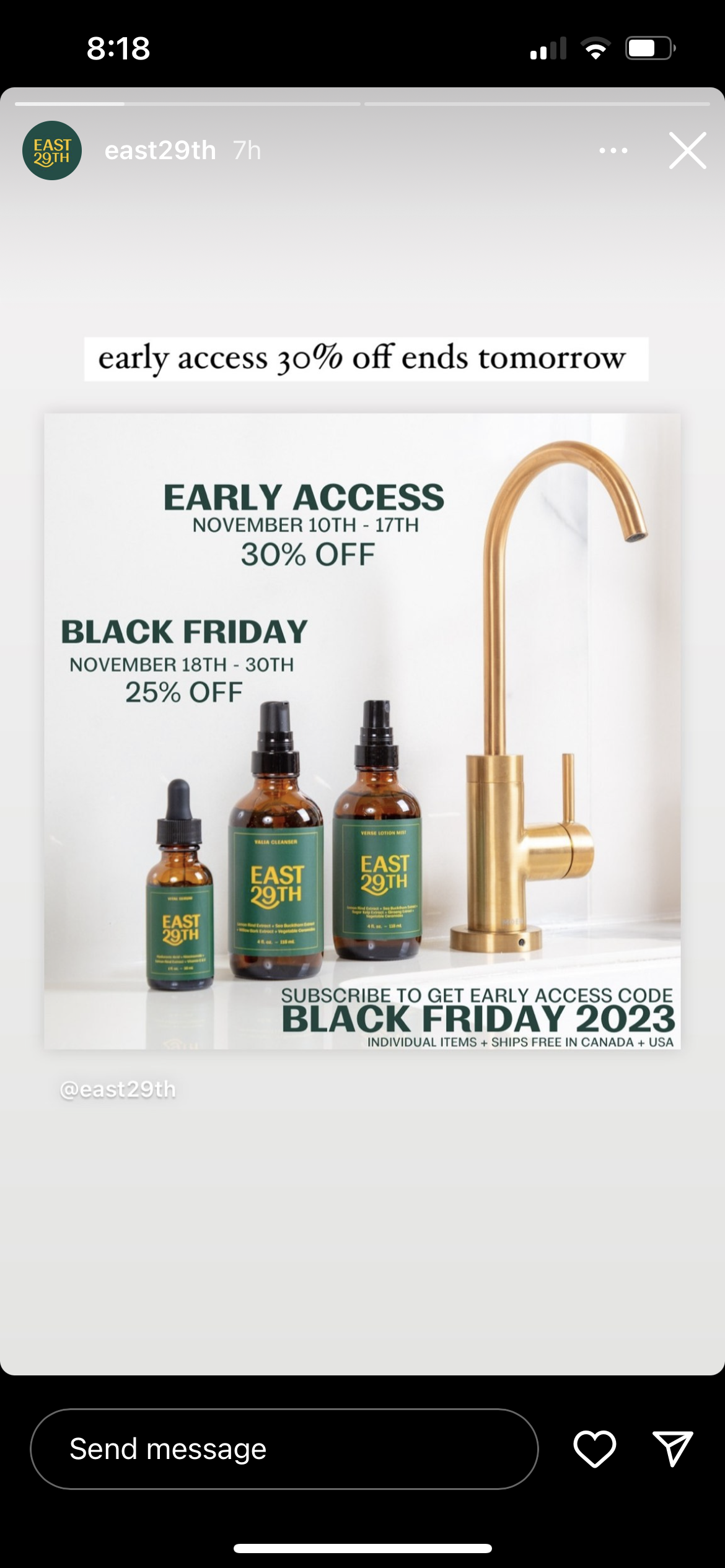
Master the art of the call to action
Stick with one clear call to action that aligns with your goals. Emphasize your CTA with branded stickers or creatives that hammer that action home.
Skincare brand East 29th makes it crystal-clear what you should do when you see this Story: subscribe to get a great deal.
Listen to audience feedback
Qualitative data is just as important as quantitative. If you’re using poll, quiz or question stickers to engage your audience, pay attention to responses.
Use feedback to inspire new products, services or content. And don’t be afraid to ask directly. People like having their voices heard.
Don’t ignore Replies, either. If people are sliding into your DMs, it may be time to organize your Instagram Inbox. Hootsuite Inbox is a great way to keep track of all your correspondence from across your social platforms in one place.
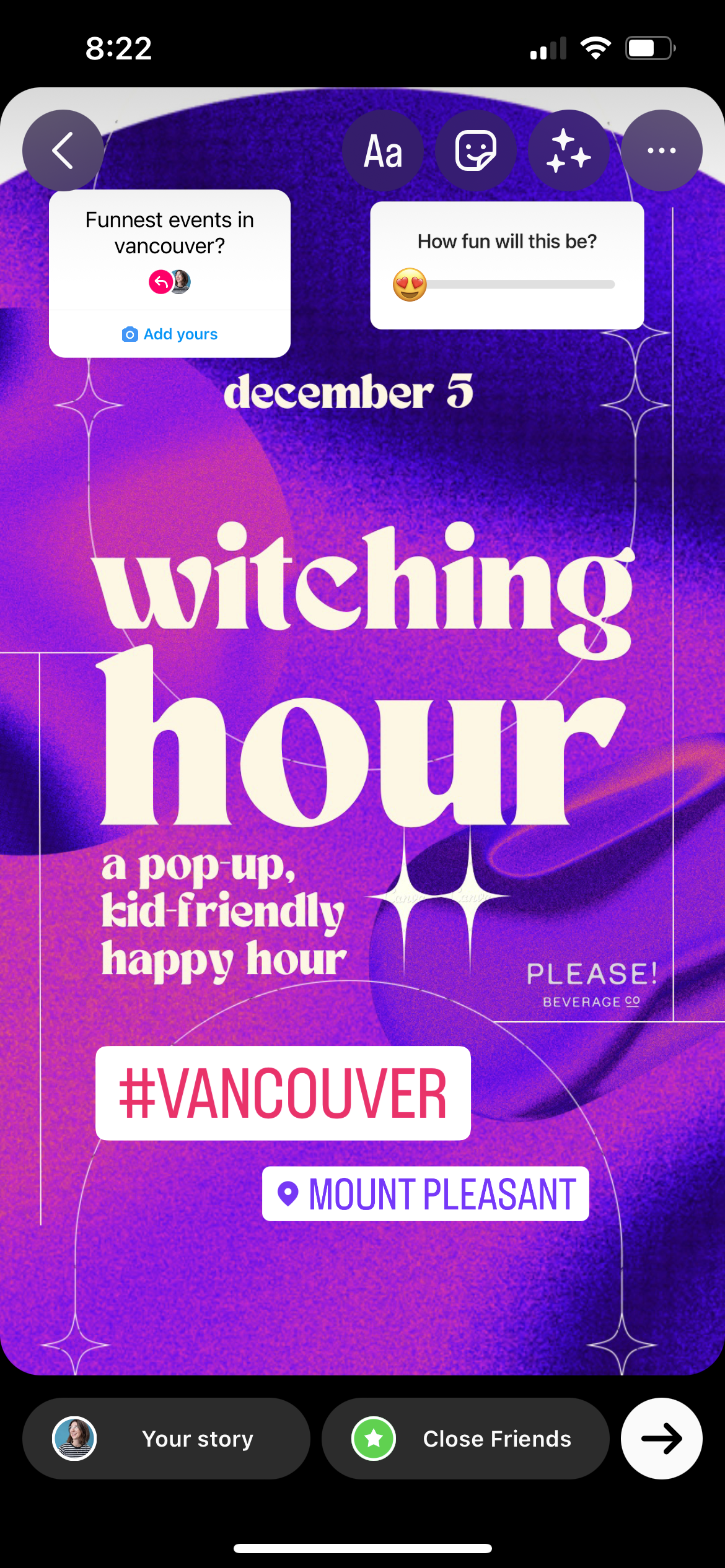
Use stickers to boost discoverability
Add stickers to boost the discoverability of your Stories. When you use a hashtag or location sticker, your story is more likely to appear in Explore or the sticker’s larger story.
Experiment with new features
Keep pushing the boundaries and exploring what’s possible with the medium. For instance, woodworking shop Union Wood Co. shared one of its Reels via Stories. Stories have some interesting editing features and filters, and new types of stickers are always dropping.
Stand out from the rest of the Stories in your followers’ by mastering all the best Instagram Story hacks and watching for fresh new ways to engage.

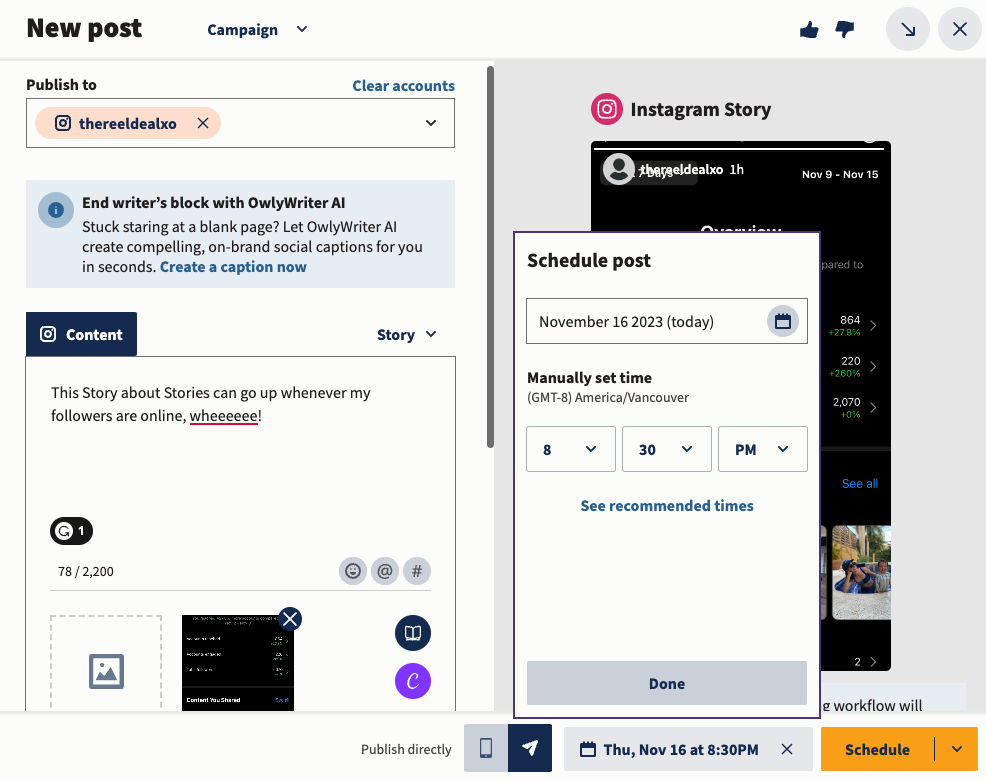
Schedule your Stories for when your followers are online
Stories only stay up for 24 hours, so timing your uploads is crucial to maximize your reach. To learn when your followers are online, head into your Insights on the Instagram app and tap Total followers.
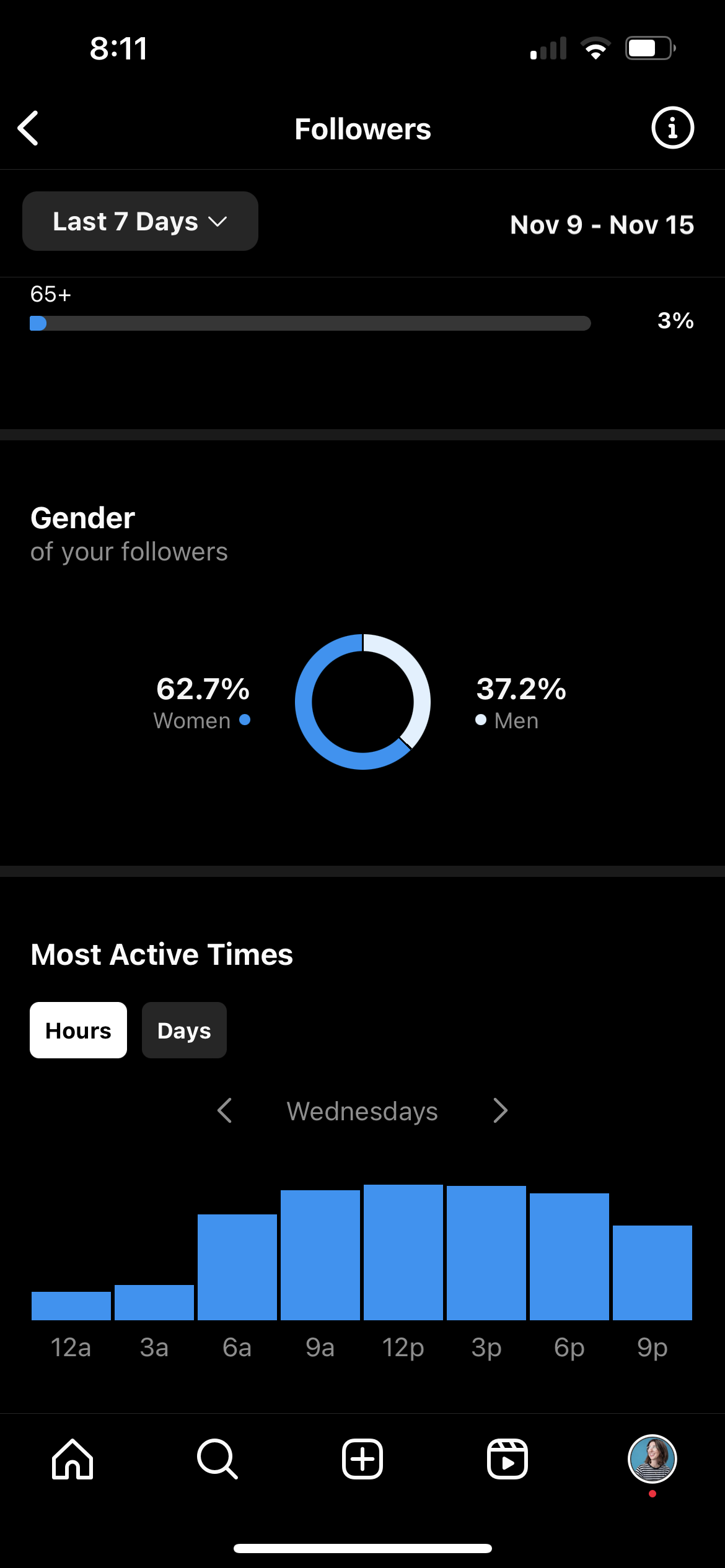
This will bring up all sorts of interesting insights about your audience’s demographics. If you scroll to the bottom, you’ll see their most active times and dates.
With that info, you can easily schedule your Instagram Stories with Hootsuite to go up at primetime.
So that’s the story on Stories! We’ll leave you to your number crunching and data mining. But when you’re ready to dive into the wider world of Instagram analytics, we’ve got you covered with our analytics primer right here.
Manage your Instagram presence alongside your other social channels and save time using Hootsuite. From a single dashboard you can schedule and publish posts and Stories, edit images, and measure performance. Try it free today.
Grow on Instagram
Easily create, analyze, and schedule Instagram posts, Stories, Reels, and Threads with Hootsuite. Save time and get results.
Free 30-Day TrialThe post Instagram Story Analytics: How to Measure the Metrics that Matter appeared first on Social Media Marketing & Management Dashboard.
* This article was originally published here
Monday, July 8, 2024
18 YouTube Tips To Grow Your Channel in 2024
YouTube is the place to be for both brands and aspiring content creators for two reasons: A huge potential audience and one of the most rewarding content monetization programs of any social platform. If you want to take advantage of these opportunities, you need our list of top YouTube tips.
After all, YouTube is the second-most visited website in the world, and 83% of U.S. adults are on the platform. Users stream a billion hours of video content every day. But it’s far from oversaturated. In fact, there’s never been a better time to start a YouTube channel.
These 18 YouTube tips for beginners, intermediate creators, and experts will help get you views, encourage people to subscribe to your channel, and keep you growing from day one and beyond.
Jump right to the most relevant section, or start reading now!
Get your free pack of 5 customizable YouTube banner templates now. Save time and look professional while promoting your brand in style.
8 YouTube tips for beginners
Ready to get started? These beginner YouTube tips will make sure you launch your channel on the right foot, setting it up for growth and success.
1. Pick the right channel name
The first thing you need to do is choose a name for your YouTube channel. What’s the perfect way to represent the type of content you plan to create?
The perfect YouTube channel name:
- Has your company or personal name in it
- Has a word or phrase that categorizes it
- Is short and easy to say
Some channel examples include Abbie Emmons, an independent author who shares content to help others write their first novel, Doctor Mike, as you may have guessed, a doctor who shares medical content, and Yoga With Adriene, a channel that shares full-length yoga routines.
Brands, like Surfer, Visme, and Hootsuite, tend to just stick to their brand name, making it easy to find them.
However, you will find more random names out there, like Unspeakable, a gaming channel, Cocomelon, a nursery rhymes channel, and That Practical Mom, a channel sharing life advice from a mom.
Consider your niche (more on that in the next tip), the types of content you want to share, and if it makes sense to just use your name or brand name. Or why not try out our YouTube name generator and let AI do it for you?
2. Pick the right niche
Relax, this is easier than choosing a channel name. Why? Because, unlike death and taxes, you can change your content niche.
You may think you’re passionate enough about something to fill hundreds of hours worth of content. But, you’ll find out for sure when the grind gets tough and you don’t want to get up early and film another video about it.
But while you can change your niche later, it may risk alienating any audience you’ve already built—so spend some time defining what your channel is going to be about.
To pick your niche, ask yourself:
- What do I lose track of time doing?
- What could I talk to my friends about for hours?
- In my free time, what do I search/watch/learn about online?
If you’re creating a YouTube channel for your brand, this step becomes a bit easier. What does your business do? That’s your niche.
To use the brands we mentioned in our last tip:
- Surfer, an SEO tool, shares videos about writing highly optimized content
- Visme, a graphic design tool, shares videos about creating visuals
- Hootsuite, a social media management tool, shares videos about using social media for marketing
Makes sense, right?
Oh, and if you’re worried about going on-camera yourself, we’ve got tons of faceless YouTube channel ideas for you to consider.
3. Optimize your channel
Set your channel up for success by fully optimizing and filling out your profile. Even if your subscriber count is still in the single digits, make sure you look established right from the start.
To do that, you’ll need to add:
- Profile photo. As a creator, this should be a professional headshot of yourself; as a brand, this should be your logo
- Channel art. Create a graphic that helps to showcase what viewers can expect from your channel
- Video watermark. Add a watermark (ideally your channel logo) that appears in the corner of all your videos for further recognition
- Channel description. Explain what your channel will be all about, or consider using our YouTube channel description generator
- Links/contact info. Add links to your other social media channels as well as an email address or website to let people get in touch with you
- Featured video. Choose the perfect introductory video to live at the top of your YouTube channel
- Verify your channel. Getting verified on YouTube helps boost your credibility and help subscribers trust your channel
You can make all of these changes in the Channel customization area of your YouTube Studio. Providing all of this information upfront helps people understand if they want to subscribe and follow along with your content or not.
Plus, it looks much more inviting. Here’s an example of a channel that’s been fully optimized:

4. Set a consistent posting schedule
If you want to grow your YouTube channel, you need to be consistent. That means setting a realistic publishing schedule and sticking to it.
A common posting schedule is once weekly, but you need to make sure that’s a realistic cadence for you to achieve. When you’re just starting out, creating and editing your videos might take a long time.
Consistency matters more than frequency. If you can only make a video once every two weeks, that’s fine.
Creator burnout is a huge issue. TikToker and YouTuber Jack Innanen summed it up as: “I get to the point where I’m like, ‘I have to make a video today,’ and I spend the entire day dreading the process.”
Sticking to a sustainable schedule will keep you moving forward without burning out, increasing the chances you’ll stay with your creator journey long enough to see results.
5. Invest in high-quality video equipment
If you want to be seen as a serious YouTube creator, you need high-quality content. One major part of creating high-quality content is having high-quality equipment.
While you don’t need to spend a ton of money on top-of-the-line gear when you’re just beginning your YouTube journey, your smartphone’s camera isn’t going to cut it for the production level that YouTube requires.
Instead, invest in some decent video equipment. Some of the basics include:
- Video camera
- Camera stabilizer (i.e., tripod)
- Microphone
- Lighting
- Green screen
- Video editing software
6. Make small improvements in every video
Spicy YouTube marketing tip: You can’t get views and subscribers without first having videos.
As popular YouTuber Ali Abdaal says, “Your first video is going to suck.” He recommends instead of trying to make every video “the best,” try to improve one small element each time. Try a new title sequence, add some background music, or test a new editing software.
Those small changes add up over time to improve your channel without being overwhelming.

Source: Ali Abdaal on YouTube
7. Create eye-catching thumbnails
Your video thumbnail is what really hooks people. They’ll decide in a millisecond if your video is worth watching based on it.
Some creators spend up to 2 hours making one thumbnail image. One YouTuber even makes several options, saying “My designer spends around 3-4 hours making 6-7 per video. If one thumb performs badly, we swap it out.”
Your thumbnail should be so good that people don’t even need to read the title to understand what the video is about.
Art with Flo’s thumbnails are well-branded with a common color palette and style, so viewers can instantly recognize their tutorials in search results.

A few thumbnail design tips:
- Use icons or logos (if applicable for your topic)
- Keep text minimal
- Add creative elements to catch the eye, like hand-drawing, neon lights, etc (depending on your brand)
8. Completely fill out your video descriptions
You have a character limit of 5,000 characters in your YouTube description, which can equal out to about 800 words. That’s a micro-blog in itself, so don’t be afraid to take up some space.
First, and we’ll discuss this more in our first “intermediate” YouTube tip, you want to include a keyword within the first bit of your video description to help YouTube’s algorithm clearly understand what your video is about.
Take a look at this example from Hootsuite’s own YouTube channel. The video is all about social media trends, and we’ve made sure to include that keyword throughout the description:

Once you’ve introduced your video with a brief description and keyword, it’s a good idea to include timestamps. If you look above, you’ll see that we’ve done this in our own video description.
Video timestamps, also known as chapters, are clickable links that allow viewers to skip around a video. Without them, people may leave if they can’t easily find what they’re looking for.
You can add timestamps manually or YouTube can auto-create them. To add them manually, type them into your video description. To create a clickable list, you’ll want to include at least three timestamps, formatting them like “01:05 Name of Chapter.”
You can also edit past uploads to include timestamps this way. After you save the description, you’ll see clickable timestamps like the above example.
From there, you’ll want to use the rest of the description field to tell viewers about you, your business, and link out to your other platforms.
This can be a boilerplate template that’s roughly the same for each video, though consider tweaking it if you have a special sale going on or mention any products in your video.
Otherwise, always include:
- Links to your other social profiles
- Your website and/or a specific landing page
- A short blurb about you/your company
- Contact information
Still want some help? Grab one of our free, editable video description templates or take advantage of our YouTube video description generator.
5 intermediate YouTube tips and tricks
Once you’ve had your YouTube channel for awhile, you may be ready to take it to the next level. These intermediate tips and tricks will help put you on the right path for growth.
9. Optimize your videos for search
YouTube is a search engine, like Google—except the search results are all video. This means you need to employ YouTube SEO tactics, like using focus keywords, that help your videos show up in search.
Keywords help the YouTube algorithm understand what your video is about, making it more likely to show up in the “suggested” column alongside related videos (see below) as well as in related search results. This means you have a better chance of reaching new viewers.

Keywords can be as simple as one word, but phrases of two or more words will often give both YouTube and people a better idea of your topic, such as “social media competitor analysis,” like you see in the above example.
Don’t go overboard here—one keyword in your title is fine. Plus: Keep it short.
Studies show video titles under 10 words perform best in YouTube’s search results, with 81% of top-ranking videos being under this limit.
More importantly, aim for around 60 characters max for your title length, which is about 8-10 words (with spaces). You’re allowed 100 characters, but only the first 60 show in search results.
Clueless about keywords? We’ve got more YouTube keyword research tips, or try out a free online tool like KeywordsPeopleUse to quickly find…keywords people use.
10. Monitor your analytics
To go forward, you need to go back…in time. Not with a Delorean, but by reviewing your YouTube analytics at least monthly.
Find your analytics in the left-side menu in YouTube Studio.

Key metrics to help you understand how your channel is performing:
- Subscribers: Including unsubscribes
- Top videos: Give your audience more of what they want
- Channel watch time: This should trend upward every month, or you may need to revisit your content strategy
- Traffic sources: See how viewers find you, including search keywords
Plus, you can explore demographics and more, including ad revenue statistics once you meet the YouTube Partner Program eligibility requirements to monetize your content.
11. Organize your content with playlists
YouTube playlists help you rank higher in search results because users are more likely to keep watching the next video, which increases your overall views and watch time—and makes YouTube think you’re pretty cool.
You can add other creators’ videos to your playlists—which is a good idea for collaborations later on—but at first, make your own. Group your videos by topic, or keep a specific series together. (Bonus tip: Later on when you get big and famous with a fancy verified account, you can create official series playlists.)
You can manage your playlists in YouTube Studio, either under Content > Playlists or by quickly adding a new one from the top Create menu.
Here’s an example of what this could look like on your channel:

12. Collaborate with other YouTube channels
One great way to increase your reach is to collaborate with other YouTubers on videos. For example, if you’re featured or mentioned by another channel, you’re reaching a new audience of potential subscribers.
Find a YouTube channel that creates similar content to yours (though if you’re a brand, you’ll want to avoid any direct competitors, focusing instead on working with creators or complementary brands) and reach out about a partnership.
Create a video (or two—one for each channel) together, then use it as a way to promote each other’s YouTube channels.
13. Caption your videos
Closed captioning your videos makes your content accessible and inclusive to everyone. Approximately 1 in 5 people experience a degree of hearing impairment, and about 5% of the global population is deaf or hard of hearing. Captions ensure you don’t exclude any of your potential audience.
You can either supply your own written transcripts or have YouTube automatically caption it with automated speech recognition.
For creators just starting out, YouTube’s automatic captions are a great option. You can edit the captions if YouTube gets any words wrong, and editing is a lot faster than typing captions from scratch.
However, once your channel starts taking off or earning income, consider hiring someone to professionally transcribe your videos. Go even further and caption your videos in multiple languages—YouTube will show viewers captions in their preferred language—to build a global audience.
5 expert-level YouTube channel tips
Mastered all these other tips? Here are a few expert tips for helping you reach the next level with your YouTube channel.
14. Monetize your channel
Once you’ve started growing your channel, why not make some money from YouTube? The platform has a great monetization plan, and the average YouTube creator brings in almost $5,000 per month.
That means YouTube can be a great side hustle—or even replace your full-time job—if you’re able to stick with it and generate a large following.
To monetize your YouTube channel, you have to be accepted into the YouTube Partner Program (YPP). Eligibility requirements include:
- Follow the YouTube channel monetization policies
- Live in an eligible country/region
- Follow community guidelines
- Turn on 2-step verification
- Have access to advanced features (an advanced form of YouTube verification)
- Have an active AdSense account linked to your YouTube channel
- Have at least 1,000 subscribers
- Have either 4,000 valid public watch hours in the last 12 months or 10 million valid public Shorts views in the last 90 days
Once you’ve hit the threshold, you can apply for the YouTube Partner Program. If accepted, you can start receiving revenue from the ads shown within your YouTube videos.
15. Try YouTube Shorts
YouTube Shorts are crucial for promoting your channel which is especially important for new creators. As of Q2 2023, YouTube Shorts has over 2 billion monthly active users.
Shorts are vertical short-form videos similar to TikTok videos or Instagram Reels. They’re featured in a dedicated Shorts section where users swipe through them.

Take a 15-second snippet from your latest video and upload that as a Short. Better yet, grab a few snippets from each video as you’re editing it and you’ve now got 2-3 Shorts to publish throughout the week.
Read our YouTube Shorts guide for tips to make the most of this exciting new format.
16. Master video editing
Your YouTube content—what you’re saying, how you’re saying it, what’s unique about it, etc.—is what hooks people, but good video editing is what keeps them watching and coming back.
Editing will take much longer than actually filming the video but it’s time well spent. Borrow inspiration from your favorite YouTubers to start figuring out your own editing style and techniques. Your videos won’t look as slick as theirs right away, but you’ll get better.
Invest in high-quality video editing software and become a pro. Not only will this make your videos better and better, but it’ll also make the editing process much faster and easier the better you get.
Depending on your budget, you could outsource to a professional video editor as soon as you start your channel. However, for most creators, the ability to do this only comes after their channel starts making money.
Either way, make sure you’ve mastered video editing, then set a goal for yourself to hire an editor once your YouTube account starts making a certain amount per month. It will free up your time to focus on creating content.
17. Attend YouTube conferences
Consider attending workshops or conferences for YouTubers that are dedicated to helping creators learn more about growing their channels. These can also be a great place to network and create connections with other YouTubers.
A few conferences to consider include:
- VidCon
- VidSummit
- Web Summit
These conferences can be a great place to get even more growth tips, come up with new ideas, and learn new skills that can help you improve your channel even more.
18. Create a content distribution strategy
Publishing your YouTube videos on your channel and calling it a day isn’t nearly enough. You need a content distribution strategy that can help you reach an even wider audience.
Though your YouTube SEO efforts should help you increase your reach on the platform, there are other ways off-platform to promote your videos.
Your YouTube video promotion strategy should include tactics like:
- Share on your other social media channels
- Link to from your email newsletter
- Share in online forums and communities
- Embed in your blog or on your website
- Use YouTube video cards and end screens to link to other videos
- Create playlists to group similar content
- Run YouTube ads to boost your videos
- Partner with YouTube influencers to reach a wider audience
- Link to other YouTube videos from your video description
Ready to start and grow your YouTube channel in 2024? Schedule, publish, and analyze your YouTube videos — and all your other social media content — in one place with Hootsuite. Try it free today.
With files from Chloe West.
Grow your YouTube channel faster with Hootsuite. Easily moderate comments, schedule video, and publish to Facebook, Instagram, and X/Twitter.
Free 30-Day TrialThe post 18 YouTube Tips To Grow Your Channel in 2024 appeared first on Social Media Marketing & Management Dashboard.
* This article was originally published here
Subscribe to:
Posts (Atom)
How to make short-form videos that stand out in 2026
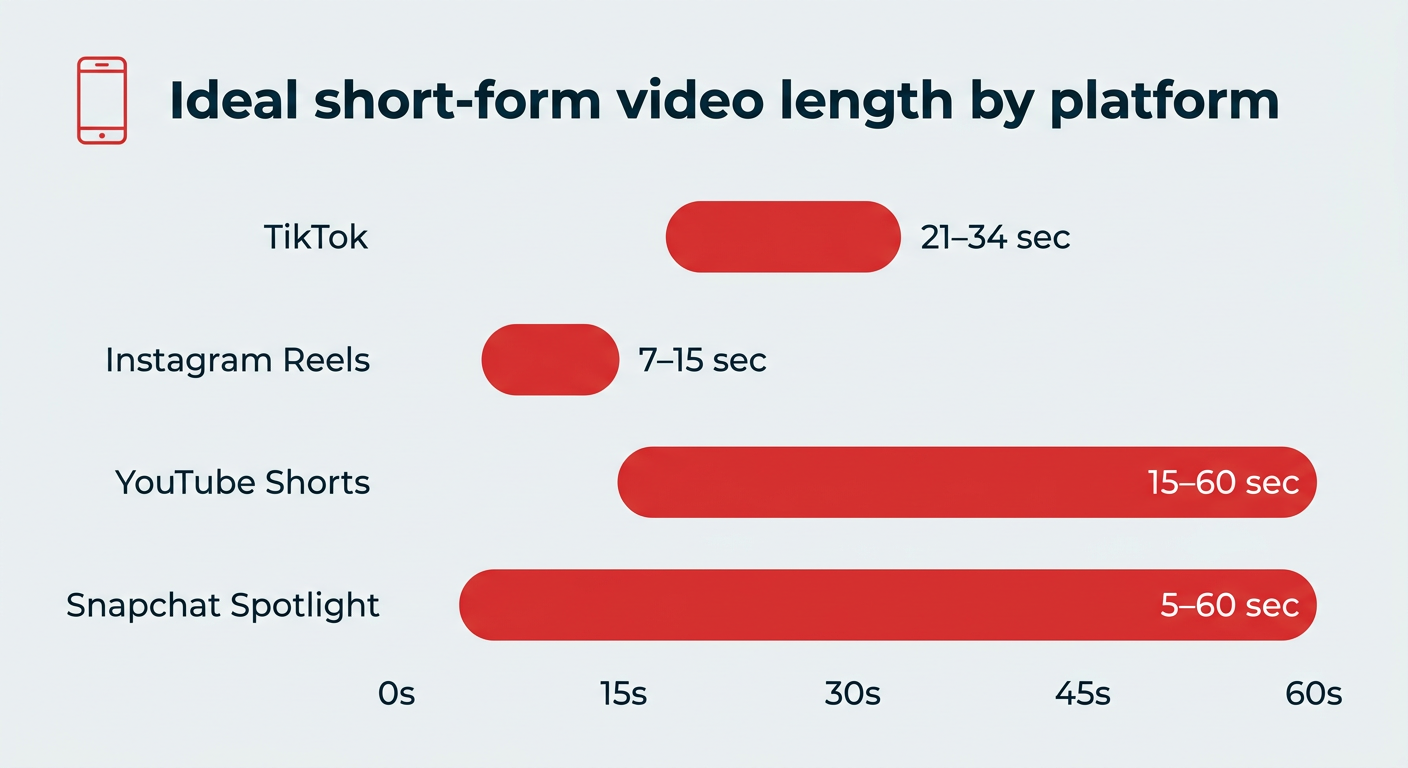
Key takeaways Short-form video defined: Video content typically under 60 seconds, built for vertical, mobile-first platforms like TikTok, I...
-
Storyboard | How Nykaa captured the online beauty market in India pre IPO Moneycontrol.com * This article was originally published here ...
-
You could spend your days trying to outsmart Instagram’s ever-changing algorithm. Or, you can take the direct route with Instagram ads. ...
-
Apple's new privacy changes have cost social media platforms nearly $10 billion, Facebook takes the biggest hi Business Insider India...
